







6 Benefits of Playing for Muslim Children
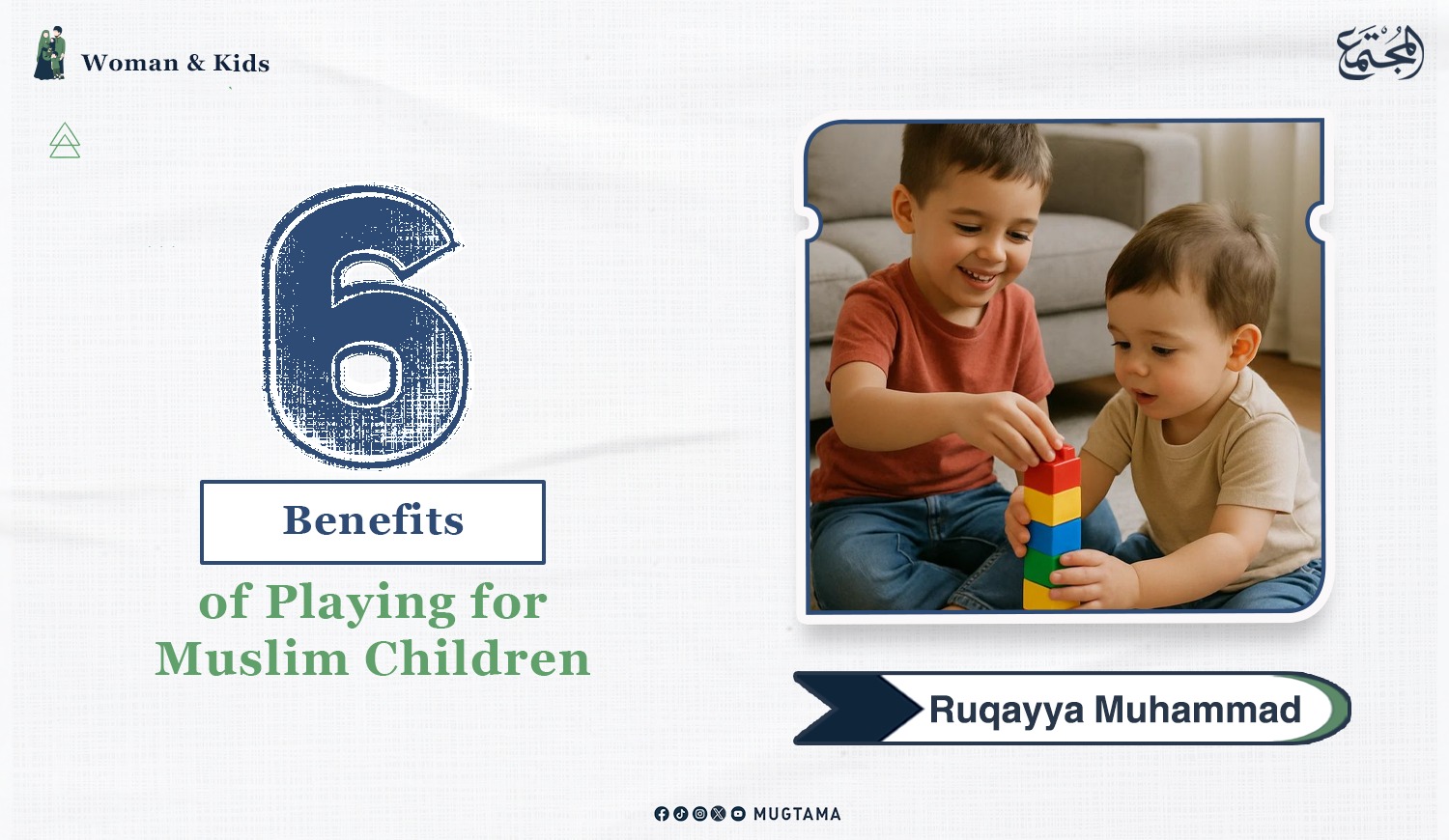
Play is a
tremendous opportunity for a child—through it, he acquires numerous skills and
experiences. It is not merely a form of entertainment as some may think;
rather, it is a recreational incubator for learning, creativity, and
discovering new things.
Contrary
to popular belief, and the repeated labeling of a child who loves to play as
mischievous or troublesome, such a child is actually creative and possesses
special abilities that can be discovered through
exposure to different types of games.
Experts
advise involving the child in a variety of games, some based on intelligence,
others on physical strength, quick wit, or linguistic abilities. Some games
require respecting rules and regulations that govern how the game is played.
According
to a study
published in the International Journal of Instruction, playing has a
positive effect on developing social skills among preschool children.
So,
should I let my child play however he wants? And what types of games should he
play?
The
answer is neither yes nor no. Every child has his own abilities, circumstances,
physical build, and interests. Parents should grant their child a space of
freedom and choice in practicing hobbies and preferring one game over another.
The matter depends on his individual needs, strengths, weaknesses, and the game
that suits him best.
Benefits of Playing for Children
Parents
can also participate in playing with their child, giving him room for
creativity, improvisation, thinking, and critical exploration. They will gain
multiple benefits from this, including:
1. Strengthening
Self-Confidence and Building a Sense of Achievement
Playing
enhances the child’s self-confidence and gives him a sense of achievement with every
result he accomplishes. It also increases his knowledge about the game and its
rules, and he may even develop or elevate the game himself to raise the level
of challenge.
2. Boosting Cognitive
Development and Critical Thinking
Playing
contributes to stimulating the child’s cognitive development, enhancing
critical thinking skills and decision-making abilities. Practicing a game with
specific rules—like football, archery, or chess—instills focus, discipline, and
respect for rules.
3. Developing Social
Skills, Friendship, and Cooperation
Playing
gives the child the chance to interact with others, form friendships, and
develop cooperation, negotiation, and flexibility. It also provides an ideal
opportunity for resolving conflicts that may arise during playing—which are
social skills that help the child understand others.
4. Teaching Patience,
Planning, and Mastery
Through
playing, the child learns patience while pursuing goals, planning for success,
and mastering skills to win. Randomness, negligence, and rushing will not lead
to victory—but patience, effort, and seriousness will.
5. Helping Children Manage
Emotions, Loss, and Frustration
Playing
offers the child an ideal chance to train in facing frustration, accepting loss
and victory, and understanding that losing is a natural part of the game—and
that winning is not always his. This helps him emotionally practice
managing anxiety and disappointment, reinforcing psychological stability.
6. Building Essential
Skills for School and Life
Playing
equips the child with essential skills needed in school life—such as focus,
attention, following instructions, respecting rules, cooperating with others,
taking responsibility, respecting others, the desire to achieve and succeed,
striving for improvement, and the ability to integrate into society.
Also Read:
- Video Game Addiction in Children: What Is the Solution?
- 5 Tips for Bringing Joy to Children’s Lives
- Balanced Parenting in Highly Diverse World
-------------------------------------------------------------