



Woman’s Financial Independence in Islam
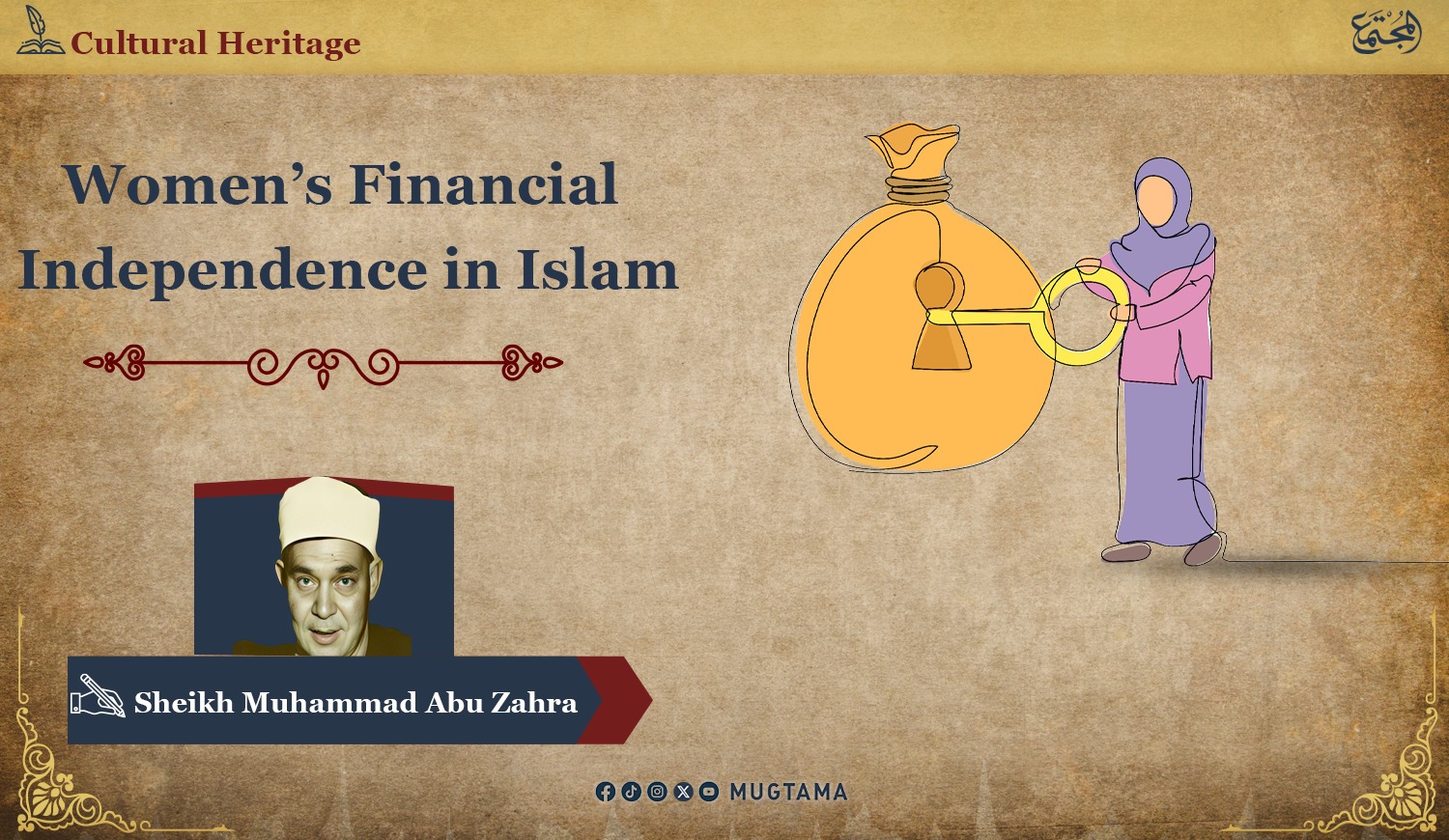
A woman has a complete Independent personality
within the family. Before marriage, as long as she is of sound mind, mature,
and of legal age, her guardians have no financial authority over her. She
manages her own wealth either directly or through a representative. Her
financial liability is entirely separate from that of her guardians. They are
not permitted to manage her wealth except through a power of attorney granted
by her, and she is completely free to issue such an authorization or to
withhold it.
After marriage, her financial liability remains
separate from her husband's. She has full right to manage her wealth
independently, and her husband has no authority over it except through a power
of attorney granted by her. If she authorizes him—and she is free to do so—he
acts according to this agency. She also has the right to revoke this agency at
any time she chooses.
Her wealth is not considered jointly owned with
her husband. Each of them maintains full control over their respective assets,
and neither has the right to interfere in the financial matters of the other.
Two important facts must be emphasized here:
First – That financial guardianship of a woman over
her own wealth was not established in Europe until only about thirty years ago,
whereas Islam had granted her this right over fourteen centuries ago.
Second – That marriage in Europe renders the man a
partner in the woman’s wealth. Any wealth she possessed prior to the marriage
is included in this joint ownership, and the husband is given the right to
dispose of this jointly owned wealth. In effect, he becomes a guardian or a
mandatory agent over his wife’s assets—without her consent.
In contrast, we see that in Islam, marriage is
a reason for inheritance: the wife inherits from her husband just as the
husband inherits from his wife. And Allah is the best of inheritors.
5 Bright
Proofs of Islam’s Honor for Women
-------------------------------------------------------------
Taken from the book: “The
Organization of Islam for Society.”