

Challenges facing Muslims in the West
Western Societies and the New Moral Frameworks
Western
societies today are experiencing a phenomenon worthy of
study and observation: the redefinition of ethics, taboos, and social
aversions, and the establishment of new boundaries by shedding many of the
restrictions that were imposed, particularly on youth and women, just decades
ago.
These new boundaries have no relation to what we Muslims know
as permissible and forbidden. That is the concern of these societies—were it
not for the fact that these new definitions affect our children living in the West
and are also exported to our countries through the material and cultural
products of globalization.
The Retreat of Taboos
The new concept of prohibitions and taboos is no longer absolute, but rather a relative matter tied to preserving health and wealth. It carries a new philosophy far removed from prevention and safety. For example, it is no longer realistic to advise a young person not to drink alcohol; instead, they are advised not to overindulge, for the sake of their health. It is no longer realistic to advise young men and women to avoid illicit relationships; instead, they are warned about the diseases that may result. It is no longer realistic to advise youth to stay away from drugs; instead, they are advised to use lighter drugs, such as cannabis, to avoid more dangerous ones.Western societies have come to coexist with these diseases and
their consequences and developments. Discussion about them has become weak and
monotonous, as if there is no way to reduce their effects, let alone confront
or contain them. Talking about youth who die from alcohol and drugs, or fall
ill because of them, has become a tragic and sorrowful topic that no one
seriously considers addressing.
Traffic fatalities due to alcohol have turned into statistics
and unfortunate incidents. Babies abandoned in the trash after birth, to escape
responsibility, become sad news stories forgotten within days. Cases of
bankruptcy and the destruction of families and homes due to various gambling
addictions are countless, yet remain collateral damage within a defined
framework.
Disasters Breed Greater Disasters
These calamities do not stop at a limit; they are constantly evolving. The issue of alcohol consumption is no longer just about addiction and the destruction of health and wealth—it has become far more dangerous. Adulterated alcohol containing various hazardous substances has spread, killing youth in greater numbers and at a faster rate than regular alcohol. Similarly, drugs laced with toxic substances kill more youth than standard drugs. Due to their lower cost, most victims of these substances are poor, unemployed youth who struggle to obtain money. Traditional gambling has spread everywhere and evolved into numerous new forms that drain finances and destroy homes—especially those of the poor and low-income families dreaming of quick wealth.These new concepts are catastrophic for Western societies, yet
discussion about them remains faint and cowardly, confined to research,
analysis, statistics, and expressions of regret and solidarity, without any
serious attempt to stop the bleeding.
Of course, there is another dimension to the issue: the
beneficiaries. Behind these poisons that kill youth are networks, gangs, and
individuals who manufacture, sell, and promote these substances. These are
influential figures known to all, and in defending their interests, they spare
no effort in fighting any societal or legal attempt that threatens their
profits and trade.
Are Our Children Safe from This Danger?
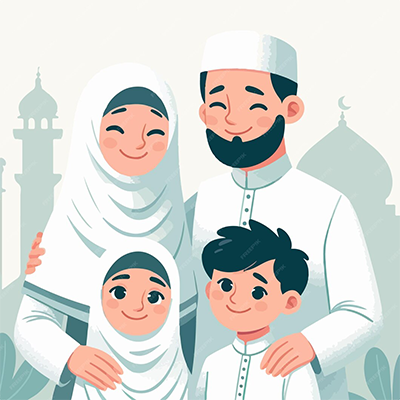
Children of Arab and Muslim communities are not far from these dangers. In fact, they are often more exposed—especially those from families with limited awareness and knowledge, and families isolated from community institutions. In recent years, dozens of them have died from adulterated drugs or alcohol, and many have ended up homeless on the streets due to addiction or gambling.Given the prevailing mindset in Western societies that prefers
talking about problems over confronting them, and sympathizing with victims
without seriously helping them, every family must deeply fear for their
children’s terrifying and unknown future, and work to shield and protect them
from this dangerous reality.
Islam’s realism in the field of education placed parents
squarely before their responsibilities, holding them accountable for their
words and sincerity, and demanding that they be role models for their
children—who view their parents’ actions as correct in all circumstances. A
smoking father not only invites his children to smoke, but to something worse.
No matter how much he speaks about the harms of smoking, his children will find
no value in his words as long as he continues this destructive habit.
The father is obligated to protect his children and wife from
all harm in this world and the next:
{O you who have believed, protect yourselves and
your families from a Fire whose fuel is people and stones, over which are
angels, harsh and severe; they do not disobey Allah in what He commands them
but do what they are commanded.} [At-Tahrim 66: 6]
One of the beauties of prophetic guidance is that it did not
merely call for avoiding the forbidden, but also for avoiding what is less
dangerous. In the well-known hadith, the Prophet ﷺ said:
“Whoever avoids doubtful matters clears himself
in regard to his religion and his honor. But whoever falls into doubtful
matters falls into the forbidden.” (Narrated
by al-Bukhari)
Islam’s philosophy does not accept treating the disease after
it spreads and intensifies. Rather, it calls on us to stay far from it and not
expose ourselves to its dangers and evils. It is a wise and great philosophy
that speaks to the mind, heart, and conscience—something no other philosophy
has achieved.
One can compare the Muslim society’s experience in banning
alcohol through a Qur’anic verse and divine command, which Muslims
immediately obeyed, with the U.S. government’s attempt to ban alcohol between
1920 and 1933. This comparison reveals the vast difference between the two
societies: one with a sincere and serious desire to eliminate a substance that
disables societal potential and kills its youth, and another that clings to
what it considers personal freedom—even if deadly. By human standards, American
society should have become more aware of alcohol’s harms after all these years
of human and scientific experience. But what was missing was a message directed
to the mind and conscience—and a heart ready to receive this divine message
with faith, submission, and surrender.
The Good Land or the Righteous Home
Creating a righteous atmosphere at home is the foundational principle for protecting children. The Prophet ﷺ emphasized many educational aspects in parents’ behavior before their children—such as honesty, trustworthiness, and integrity in private. In such an environment, one hopes for the emergence of righteous children:{As for the good land, its vegetation emerges by permission of its Lord; but that which is bad, nothing emerges but sparsely. Thus do We diversify the signs for a people who are grateful.} [Al-A‘raf 7: 58]
Prayer is,
without doubt, the greatest safeguard for children. It is the most difficult
for them, as it is a daily commitment that pulls them away from distractions,
preoccupations, and moments of rest. It requires tremendous effort from
educators and reformers until children perform it with self-driven faith. It is
no surprise that prayer is frequently mentioned and prayed for in the Qur’an:
{O my son, establish prayer, enjoin what is
right, forbid what is wrong, and be patient over what befalls you. Indeed, that
is of the matters requiring determination.}
[Luqman 31: 17]
{My Lord, make me an establisher of prayer, and
[many] from my descendants. Our Lord, accept my supplication.} [Ibrahim14: 40]
{And enjoin prayer upon your family and be
steadfast in it. We do not ask you for provision; We provide for you. And the
outcome is for righteousness.} [Taha
20: 132]
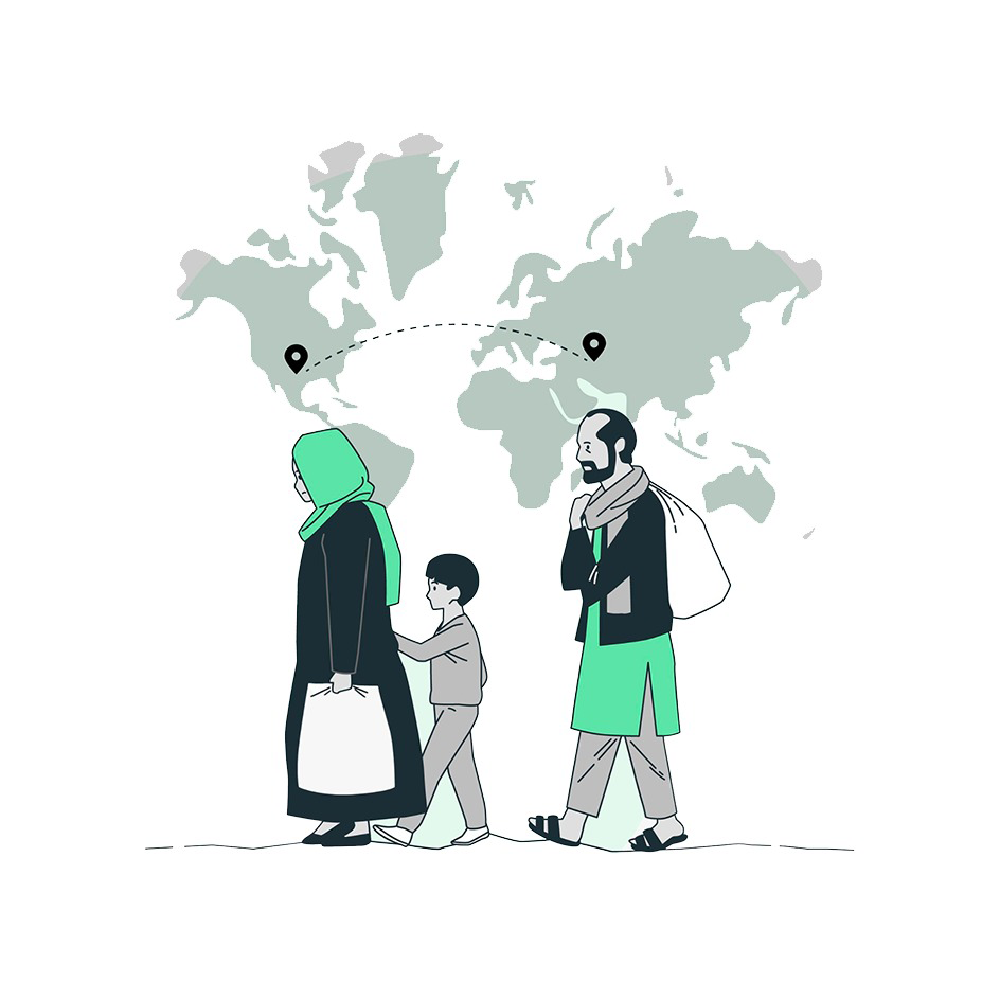
One final matter must be pointed out: the isolation experienced by many families in diaspora communities. These families do not interact with others, nor do they take their children to institutions established by the community, such as mosques and cultural centers. This leaves their children very distant from their culture, civilization, and language, making them more vulnerable to deviation and exposure to the previously mentioned prohibitions and dangers.