






Violence Begins as an Idea

.jpeg)
Can a human being kill another without ever touching him?
The short answer: yes—when violence ceases to be a mere
physical act and transforms into an ideology that destroys minds.
Academically, violence is
nothing more than the deliberate use of force—whether material or moral—to
inflict harm, be it physical injury or serious psychological damage. It is a beast
with many faces: beginning with a hidden slap at home (domestic violence),
passing through a harsh word that shatters the spirit (verbal or psychological
abuse), and culminating in its most dangerous form—intellectual violence. This
latter type fuels fanaticism, legitimizes hatred, and arms the killer with
false conviction, turning differences of opinion into grounds for annihilation.
It is the poison that assassinates the very concept of coexistence.
Intellectual Violence
In the corridors of modern history, the greatest tragedies
were not born of fleeting anger, but of seeds of extremist thought. Terrorism
that shook the world was the bitter harvest of brainwashing stories that began
with hate speech in gatherings. Such narratives show how reducing human beings
to mere “enemies” or “infidels” within an ideology grants perpetrators the
false right to kill without conscience. Intellectual violence is the operations
room where major crimes are prepared.
No religion calls for peace and justice as authentically as
Islam, which made the preservation of life one of its highest objectives. In
confronting violence and aggression, the Prophet’s
biography offers an eternal model of conflict management
without descending into destructive vengeance. The pinnacle of this approach
was seen in the Conquest of Mecca: after years of harm, exile, and
battle, the Prophet ﷺ
entered the city victorious, fully capable of settling every score, yet chose
instead to record history’s greatest act of human pardon: “Go, for you are free.”
This was not mere forgiveness, but a triumph of values over
anger, establishing the principle that true strength lies in mercy, and that
the goal is not revenge but the building of a safe and stable society.
Digital Violence and Stark Statistics
Today, the battlefield has shifted. Our phone screens have
become new arenas of violence: cyber extortion and online bullying represent
the latest and most insidious forms of aggression. Here, victims are stripped
of their dignity publicly, often driven to the brink of despair by this silent
assault.
Globally, the statistics are staggering: one in three women
worldwide experiences some form of violence. In our
Gulf and Arab region, specialized—though not fully official—reports point to a
sharp rise in cybercrime complaints involving threats and extortion,
particularly among youth in countries such as Kuwait. This confirms that
terrorism can emerge from a computer screen, threatening privacy and life
itself.
Prevention Begins Within
The prevention of violence begins from within—by mastering our
anger before it masters us. The Arab poet offers us a timeless prescription for
managing relationships and emotions, one we need more than ever today:
If you reproach your friend for
every fault, You will never find one without
blame.
It is a call for gentleness, for granting space to human
imperfection, and for wise management of our emotions as the barrier that
prevents us from becoming a source of harm to others.
Structural Violence
The study of
violence is incomplete without addressing cases where it
transcends individual behavior to become structural violence. As sociologist
Johan Galtung described, this is the harm inflicted on people by social and
political arrangements that prevent them from meeting basic needs and limit
their potential.
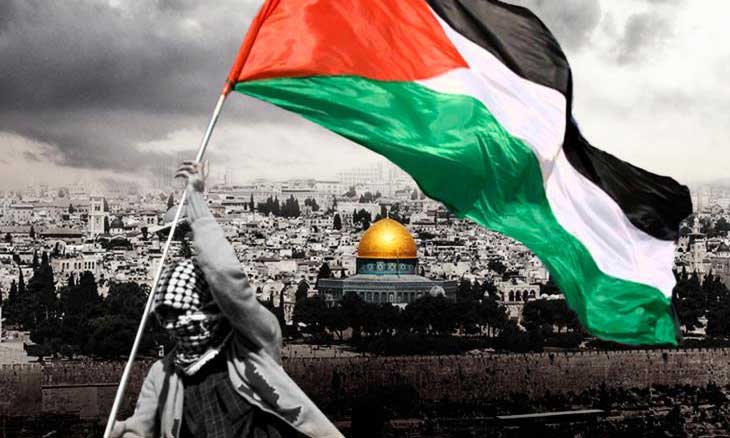
In the context of Gaza, structural violence by the occupying
power manifests in multiple forms:
- The
blockade: systematic economic and logistical violence
that deprives residents of food, medicine, and energy, leading to
long-term health and social deterioration.
- Forced
displacement: spatial and psychological violence that
destroys social fabric and sever ties to the land.
- Direct
violence through bombardment and clashes: the
most visible aspect, yet part of a wider cycle sustained by ongoing
structural oppression.
Thus, violence becomes not just an act, but a system—employing
tools of siege, policy, and military force to impose a permanent state of
weakness and despair on a population.
Violence Is a Choice
Violence is not destiny but choice. It expands and
evolves—from a radical idea to cyber extortion that devastates victims.
Combating it requires us to adopt the Prophet’s
merciful approach, to remain conscious of the dangers of
intellectual and digital violence, and above all, to tame our anger and master
our inner selves. For peace cannot be built in the world until it is first
built within the soul.