







Lessons from Prophet Yusuf
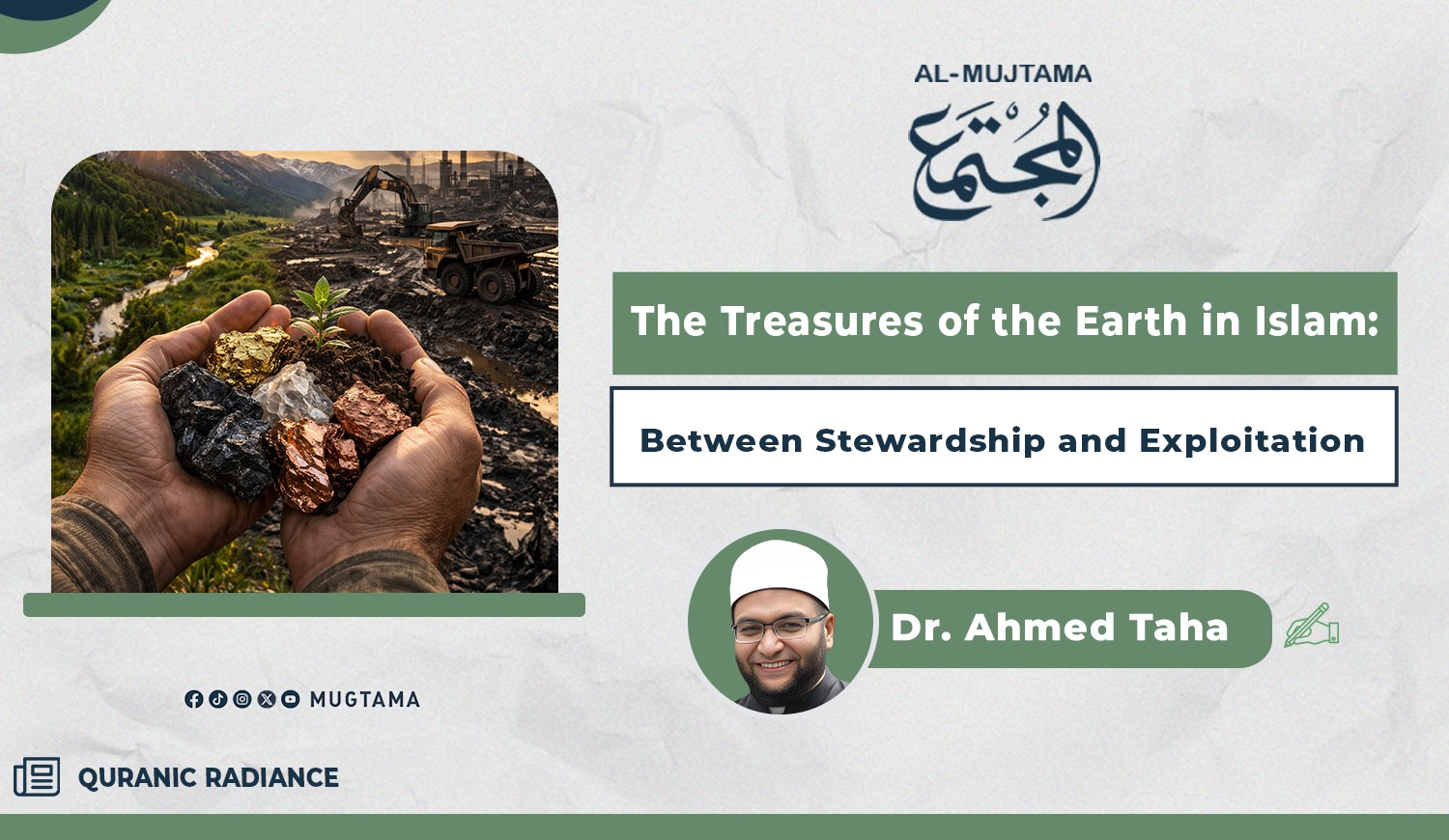
The Treasures of the Earth in Islam: Between Stewardship and Exploitation
Since I
began my daily Quranic recitation today, I have not moved past the request of
Prophet Yusuf (peace be upon him) when he met the king and spoke to him, asking
to be entrusted with the treasuries of the land, what we would today call the
ministries of finance and economic resources. This is when he said: {Put me in charge of the store-houses of the land, for I
am truly reliable and adept.} [Yusuf 12:55]
This
request prompted me to revisit the Quranic context and its miraculous sequence,
raising many reflections that emerged through careful contemplation of the
story of Yusuf (peace be upon him). I invite the reader to join me in some of
these reflections—especially as this topic is highly relevant today, given the
events and wars we are witnessing, which may soon take on a global
dimension—may Allah grant safety to our Ummah.
At their
core, these conflicts revolve—openly or secretly—around this very issue: “The
treasures of the earth between the eye of the entrusted and the eye of the
exploiter.”
The Treasures of the Earth: Between
Responsibility and Exploitation
The
treasures that Allah has granted to humanity and placed within the earth can,
in reality, be divided into two categories:
1. The Faithful Successor:
A Model of Responsible Leadership
The first
is the believing successor, who carries the responsibility of development and
understands his role in stewardship, growth, and caring for humanity through
these resources.
He
preserves them, develops them, and enhances their returns for the benefit of
society and civilization.
Here, I
understand the Prophet’s (peace be upon him) instruction to Mu`adh when sending
him to Yemen as a governor and teacher: “Teach
them that Allah has made it obligatory for them to pay the Zakat from their
property and it is to be taken from the wealthy among them and given to the
poor.” I also reflect upon his
saying: “Do not take the best of their property.”
If this
is the Islamic methodology regarding wealth entrusted
in people’s hands, then what about the vast treasures and resources placed
within their lands?
2. The Exploiter: Turning
Wealth into a Tool of Oppression
The
second is the one who exploits these treasures for personal gain, driven by
hostility, class ambitions, or political interests—dividing societies and
burdening people with hardship, poverty, and suffering.
Instead
of being a source of dignity and strength, these resources become tools of
humiliation, destruction, and dependency in the hands of those who manage them. Reality itself
speaks louder than words.
Lessons from the Story of Yusuf:
Leadership in Times of Crisis
Returning
to the reflections inspired by this noble verse, several questions arise:
- What prompted Yusuf
(peace be upon him), while unjustly imprisoned, to interpret the king’s
dream in such detail and offer practical solutions during a looming
national crisis?
- Why did he not
conceal part of this knowledge to leverage it for his personal freedom or
for leadership?
- Why did he prioritize
the welfare of the land over his personal suffering—especially when it was
not even his homeland?
- And why did he
request authority over the treasuries of the land despite not being publicly known as an economic
expert among the ruling elite?
These
questions are many—but I will attempt to answer some of them through a simple
understanding that presents a unique model of Yusuf-like stewardship thinking.
Key Principles of Yusuf’s Leadership
Model
1. Prioritizing the Nation
Over Personal Grievance
Yusuf
(peace be upon him) understood the severity of the coming crisis facing the
society in which he lived and grew. At such a moment, personal pain and
injustice become secondary—this is not the time for withdrawal or personal
vindication.
2. Offering Complete and
Honest Solutions
A true
reformer [depicted here in Yusuf (peace be upon him)] presents a complete
vision—not a partial one—driven by responsibility before Allah first, and
before people second.
3. Separating Personal Pain
from Public Responsibility
The
entrusted leader does not allow personal suffering to interfere with serving
the Ummah. There is no room for bitterness, blame, or vengeance
when the welfare of society is at stake.
4. Turning Knowledge into
Practical Action
Yusuf
(peace be upon him) demonstrated that theoretical solutions alone are
insufficient. In times of crisis, those with knowledge, expertise, and
practical ability must take the lead—transforming ideas into actionable
strategies that minimize losses and even turn them into gains.
Core Concepts in Yusuf’s Economic and
Governance Vision
From this
Yusuf-centered perspective, several key concepts emerge:
- The wealth and
resources of a nation are among its greatest existential strengths. They
must be entrusted to capable, righteous leaders—not weak exploiters or
they’ll lose it. Thauban reported God's messenger as saying, “God gathered together the earth for me and I saw
its eastern and western parts. My people will attain to rule over it so
far as it was gathered together for me. I have also been given the two
treasures, viz. gold and silver.”
- Wise leadership is
one that truly fears for its people and seeks their welfare. It does not
imprison reformers but elevates them, benefits from them, and gives them
space to act.
- Effective solutions
always emerge from within the Ummah—from its people, its environment, and its lived
reality. They are the most deserving of managing their own resources in
times of ease and hardship alike.
- Seeking external
intervention often leads to exploitation of resources. Such external
actors do not reform—they consume, manipulate, and appear only when there
are gains to divide.
- True leadership
proves its worth through action—by prioritizing its people, safeguarding
its resources, and implementing real, effective solutions on the ground.
- Finally, Yusuf (peace
be upon him) would not have achieved what he did without collective
cooperation, unified effort, and deep understanding of the society he
served. Through this, he was able to lift the nation from crisis, restore
its strength, and transform it—within years—into a secure source of
sustenance for others, a center of stability and provision for surrounding
regions.
For Further Reading:
- Global Economic Dominance and the Prospects of Shifting Power Dynamics
- From Caracas to Wall Street: Is Gold Redrawing the Map of Global Power?
- 7 Foundations for Building an Islamic Mind
-------------------------------------------------------------