








Our Last Warrior in Al-Andalus
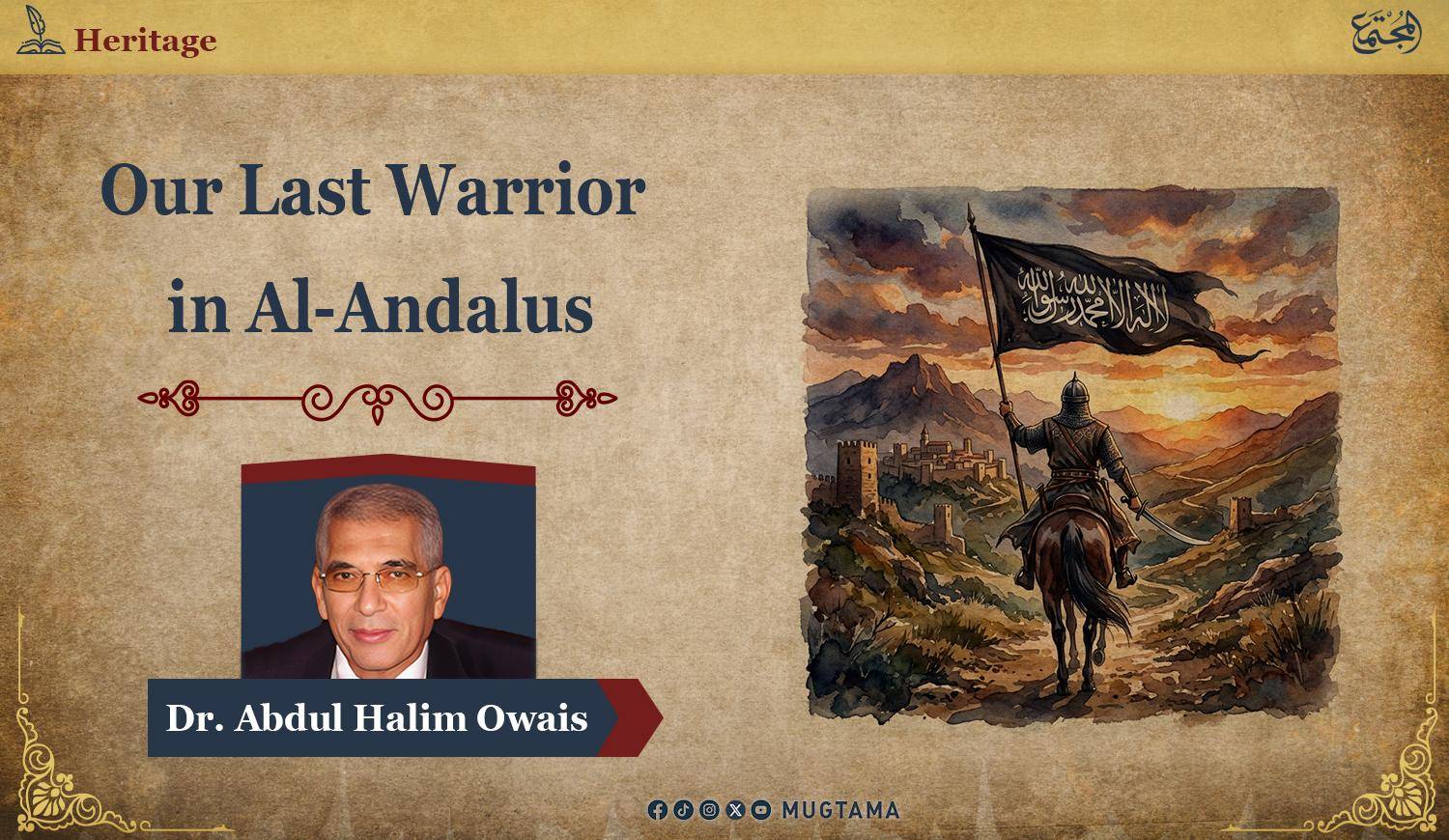
The survival of the Islamic Kingdom of Granada in Al-Andalus for two centuries was nothing short
of a miracle in Islamic history. This Islamic enclave, floating atop a
tempestuous sea of Christendom brimming with historic animosity and deceit,
could never have endured with such renowned resilience had that resilience not
been rooted in Islamic doctrine and dynamic vitality. Without this faith, such
an isolated enclave could never have held out alone in Al-Andalus, two
centuries after all other Muslim cities and strongholds had fallen.
It was the law of 'challenge
and response' that kept Granada alive, vibrant with Islamic thought and
cultural refinement throughout those two centuries. The people of Granada were
acutely aware of being encircled on all sides by an enemy waiting for the right
moment to devour them, knowing full well there was no hope of importing victory
from the wider Muslim world, and that they had to rely solely on themselves.
This very conviction became
their greatest impetus for perpetual readiness, rallying behind the banner of
Jihad, and clinging steadfastly to their Islamic faith.
Granada thus succeeded in
standing until 1492 CE (897 AH) as the mistress of Islamic Al-Andalus, a beacon
of learning, and the last enduring torch of Islamic civilization in Europe.
Yet the years leading up to
the fall witnessed a decisive shift in Andalusian affairs. On the Christian
front, a major union began to take shape between the two most formidable
Christian realms hostile to Islam: the kingdoms of Castile and Aragon. The two
merged into an alliance sealed and crowned by the marriage of Queen Isabella of
Castile to King Ferdinand of Aragon.
On their wedding night, the
dream haunting the Catholic Monarchs was to march into Granada, spend their
honeymoon within the halls of the Alhambra, and raise the cross atop its
watchtower—the greatest of its ramparts. On the Islamic front, however, deep
fractures had ruptured the Kingdom of Granada, particularly among the members
of the ruling dynasty. The already diminished realm was partitioned into two
rival factions, each menacing the other and lying in wait.
One faction held sway over
the grand capital, Granada, ruled by Abu Abdallah Muhammad ibn Ali Abu al-Hasan
al-Nasri (the last monarch of Granada and Al-Andalus); the other controlled
Guadix and its dependencies, governed by his uncle, Abu Abdallah Muhammad,
known as al-Zaghal.
In 894 AH, the Catholic
Monarchs launched their assault on Guadix, successfully seizing it along with
Almería, Baza, and other strongholds, until they stood at the very gates of the
city of Granada.
They dispatched an envoy to
Sultan Abu Abdallah al-Nasri, demanding the surrender of the radiant
palace-city of the Alhambra, offering to spare his life and allow him to remain
in Granada under their royal protection. As is so often the fate of monarchs
swept away by the inexorable turn of history's tides, he was a weak ruler who
had failed to reckon with such a day. Yet, recognizing that yielding to this
demand would spell the absolute surrender of Islam’s final bastion in
Al-Andalus, he refused. A war between the Muslims and the Christians erupted
and raged for two full years, spearheaded and fiercely galvanized by a Muslim
knight of the kind that appears like a final flash of brilliance just before sunset:
Musa ibn Abi al-Ghassan.
Thanks to this knight and
those of his caliber, Granada held out against the Catholic Monarchs for two
full years, withstanding seven months of grueling siege. Yet, despite such
valor, the outcome of the struggle was never in doubt. Abu Abdallah had failed
to defend his realm as true men do, and the bitter dynastic rifts and internal
discord tearing the kingdom apart stood in stark contrast to the absolute
solidarity on the Christian front. Compounding these wounds was the grim
harvest of a long history of disorientation, tribal parochialism, and
infighting divorced from Islamic principles—a tragic legacy that Granada had
endured and inherited from the fallen Muslim kingdoms of Spain.
All these forces converged to
extinguish the last remaining candle of Islam in Al-Andalus.
And as Abu Abdallah—this
final king of Granada—boarded the vessel setting sail away from Islamic
Granada, the last piece of European soil to breathe an Islamic spirit after
eight centuries lived beneath the canopy of Islam, he wept over his lost
dominion and the squandered heritage of Islam amidst this violently dramatic
scene. It was then that he received from his mother the reprimand etched
forever in history: 'Weep like a woman for a kingdom you could not defend
like a man.'
In truth, with those words his mother was dealing a stinging rebuke not only
to him, but to countless rulers throughout Islamic history who wept like women
for domains they failed to protect as men. (1)
