







Kashmir in a Week


During the past week, Indian illegally occupied Jammu and Kashmir saw many important developments in its security, politics, and human rights issues. These events show that India continues its strict security approach in the region. At the same time, concerns are growing about religious freedom, digital privacy, and the safety of Kashmiris living abroad.
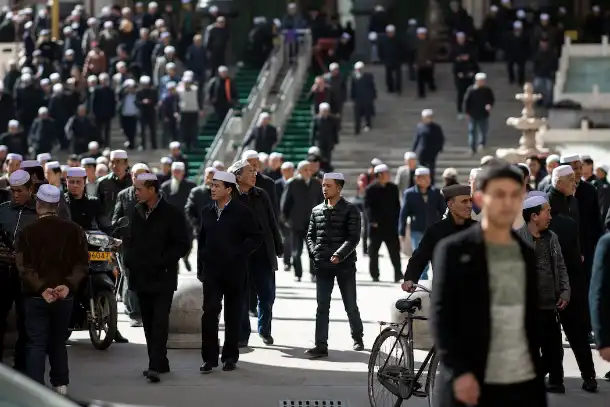
Police Monitoring of Mosques Raises Religious Concerns
Police in Jammu
and Kashmir began collecting detailed information about mosques in the
Kashmir Valley. This details about mosque structures, finances, and personal
information of those who are managing them. Religious and political leaders
strongly criticized this move, saying it interferes with freedom of religion.
The Muttahida Majlis-e-Ulama (MMU) called the action intrusive and worrying,
and demanded that it should be stopped immediately.
Heavy Security Ahead of India’s Republic Day
Indian
forces increased search and patrol operations in the Chenab Valley and
along the Line of Control, citing preparations for India’s Republic Day. Areas
such as Doda, Kishtwar, Ramban, Rajouri, and Poonch were affected. Additional
troops and night patrols disrupted daily life and created fear among local
residents, raising concerns about continued militarization.
Search Operations and Clashes
Security
forces launched cordon-and-search operations (CASO) in forest and
mountainous areas of Kathua. Reports said gunfire was heard, and more forces
were sent to the area. Joint search operations by police, army, and
paramilitary forces were also carried out after reports of suspicious movement.
Dismissal of Kashmiri Government Employees
Indian
authorities dismissed five newly appointed Kashmiri government employees from
sectors such as education, health, forestry, and public services. Since the
removal of Kashmir’s special status in 2019, hundreds of employees have been
suspended or dismissed. Political groups say this is part of a systematic and
discriminatory policy.
Warning Against Mass Digital Surveillance
India’s Internet Freedom Foundation warned that proposed smartphone
security rules could allow large-scale government surveillance and violate the
constitutional right to privacy. The proposals include access to source codes,
device data storage, and government approval for security updates, which
experts say could threaten user safety.
Key Political and Legal Developments
Detained Kashmiri leader Shabir Ahmad Shah
told India’s Supreme Court that his speeches reflected the aspirations of the
Kashmiri people and did not promote violence. Judges questioned his continued
detention for over six years. Meanwhile, a Delhi court convicted Kashmiri
leader Asia Andrabi under anti-terror laws, with sentencing to be announced
later.
Calls for International Intervention
The All Parties Hurriyat Conference urged the United Nations and
international human rights groups to help secure the release of more than 3,000
Kashmiri political prisoners held in Indian jails. The group warned about poor
health and living conditions of detainees. Preparations were also discussed to
observe January 26 as a “Black Day” to highlight ongoing human rights
violations.
Kashmiri Students Affected by Iran Crisis
Due to rising unrest in Iran, the Jammu and Kashmir administration
appointed a special officer to coordinate the safety of Kashmiri students
there. Some groups of students have returned to India, while leaders such as
Mehbooba Mufti called for urgent action to ensure the safe return of all
remaining students.
Debate Over Islamic Heritage and Education
Hindutva groups demanded the cancellation of a symbolic Mughal-era
ceremony linked to Emperor Shah Jahan at the Taj Mahal, raising fears of
attacks on Islamic heritage. In Kashmir, a medical college was closed after
protests against the high number of Muslim students admitted, sparking debate
over discrimination and communal pressure.
Environmental and Tourism Issues
A forest fire near Srinagar continued for the sixth day, with
firefighting efforts hindered by rough terrain. At the same time, heavy
snowfall in higher areas attracted tourists but caused traffic jams and
logistical problems, highlighting weak infrastructure and emergency
preparedness.
High-Level Security Reviews
Senior Indian security official Govind Mohan held an important meeting
with Jammu and Kashmir’s Lieutenant Governor Manoj Sinha to review security
arrangements ahead of Republic Day. The meeting focused on coordination between
the army and civil authorities to prevent any security threats.
Army Chief Reviews Ground Situation
Lieutenant General Pratik Sharma, head of the Indian Army’s Northern
Command, visited several areas of Kashmir to assess the security situation. He
stressed the need for better coordination between agencies and higher military
readiness.
Water Crisis Deepens
Local reports warned that Kashmir’s water crisis is becoming a
“man-made disaster,” caused by poor planning, weak infrastructure management,
and the growing impact of climate change. The lack of long-term investment has
made life harder for residents.
Rising UAPA Arrests in Jammu and
Kashmir Raise Human Rights Concerns
Official data shows that Jammu and Kashmir records the highest number
of arrests in India under the Unlawful Activities (Prevention) Act (UAPA), while
conviction rates remain extremely low. Human rights organisations have warned
that security laws are being misused against civilians.
Key
Figures (2019–2023)
●
3,662 arrests under UAPA in
Jammu and Kashmir
●
Only 23
convictions, a conviction rate of 0.62%
Data
for 2023
●
1,206 arrests
●
Only 10
convictions (0.8%)
Sharp
Rise After 2019
Arrests increased significantly after the revocation of Jammu and
Kashmir’s special constitutional status in August 2019:
●
2019: 227 arrests
●
2020: 346
●
2021: 645
●
2022: 1,238
●
2023: 1,206
Almost
No Convictions
●
No convictions in
2019 and 2021
●
2 convictions in
2020
●
11 in 2022
●
10 in 2023
Legal
and Human Rights Views
Legal experts and rights activists argue that arrest itself has become
a form of punishment, with many people detained for long periods without
sufficient evidence or trial. Journalists, political opponents, activists, and
young people are frequently targeted.
The UAPA is often used alongside the Public Safety Act (PSA), which
allows detention without trial. Rights groups say this combination has led to
shrinking civil liberties and increased human rights violations in Kashmir.
Pro-Iran Protests in Kashmir
Several areas of the Kashmir Valley witnessed peaceful
demonstrations in support of Iran, reflecting regional geopolitical
tensions.
Bijapur Operation in Chhattisgarh
On Saturday, 17 January 2026, Indian security forces conducted
an anti-Maoist operation in forested areas of Bijapur district, Chhattisgarh.
Joint forces included:
●
CoBRA unit of
CRPF
●
Special Task
Force (STF)
●
District Reserve
Guard (DRG)
Casualties and Seizures
●
Four people
killed, including Dilip Vidja, described by authorities as a senior
Maoist leader
●
Weapons recovered
included an AK-47 rifle and a .303 rifle
●
Search operations
are ongoing
Conflicting
Narratives
While authorities say the operation is part of a wider campaign to
eliminate Maoist insurgency by 31 March 2026, rights groups and local activists
allege the incident may have been an extrajudicial killing or a staged
encounter, claims denied by the government.
Eight Indian Soldiers Injured in
Attack During Security Operation in Kishtwar
At least eight Indian soldiers, including a Junior Commissioned
Officer (JCO), were injured during an attack on security forces amid a
cordon-and-search operation in the Sonar area of the Chatroo sector in Kishtwar
district, north Jammu and Kashmir.
According to security officials, the operation—known as “Operation
Trashi”—turned into a gunfight during the first contact with armed militants.
The attackers allegedly threw a grenade at the security team, injuring most of
the soldiers with shrapnel.
Details
of the Encounter
The operation began on Sunday, 18 January, in Sonar village near the
Mandral–Singpora axis. It was suspended late at night due to difficult terrain
and poor visibility. The search resumed on Monday morning with additional
reinforcements.
The injured soldiers were shifted to hospitals for treatment.
Officials confirmed that one of the injured is a JCO.
Reinforcements
and Aerial Support
Indian forces deployed additional units, including:
●
Indian Army
●
Central Reserve
Police Force (CRPF)
●
Special
Operations Group (SOG)
Army helicopters were used for aerial surveillance, supply transport,
and operational support in mountainous areas. Drones and sniffer dogs were also
deployed, and a tight security cordon was established to prevent militants from
escaping.
Current
Situation
No fresh exchanges of fire have been reported since the initial
encounter. However, search and combing operations are ongoing to locate the
militants hiding in higher reaches and dense forests.
Security agencies estimate that two to three militants are involved
and believe they belong to the Jaish-e-Mohammed (JeM) group.
Security
Context
This incident marks the third armed encounter in the Jammu region this
year, following earlier clashes in the Kahog and Nagrota forests of Kathua
district. It comes amid heightened security measures ahead of India’s Republic
Day on 26 January, along with reports of renewed infiltration attempts.
The Indian Army stated that its forces displayed high preparedness and professionalism despite harsh weather and difficult terrain, and confirmed that operations will continue until the militant group is fully neutralised.