





Iraq Tearing Conspiracies3 (3–5)
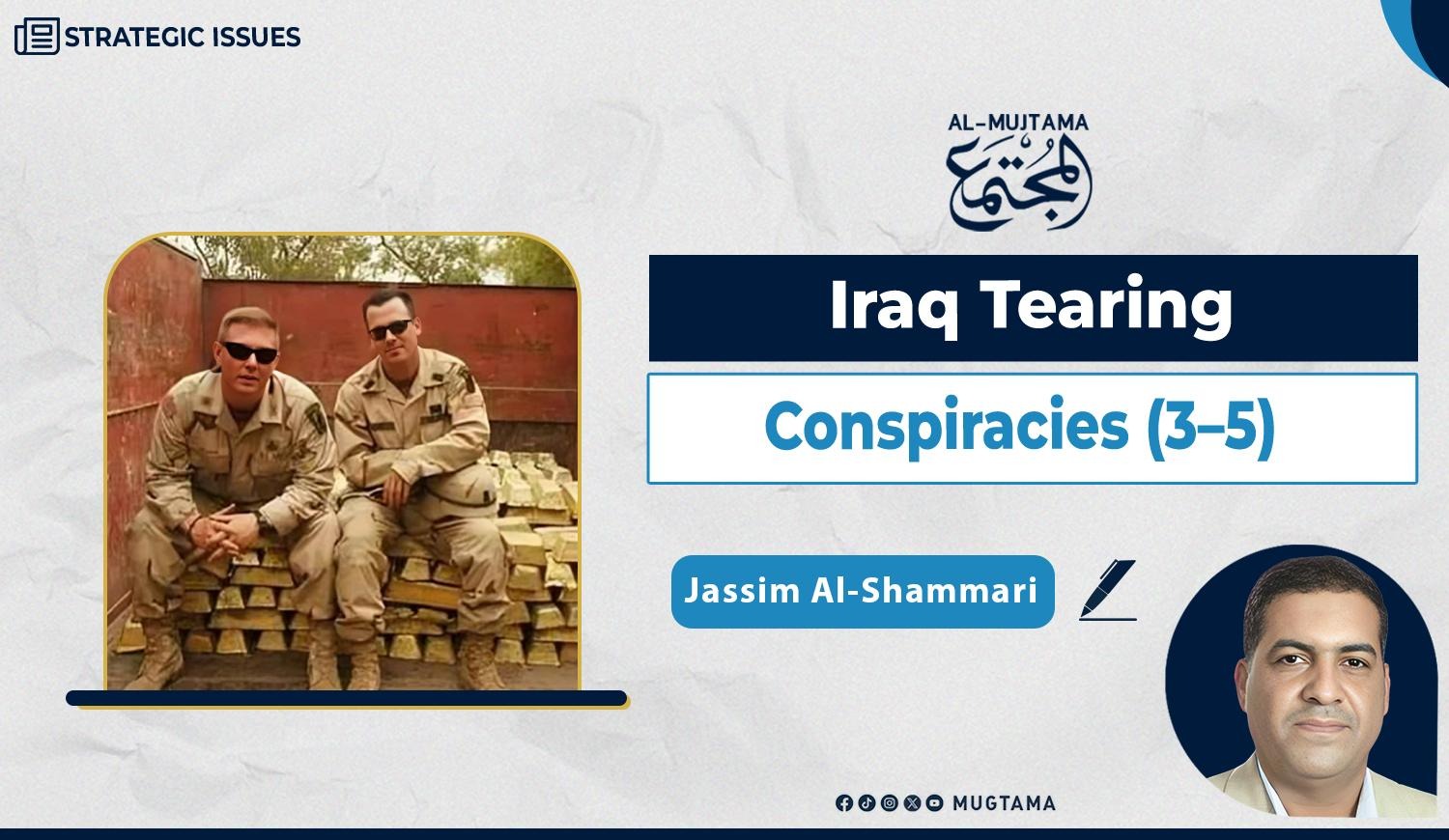
Continuing from the previous two installments of the article on projects to tear Iraq apart, and further describing the dilapidated state of Iraq following the bombing of the two shrines in Samarra in February 2006, we observe that 2006 was one of the darkest years in Iraq’s history, no less bleak than the years 2014 and 2017, among others.
We will attempt to review the remaining projects that
contributed to tearing Iraq apart, albeit briefly.
6. Tragic Incidents Spanning Several
Years
Following the Samarra bombings, militias continued to tamper
with the nation’s resources and the people’s interests. In this context, the
British medical journal The Lancet stated in a study published at the
end of 2006 that 655,000 Iraqis had been killed since the beginning of the
American invasion on March 19, 2003, up until November 11, 2006.
At the end of February 2007, an important study on the
destructive American war in Iraq was published, prepared by American professor
Joseph Stiglitz of Columbia University, in which he addressed the scale of
human and economic losses on both the American and Iraqi sides.
Stiglitz stated that the number of Iraqi fatalities had
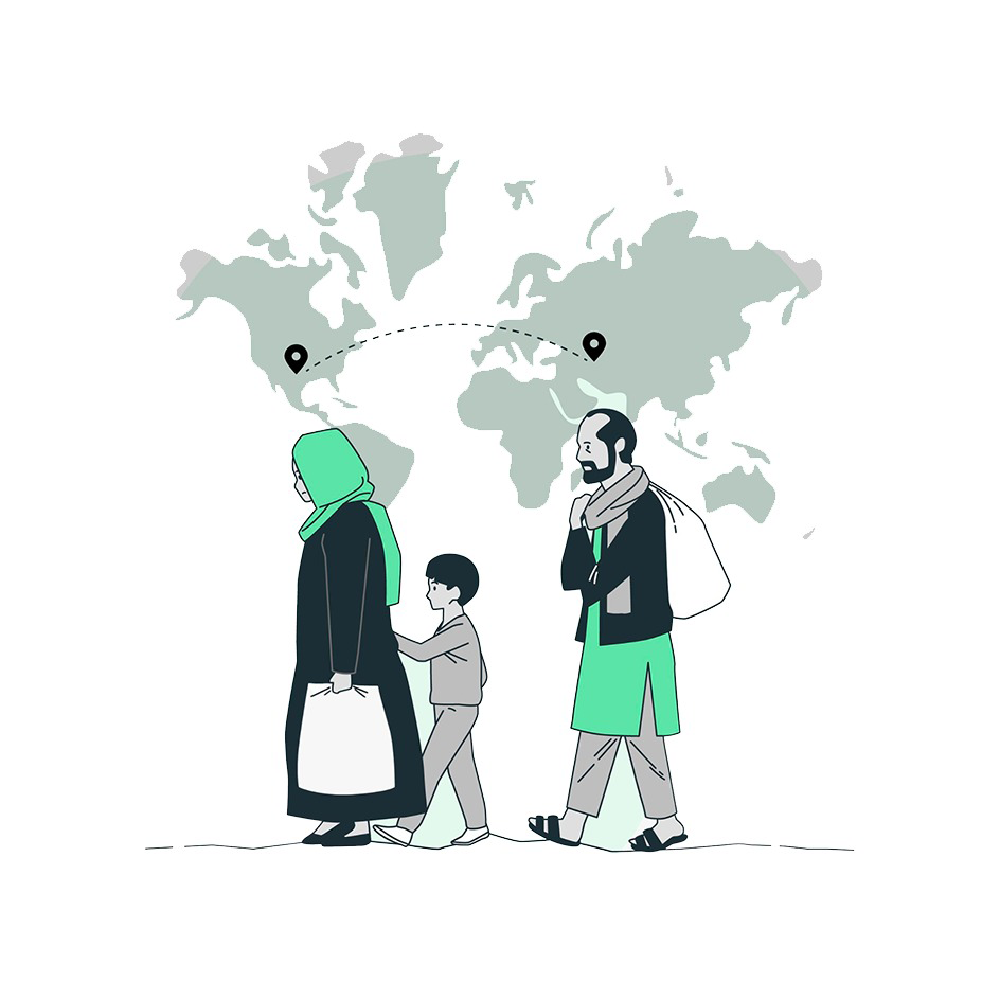
reached more than 700,000 by the end of 2006, while the number of refugees
exceeded 3.8 million.
7. Fighting Militias and Its
Repercussions
With devastation growing across the country, the American
administration attempted to impose security by implementing the troop surge
plan (The Surge), announced by U.S. President George W. Bush at the beginning
of 2007, to confront the severe security deterioration and sectarian
lawlessness witnessed in the country after the Samarra bombings. To this end,
Washington sent massive military reinforcements, amounting to approximately
20,000 additional troops, to control the security situation in the country.
At that time, the Sahwa (Awakening) forces emerged through the
formation and support of "Awakening Councils" in Anbar and other
regions, with the participation of tribes in the fight against Al-Qaeda.
In March 2008, forces of Nouri Al-Maliki’s government launched
a broad military operation against the Mahdi Army, led by Muqtada Al-Sadr, in
the city of Basra and other southern governorates, through which the government
imposed its control and worked to disarm certain militias.
Continuing the sectarian approach and security chaos, an
Amnesty International report published on April 29, 2008, stated that “2.770
million citizens were internally displaced within the country, while
approximately 3 million emigrated abroad, and the number of emigrating Iraqi
doctors reached around 20,000, representing one-third of Iraq’s doctors.”
In a statement by the commander of U.S. detention facilities
in Iraq, Douglas Stone, during an interview with the American news network CNN
on May 5, 2008, he said: “There were 26,000 detainees, and today we have 23,500
detainees, including 525 juveniles under the age of 18.”
The Iraqi Organization for Follow-up and Monitoring confirmed
on May 9, 2008, that “the rate of torture in Iraqi detention centers reached
100%,” distributing its findings in the following order:
a. All detainees were subjected to one or several forms of
torture.
b. 87% of them do not know the reason for their arrest.
c. Their detention periods ranged between 3 months and 4
years.
d. 81% of them did not receive any visits from their relatives
or families.
On February 1, 2009, the American anti-war website AlterNet
published a report stating that “Bush’s war on Iraq resulted in the death of
one million people and the displacement of approximately 4.5 million
individuals, in addition to the existence of nearly two million widows and 5
million orphans.”
Despite the relative security improvement after mid-2009, the
end of the year—specifically in October and November—witnessed massive
terrorist bombings that shook sensitive government institutions in Baghdad,
such as the bombings of the Ministries of Justice and Finance, leaving hundreds
dead and wounded.
8. Pivotal Political Crises
Parliamentary elections were held in March 2010, witnessing
competition between the State of Law Coalition led by Nouri Al-Maliki and the
Iraqiya Coalition led by Ayad Allawi, which secured first place in terms of
seats by a slight margin. Nevertheless, Allawi did not assume the premiership,
and Al-Maliki returned to head the government under political arrangements that
sparked widespread controversy.
The year 2011 marked the beginning of a major political crisis
represented by the case of Vice President Tariq Al-Hashimi, just a few days
after the nominal withdrawal of American occupation forces, when the Iraqi
judiciary issued arrest warrants against Al-Hashimi on charges related to
“terrorism”—igniting a severe political crisis with a sectarian orientation
whose repercussions have not ended to this day.
During 2012, political tension worsened, and bombings and
arbitrary arrests returned. These conditions led to the emergence of the “Sunni
Popular Movement” in six governorates at the end of 2012, continuing through
2013 before ending with its forcible dispersal in the northern governorate of
Kirkuk and then western Anbar, among others, at the end of 2013, leaving 200
martyrs and thousands wounded.
In the same year, Al-Qaeda carried out a massive attack on Abu
Ghraib prison, west of Baghdad, on the night of July 21, 2013, lasting until
the early hours of dawn on July 22, 2013, resulting in the escape of hundreds
of dangerous prisoners.
9. Collapse of Security Forces and
the Loss of Half of Iraq
In April 2013, Abu Bakr Al-Baghdadi announced a new
organization, represented by merging the “Islamic State of Iraq” in Iraq with
its branch in Syria, formerly represented by “Jabhat Al-Nusra,” so that the
official name of the new organization became the “Islamic State in Iraq and the
Levant” (ISIS).
With this, a new phase of conflict began between ISIS and the
government in Baghdad through sporadic operations across numerous governorates.
The biggest event occurred at the beginning of 2014, represented by the fall of
the western city of Fallujah and ISIS’s control over it, which marked the
actual beginning of the collapse of the security apparatus in western Iraq.
During this phase, legislative elections were held, with the
exception of Fallujah and the city of Al-Karmah. The period extending between
April and August 2014 also witnessed the end of Al-Maliki’s rule.
Although Al-Maliki obtained a good percentage of the votes, he
was unable to form the government amid political and constitutional objections
to renewing his term. Despite his insistence on remaining in office, amid
internal and external political and security pressures, Haider Al-Abadi was
nominated and tasked with forming the new government in August 2014.
On June 10, 2014, the largest military collapse occurred: the
northern city of Mosul, the capital of Nineveh Governorate and Iraq’s
second-largest city, fell into the grip of ISIS following a sudden withdrawal
of the army and security forces, followed by the fall of vast parts of Saladin,
Kirkuk, and Diyala governorates.
The Nineveh Plains and Sinjar District witnessed horrific massacres committed by ISIS elements, leading to a massive and tragic wave of displacement of hundreds of thousands of minority members—such as Christians, Shabaks, and Yazidis—accompanied by grave humanitarian violations.