





Grandmother Maryam Embraces 150 Orphans in Gaza
The massacre
that wiped out the Abu Shari'a and Al-Hasabiya families in the Gaza Strip was
more than a tragedy that claimed the lives of over 310 people. It left an
unimaginable wound in the heart of a grandmother named Maryam, who lost her
children and grandchildren beneath the rubble. The only family member she had
left was her little granddaughter, also named Maryam, who was pulled from the
debris with severe head injuries.
The bombardment
was relentless. Missile after missile struck the densely populated area, filled
with women and children. Explosions shook the ground and terrified those caught
in their path, turning the neighborhood into a scene of carnage that reflected
yet another chapter in Israel’s genocidal war on Gaza.
Amid the rubble
and destruction, rescuers found little Maryam still alive, despite her critical
injuries. Her grandmother, who shared her name, clung to a fragile hope that
the child would survive, even as she understood how serious her condition was.
Three
Days Between Hope and Loss
Grandmother
Maryam watched over her granddaughter with eyes full of hope, holding on to
every remaining breath as though the little girl represented her last chance to
reclaim something of the family she had lost.
She promised to
raise her, surround her with love and tenderness, and make up for the absence
of her parents.
Whenever the
little girl regained consciousness between bouts of pain, she would ask for her
mother and father, unaware that they had been killed. Her grandmother tried to
comfort her with whatever strength and affection she had left, offering her the
sense of security that the massacre had stolen from her.
She dreamed of
watching her granddaughter grow up, receive an education, and become a doctor,
just as she had wished for her. She wanted to be both mother and father to the
child, as well as her grandmother.
But that hope
did not last. Just three days after the massacre, little Maryam’s heart stopped
beating. She joined her parents and the rest of her family, leaving her
grandmother to face another devastating loss, no less painful than the first.
Dar
Al-Rahma: From Personal Grief to Caring for 150 Orphans
The death of
little Maryam left a deep wound in her grandmother’s heart. She had seen the
child as a source of comfort amid her suffering and a glimmer of hope that
might restore something of her lost family. But the little girl was gone too,
leaving her grandmother with a grief beyond words and not even the last thread
of hope she had clung to.
Yet, despite
the weight of her loss, Maryam's capacity to love and care for others did not
fade. She decided to take in around 150 orphaned children from her extended
family, particularly those who had lost both their fathers and mothers. She
resolved to provide them with as much care and attention as she could, hoping
to offer them some of the warmth of family life that the bombardment had taken
away.
Driven by this
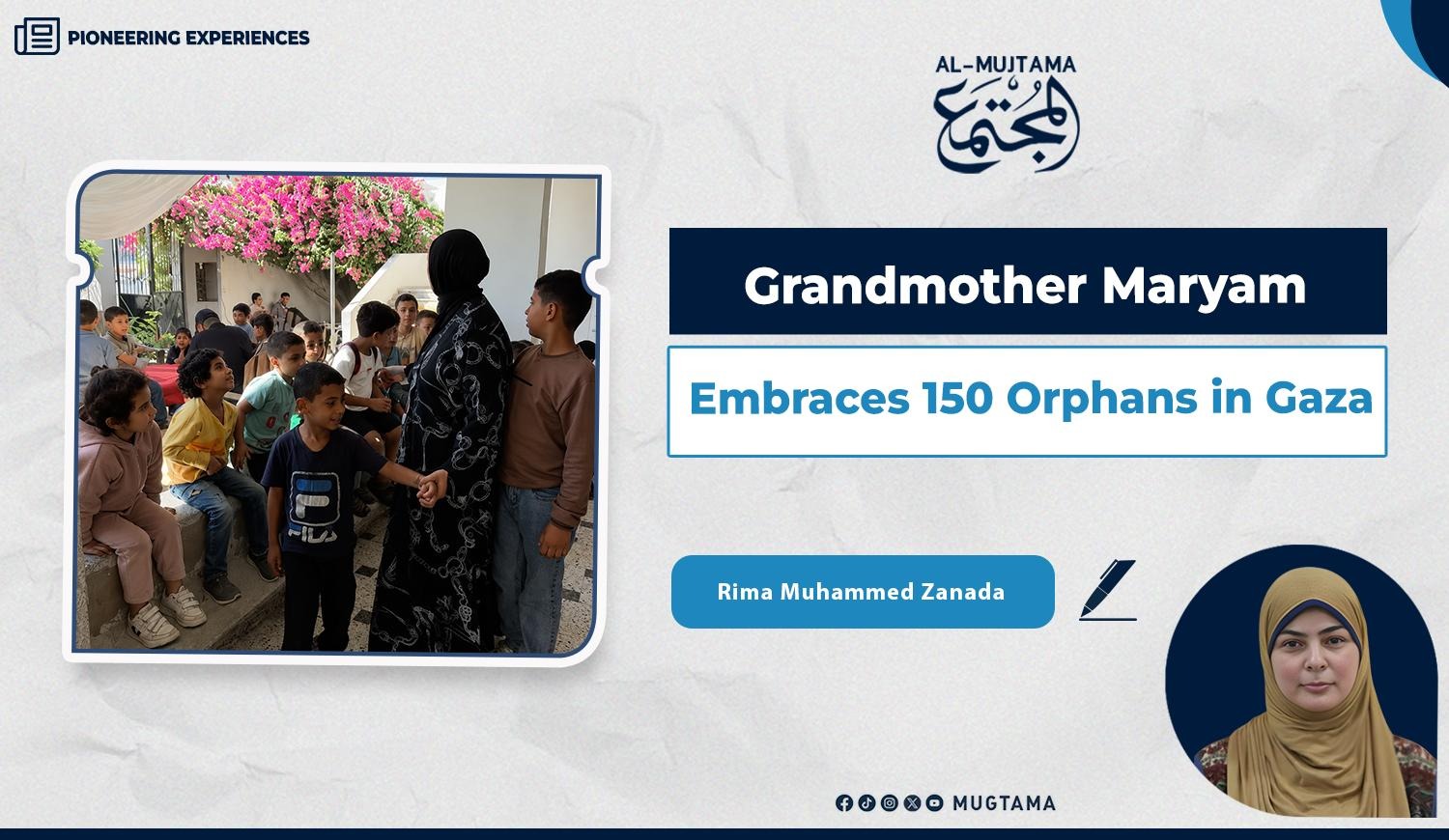
determination, and placing her trust in Allah, Maryam established Dar Al-Rahma
for Orphans through individual efforts. She rented a suitable building with one
floor for boys and another for girls, creating a safe space where the children
could receive care, attention, and affection within the limits of the resources
available to her.
Maryam sees
these children as an extension of the sons, daughters, and grandchildren she
lost. Whenever she embraces one of them, she feels closer to her departed loved
ones. In some children, she even recognizes the resemblance of her lost family
members, not only in their features but also in their behavior and little
everyday details.
The children's
love, in turn, gives her a sense of unexpected compensation for her loss and
helps her slowly mend some of the wounds of her grief.
And so,
Grandmother Maryam’s story has evolved from one of unimaginable tragedy, in
which she lost her entire family and her little granddaughter, into a story of
motherhood embracing 150 orphans. Rather than surrendering to the cruelty of
war, she has chosen to confront it with even greater love and compassion.
-------------------------------------------------------------
