









Digital Seclusion: A Teen, Their Phone, and Satan as a Third Company
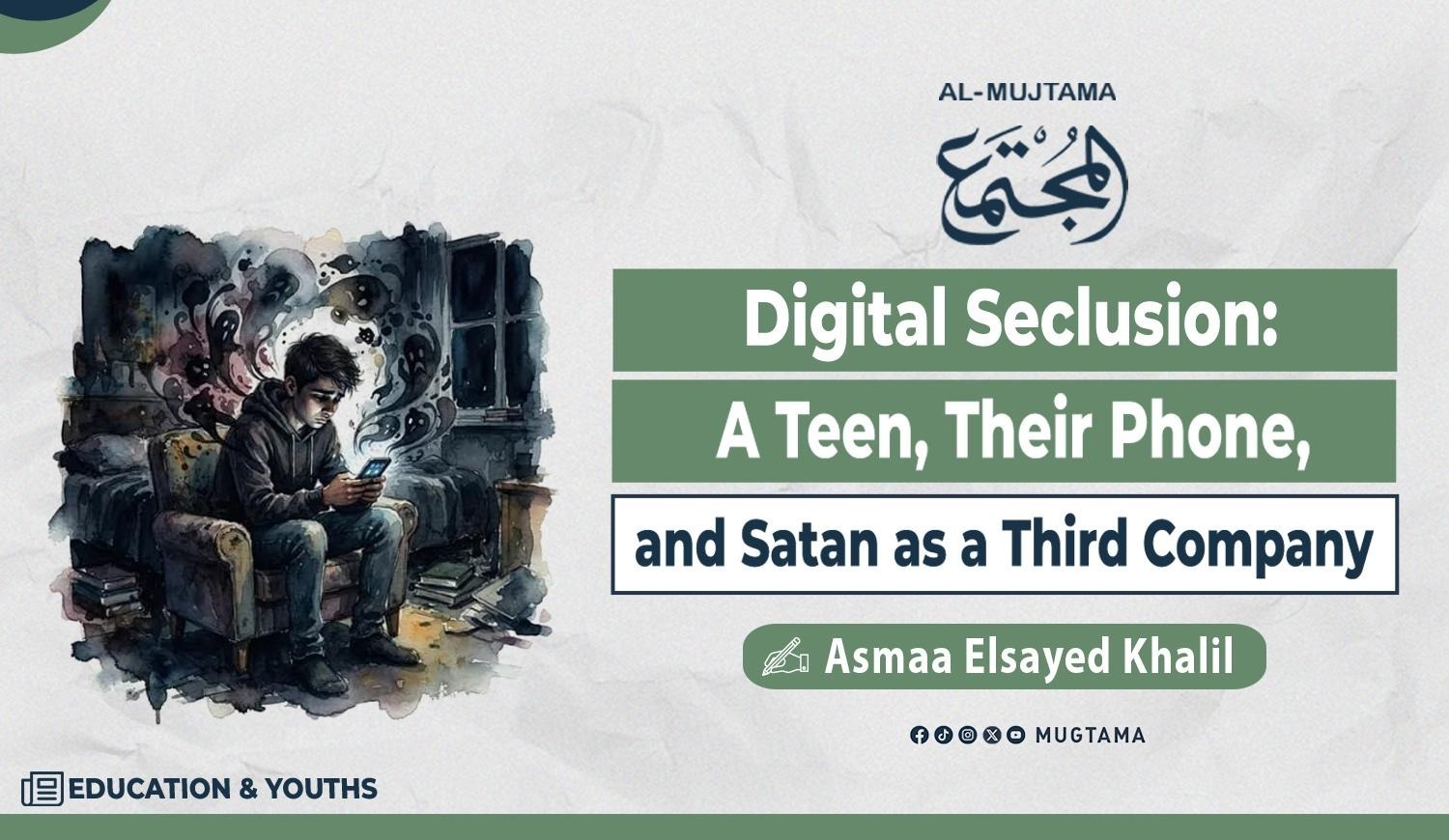
Adolescence is
not merely a biological transition from childhood to adulthood. It is a complex
journey of reshaping one’s identity, during which teenagers reassess the ideas
and values they were raised with as they seek independence and strive to
establish their sense of self. When the vulnerability of this stage meets a
digital world that constantly competes for their attention and fuels their
curiosity, we need to ask: Is a smartphone simply a window through which
teenagers look out at the world, or can it sometimes become a closed-off space
where they are immersed in digital content, with all its benefits and
drawbacks?
The problem is
not the device itself, but the unrestricted privacy we give teenagers with that
device, without guidance or supervision. One father says he was comfortable
with his son spending time alone in his room with his phone, assuming he was
studying or watching a few videos. But after some time, he began noticing
unusual changes: a lack of concentration, declining academic performance,
withdrawal, and uncharacteristic irritability. He eventually discovered that
his son had begun living an entire life through his phone, with numerous online
friends, secret conversations, pornographic videos, and disturbing content that
he could barely make sense of.
A
Gateway Without a Gatekeeper
One mother says
she believed her daughter used her phone mainly for schoolwork and keeping in
touch with her friends. It never occurred to her that a stranger might exploit
her daughter’s innocence to obtain personal information and private photos, and
then use them to blackmail her. It began with seemingly innocent compliments
that gradually turned into psychological pressure and threats before the family
eventually sought legal help.
Unfortunately,
the online environment can facilitate this gradual progression, often without
teenagers fully realizing what is happening. Harmful behavior can begin with
small acts driven by curiosity, then become familiar and normalized. As a false
sense of privacy grows, awareness of accountability may weaken, boundaries may
gradually disappear, and turning back can become more difficult than we
imagine. The problem is not limited to explicit or harmful content. It also
includes accounts that promote violence and extremism, fraud, gambling, and
other forms of criminal behavior that can find fertile ground in the digital
environment.
Psychological
and Behavioral Effects
The effects of
digital isolation do not end when the phone screen is turned off. They often
begin afterward. The many hours a teenager spends in the virtual world can
gradually affect their emotional well-being and their relationships with
others. Excessive smartphone use is therefore no longer simply a technological
issue. It has become an educational, psychological, and health concern that
deserves the attention of families and society.
One of the most
noticeable effects is social isolation. A teenager who spends most of their
time in front of a screen may gradually lose opportunities to develop
face-to-face communication skills, while their participation in family and
social activities declines.
Sleep
disruption is another significant concern. Staying up late on a phone and
prolonged exposure to the screen can affect sleep quality, which in turn may
lead to poor concentration, fatigue, and declining academic performance.
Psychologically,
teenagers may also develop feelings of inadequacy or dissatisfaction as a
result of comparing themselves with what others present on social media. They
see carefully curated images of other people’s lives, and because they may not
yet have the maturity to recognize this, they can fail to understand that much
of what they see does not reflect the full reality.
A Lack
of Supervision or a Lack of Communication?
One mother
noticed that her daughter no longer told her about her day or shared her joys
and problems as she once had. The mother assumed it was simply part of
adolescence. She later discovered that the phone had become her daughter’s
primary confidant, and that she had found in the virtual world the attention
she felt was missing from her real life.
Teenagers are
looking for a space where they feel understood and accepted. When they find
their parents constantly busy and their siblings absorbed in their own worlds,
they may look for that sense of connection outside the family, and they will
not always choose the right place to find it.
The mistake
some families make is treating the phone itself as the problem. They respond by
confiscating the device and imposing punishment, while leaving the more
important question unanswered: Why has the phone become so attractive? Why
would a child rather sit with a screen than spend time with their family?
The greatest
competitor to parents is not the phone itself, but the emptiness that allows
the phone to take over a teenager’s time. This does not mean leaving children
without supervision. Clear boundaries are essential: designated times for
device use, device-free spaces, and thoughtful awareness of what children are
watching and who they are interacting with online.
The
Family as the First Line of Defense
A smartphone is
not an enemy that must be eliminated. It requires responsible use. Perhaps the
greatest challenge of our time is not simply protecting our children from the
dangers of screens, but preparing them to live alongside technology without
losing themselves.
Digital
solitude will remain part of our lives. The real question is whether children
enter that world without direction or whether they enter it equipped with the
awareness they need to protect themselves.
The family
remains the first line of defense because parents can provide supervision,
instill values, build trust, and develop an inner resilience in their children
that no parental-control software can provide. Schools, religious institutions,
and the media also have important roles to play in protecting children in the
digital age, though there is not enough space here to explore each of them in
detail.
We must
therefore return to the central role of the family. Teenagers need someone to
teach and guide them. Parents should also model healthy phone habits
themselves. They need to understand the applications their children use and the
nature of the content they encounter. They should teach them the principles of
privacy and online safety, while, most importantly, providing meaningful
alternatives so that their children do not become prisoners of the screen.
-------------------------------------------------------------