






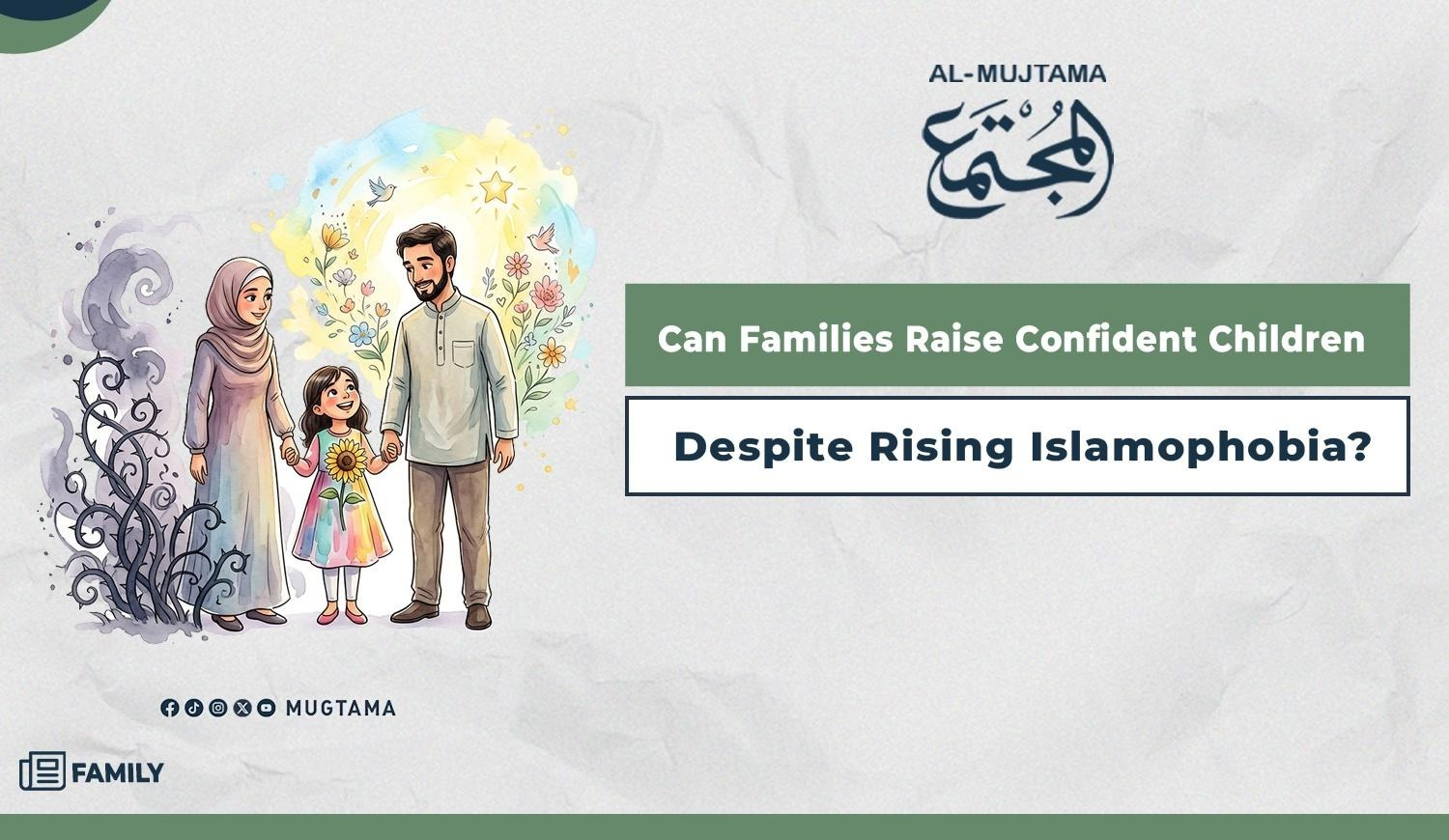
Can Families Raise Confident Children Despite Rising Islamophobia?
For many Muslim parents in Britain today, the question is no
longer whether their children will encounter prejudice—but when!
Over the past months, reports of anti-Muslim hostility have
continued to mount. Mosques have been vandalized, Muslim women have described
having their hijabs pulled off in public, children have been subjected to
racist abuse, and many families now admit they think twice before displaying
visible signs of their faith. Community organizations warn that anti-Muslim
hatred has become more visible, more normalized, and more damaging to the
everyday lives of ordinary Muslims.
The numbers tell a troubling story. Recent reports note that anti-Muslim hate crimes in England and Wales have
risen by 19%, while Muslims account for nearly one-third of all religious hate
crime victims in Scotland.
At the same time, a nation wide survey published this month found that 42% of Britons believe
Muslims cannot integrate into British society, despite the overwhelming
majority of British Muslims saying they want to participate fully in public
life while freely practicing their faith.
For Muslim children, these headlines are not simply news
reports. They shape the atmosphere in which they grow up. A child who
repeatedly hears negative messages about Islam may begin to wonder whether
their faith is something to hide, whether they truly belong, or whether being
visibly Muslim will always come at a cost.
Yet history offers another lesson. Muslims have often
flourished not because the world welcomed them, but because their families
nurtured an inner confidence that no hostility could erase.
The challenge before today’s parents is therefore not merely
protecting children from Islamophobia, but
raising them with an identity strong enough to withstand it.
Confidence Begins with Identity, Not Circumstances
Children borrow their view of themselves from the adults
closest to them. When parents speak about Islam with confidence, gratitude, and
love—not fear or apology—children learn that their faith is a source of dignity
rather than embarrassment.
That confidence grows when Islam is presented as a living
relationship with Allah instead of merely a list of restrictions. A child who
understands why they pray, fast, or wear the hijab is far less likely to
see these practices as burdens imposed by society.
Prepare, Don’t Terrify
Parents should not pretend discrimination does not exist. But
neither should every news story become a reason for fear.
Children benefit from honest conversations that match their
age. They should know that prejudice says more about the one who hates than the
one who is hated. They should also hear the countless stories of Muslims who
have contributed to British society—as doctors, teachers, entrepreneurs,
scientists, and neighbors—despite facing obstacles.
Preparation builds resilience, but fear builds helplessness.
Build a Community Before a Crisis
A confident child rarely grows alone. Strong friendships at
the mosque, Islamic school, youth circles, or within practicing families remind
children that they belong to something much larger than themselves.
Research consistently shows that a strong sense of belonging
is one of the greatest protective factors for children’s emotional well-being,
especially when facing discrimination.
The Prophet (peace be upon him) built believers through
community before he built institutions. Families today need that lesson as much
as ever.
Teach Children to Respond with Character
Islam does not ask Muslims to surrender their dignity, nor
does it permit them to mirror hatred with hatred.
Children should learn that they can answer ignorance with
knowledge, insults with composure, and hostility with principled confidence.
Speaking clearly about one’s faith, reporting hate crimes when necessary,
seeking legal protection, and refusing to internalize prejudice are all forms
of strength—not weakness.
The Greatest Gift Parents Can Give
Parents cannot control every headline, every hateful comment,
or every act of prejudice.
They can, however, shape the voice their children hear every
day at home.
If that voice consistently says, “Allah honored you. Your
faith has purpose. Your identity is not a burden but a gift,” then children
will carry something that no act of Islamophobia can easily take away.
Hostility may shape the environment, but it does not have to
shape your child.