







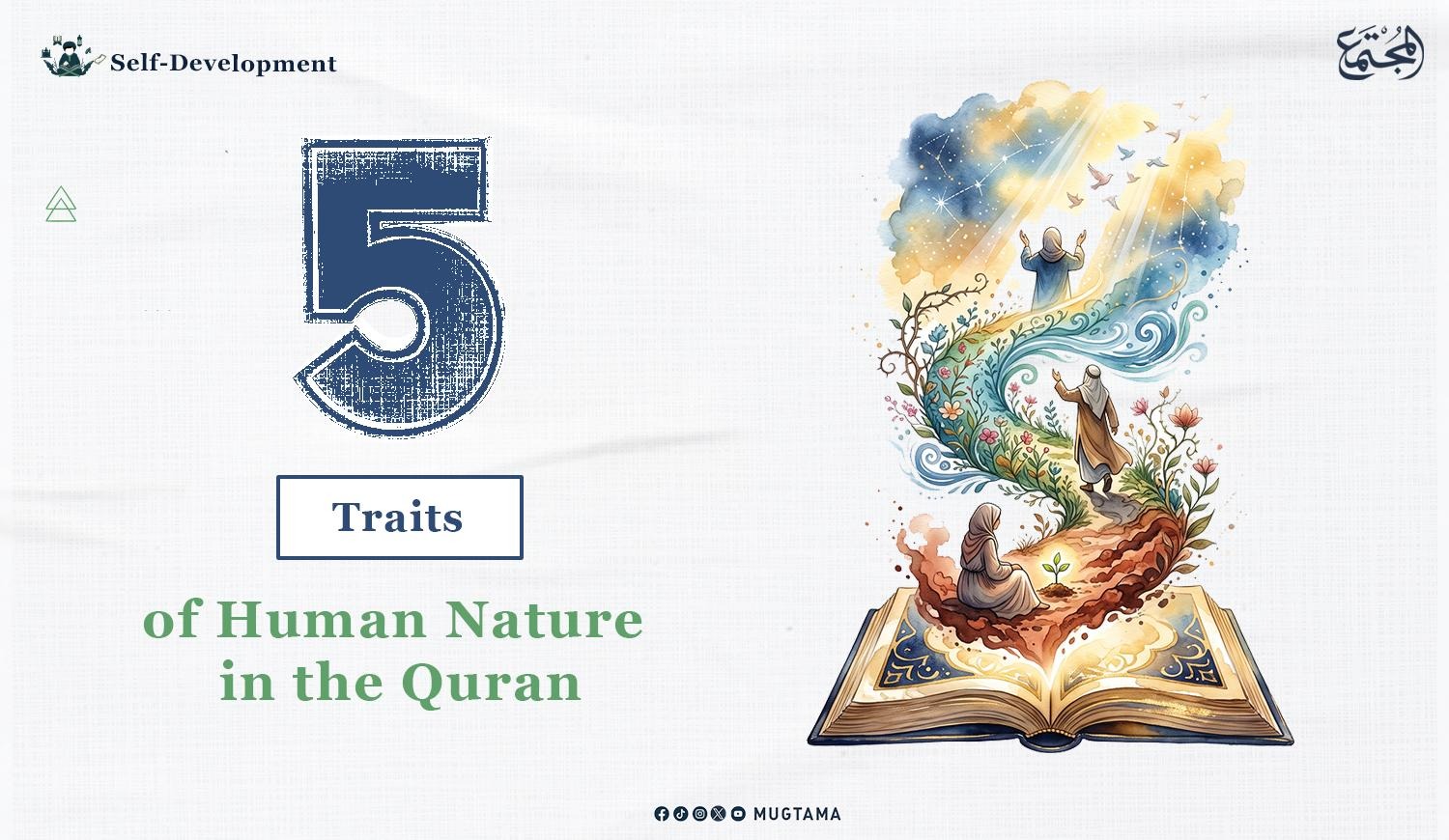
5 Traits of Human Nature in the Quran
The Quran does
not present human beings as perfect creatures free from weakness, nor does it
portray them as prisoners of their instincts, incapable of change. Rather, it
reveals the nature of the human soul, including its weaknesses, shortcomings,
and fluctuations, and then guides it toward a path of growth, self discipline,
and restraint.
In several
verses, the Quran describes qualities that are deeply rooted in human nature,
so that recognizing them can become the first step toward overcoming them.
Among the most prominent are:
1.
Impatience
People
naturally tend to rush toward what they want, seeking results before their
proper time. This can sometimes lead them to make decisions without considering
their consequences. {And humans ˹swiftly˺ pray for evil as they pray for good.
For humankind is ever hasty.} [Al-Isra 17:11]
For this
reason, part of faith is learning to be patient and deliberate, and
understanding that a delay in receiving what one hopes for does not necessarily
mean being deprived of it. There may be wisdom and goodness in the delay that a
person cannot yet see.
2.
Weakness
The Quran
reminds human beings of their created nature so that they do not become
deceived by their own abilities or develop a sense of self sufficiency.
{And
it is Allah’s Will to lighten your burdens, for humankind was created weak.} [An-Nisa 4:28]
Human beings
are inherently weak, limited in knowledge and ability, and dependent on their
Lord in every aspect of their lives. Acknowledging this weakness is not a
deficiency. Rather, it opens the door to turning to Allah, seeking His help,
and asking Him for steadfastness.
3.
Ingratitude and Forgetfulness of Blessings
Human beings
can naturally focus on what they lack while overlooking the blessings they
already have. When hardship strikes, they turn to their Lord, but once the
hardship is removed, they may return to heedlessness.
{If
We give people a taste of Our mercy then take it away from them, they become
utterly desperate, ungrateful. But if We give them a taste of prosperity after
being touched with adversity, they say, “My ills are gone,” and become totally
prideful and boastful.} [Hud 11:9-10]
The Quran
therefore teaches the believer not to let their emotional state be dictated by
changing circumstances, but to remain grateful in times of ease and patient in
times of hardship.
4.
Argumentativeness
The pursuit of
knowledge can sometimes turn into argument, and personal desire may lead a
person to defend their opinion even after the truth has become clear.
{But
humankind is the most argumentative of all beings.} [Al-Kahf 18:54]
This does not
mean that dialogue or asking questions is inherently blameworthy. Rather, the
Quran warns against argument that turns into hostility, where defending one's
ego becomes more important than seeking the truth. True wisdom includes having
the humility to acknowledge a mistake when the truth becomes clear.
5.
Love of Wealth and Attachment to the World
Human beings
naturally love wealth, but this love can develop from a means of living and
giving into an attachment that takes control of the heart.
{and
they are truly extreme in their love of ˹worldly˺ gains.} [Al-`Adiyat 100:8]
Islam does not
condemn possessing wealth or seeking lawful provision. Rather, it warns against
allowing wealth to become an end in itself, controlling a person and
distracting them from their responsibilities toward Allah, other people, and
the Hereafter.
Understanding
Human Nature and Reforming It
These qualities
reveal aspects of human nature as presented in the Quran: impatience, weakness,
ingratitude, argumentativeness, and attachment to wealth. Yet they are not
final judgments on human beings, nor are they excuses for surrendering to these
tendencies. The Quran that exposes human weakness teaches patience. The Quran
that warns against ingratitude commands gratitude. The Quran that cautions
against destructive argument calls people to wisdom. And the Quran that exposes
attachment to worldly life reminds them of the Hereafter.
Thus, the Quran
does not merely tell human beings who they are. It also guides them
toward who they should become.
