







5 Reasons to Make Reading a Habit
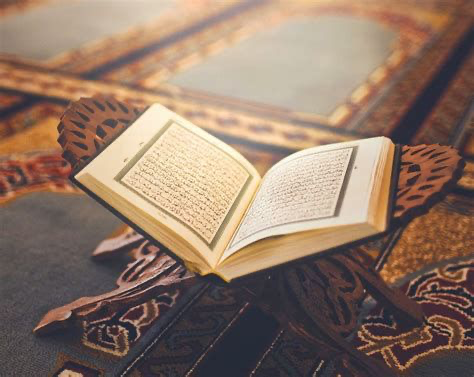
Reading holds a great status
in Islam, so much so that the command to read was in the very first verse
revealed to the Prophet of the nation: (Read! In the name of your Lord who created) (Al-'Alaq: 1) Reading is one of the most essential means of
learning and acquiring knowledge.
Due to its immense
importance, the Prophet (peace be upon him) set it as a condition for ransoming
the prisoners of the Battle of Badr. Among the remarkable moments in the
Prophet’s biography that demonstrate the value of literacy is the ransoming of
the captives of Badr, where the Messenger of Allah (peace be upon him) required
any literate polytheist captive to ransom himself by teaching ten Muslims how
to read and write.1 Allah Almighty says: (Allah will
elevate those of you who are faithful, and ˹raise˺ those gifted with knowledge in rank) (Al-Mujadila:
11)
And the Prophet (peace be
upon him) said: (Whoever
treads a path in search of knowledge, Allah will make the path to Paradise easy
for him.)(Narrated by Muslim).
So, if you want to make
reading a habit, here are 5 reasons to do so:
First: Because the Islamic message began with the call to read:
The first verse revealed in
the Book of Allah is: (Read! In
the name of your Lord who created) (Al-'Alaq: 1)
Quranic verses have repeatedly encouraged the pursuit of
knowledge and elevated the status of scholars. Allah Almighty says: (How can those who know be equal to those who do not
know?) (Az-Zumar: 9) And Allah Almighty says: (Lord, increase me in knowledge!) (Taha: 114)
The Prophet (peace be upon
him) instilled this concept in his companions, saying: (Whomever Allah wishes good for, He gives him
understanding of the religion) (Agreed upon). Reading is one of the greatest means to
acquire and reinforce knowledge.
Second: Because reading is what built Islamic civilization:
Civilizations are not built by wealth or arms alone. Mosques
served as arenas for knowledge alongside worship, and libraries were a hallmark
of the Islamic state throughout its history. The companions who were literate
held greater esteem than others, consistently prioritized over their peers.
Zayd ibn Thabit was advanced above many senior companions and became close to
the Prophet (peace be upon him) because he mastered reading and writing.
Consequently, he became a scribe of the divine revelation and correspondence,
and a translator of Syriac and Hebrew—all by the age of 13.2
Sa'id ibn Jubayr said: "A man remains knowledgeable as
long as he continues to learn; but if he stops learning and thinks he has acquired
enough, he becomes as ignorant as can be."3 Embodying this spirit,
the "House of Wisdom" (Bayt al-Hikmah) was established in Baghdad,
turning it into the capital of science and a destination for scholars like
Al-Khwarizmi, the founder of algebra.
Third: Because reading liberates your mind, allowing you to master
your own destiny:
When we speak of ignorance, we do not mean a lack of
information. We live in an era where acquiring information is effortless, yet
it remains characterized by ignorance as well as intellectual and moral
deviation. News spreads like lightning across platforms, yet hardly anyone
bothers to read it in full; the majority settles for mere headlines to form
ideas and pass judgments.
The Quran guided Muslims to verify information before
spreading it, as Allah Almighty says:
(Believers, if a troublemaker brings you news, check it first.)(Al-Hujurat: 6)
And the Prophet (peace be upon him) said: "It is enough of a lie for a person to narrate
everything he hears." (Narrated by Muslim).
Thus, daily reading serves as a fortress for the mind,
enabling a person to weigh statements against the scales of Islamic law,
reason, and wisdom, so as to fulfill the saying of Allah Almighty: (Who listen to what is said and follow what is best.
These are the ones God has guided; these are the people of
understanding.)(Az-Zumar: 18)
Fourth: Because reading deepens awareness and condenses time:
Through the value of reason,
a person can learn from the experiences of others without having to start from
scratch every time; rather, one should pick up where others left off. By
reading, you add the lifespans of authors to your own, gaining deep learning
and insight. This is precisely why the Quran contains stories of past
nations—we read them as though we are living through those events alongside
them. Allah Almighty says: (There is a
lesson in the stories of such people for those who understand.) (Yusuf: 111). And He says: (Tell them the story so that they may reflect.)
(Al-A'raf: 176)
Fifth: Because reading builds an individual who benefits themselves
and their nation:
God created man to be a
successor on earth, flourishing it through faith, improving it with knowledge,
and worshipping his Lord through righteous deeds. Thus, knowledge in Islam is a
means to action, not an end in itself. Allah Almighty says: (It is those of His servants who have knowledge
who stand in true awe of God.)(Fatir: 28)
Knowledge that does not lead
to the fear of Allah is deficient in blessing. For this reason, the Prophet
(peace be upon him) used to say: (O Allah, I seek refuge in You from knowledge that does not
benefit.) (Narrated by Muslim).
Furthermore, he designated
the dissemination of beneficial knowledge as one of the greatest deeds that
endure after death, saying: (When a
person dies, his deeds come to an end except for three: an ongoing charity,
beneficial knowledge, or a righteous child who prays for him.) (Narrated by
Muslim).
A Muslim cannot leave behind beneficial knowledge unless they are a good reader
who acquires insight to benefit themselves and their nation.
Nations do not begin their revival in factories; they begin in minds—and
minds are built only through knowledge. Reading is the widest gateway to
acquiring knowledge. If we wish to reclaim our status among nations, let us
begin where divine revelation began: Read! Encourage your children to
read until it becomes a daily habit, create a reading culture around you, and
pass it on to others.
