







Bangladesh’s 13th Parliament
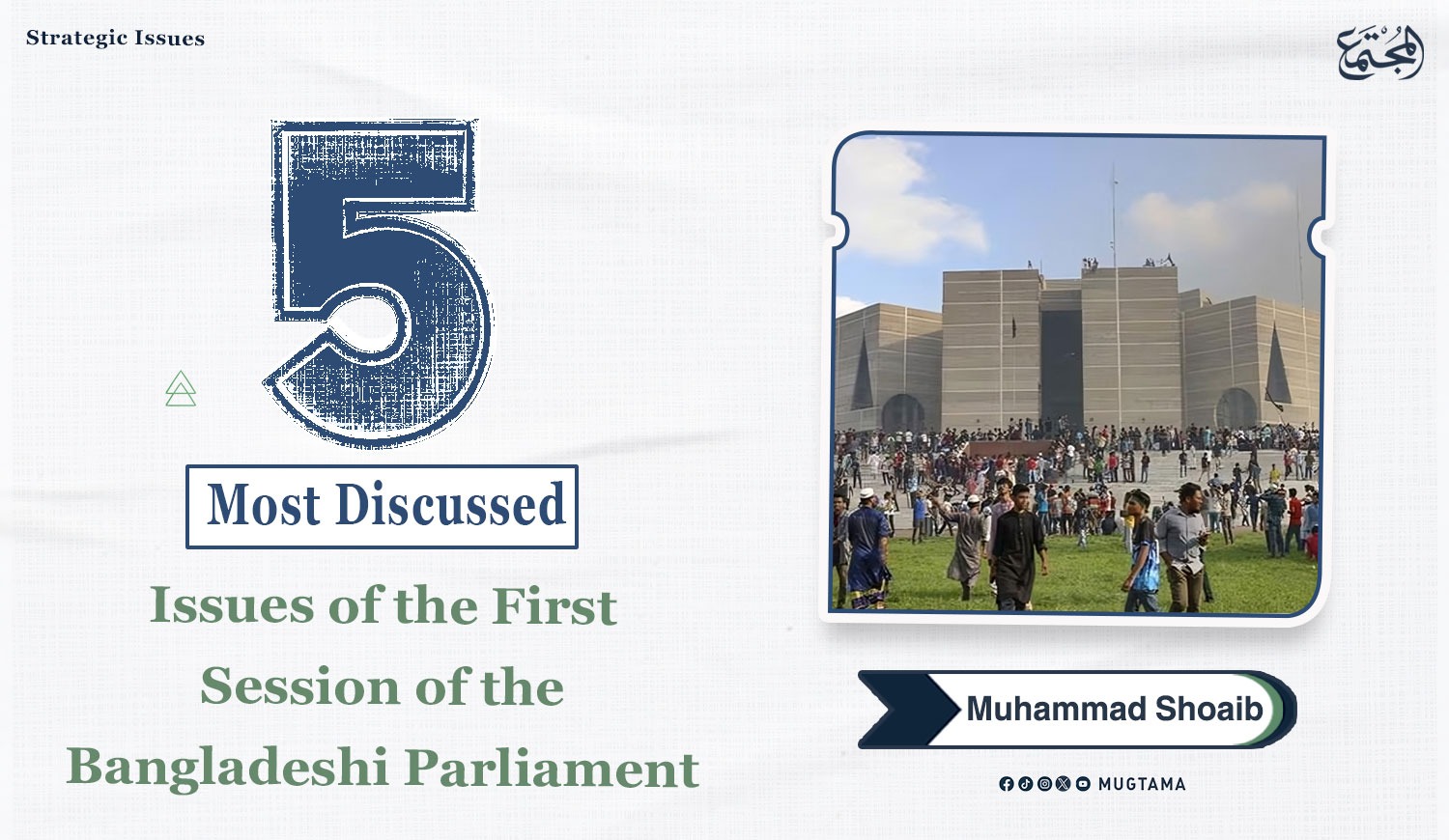
5 Most Discussed Issues of the First Session of the Bangladeshi Parliament

The first session of the 13th National Parliament of
Bangladesh is being seen as important for various reasons.
This parliament, which sat almost two years after the fall of
the terrorist Awami League government in a mass uprising, witnessed an
exceptional political situation. As a result, there was increased interest
outside the parliament in every bill, statement, and decision of the session.
In addition to arguments for and against the government and
opposition parties on various issues, including the President's address, the
Liberation War, and the July Charter, statements by the Speaker and Deputy Speaker also sparked discussion.
This session, which ended on Thursday, was a record of
lawmaking on the one hand, and on the other hand, there was a heated political
debate and an indication of future politics.
According to the information of the Parliament Secretariat, a
total of 133 ordinances were raised in this 25-day session. Among them, 91
bills were passed. The session ended with the passage of a total of 94 bills,
including the two bills on the last day.
The parliament was also lively during the question-and-answer
session. According to the news agency BSS, 93 notices of questions were
submitted to the Prime Minister in this session, of which he answered 35.
In addition, out of the 2,509 questions submitted to ministers
of various ministries, 1,778 were answered.
Analysts say that in the first session of the 13th National
Parliament, there was a clear attempt to speed up parliamentary activities
beyond lawmaking. Many analysts believe that the role of the Speaker and Deputy
Speaker, in particular, was quite positive.
1. The President's speech - discussion and opposition
The President's speech has been the subject of discussion
since the first day of the first session of the 13th National Parliament.
President Md. Shahabuddin's speech was protested by opposition
MPs, including Jamaat-e-Islami and NCP.
Since then, the discussion of the motion of thanks on the
President's speech has become one of the main attractions of this session.
About 280 MPs participated in the discussion and the debate
lasted for more than 40 hours in total.
Although in the parliamentary history of Bangladesh, the
President's speech is usually only praised, this time the discussion was
different. Direct opposition and observations were raised on various points of
the speeches given by the opposition MPs.
Even during the discussion on the motion of thanks brought on
the President's address on the last day of the session, Nahid Islam, the
opposition chief whip in the National Parliament and convener of the Jatiya
Nagorik Party, has called for the President to be removed and arrested.
2. July Charter’ faces strong disagreement in Parliament
In the first session of the 13th National Parliament of
Bangladesh, a heated debate erupted between the government and the opposition
over the ‘July Charter’.
The ruling party accused the opposition of trying to
appropriate the credit of the movement, while Home Minister Salahuddin Ahmed
called on all parties to implement the charter together and proposed forming an
all-party committee.
The opposition, however, protested several statements and
created disruptions in Parliament. Analysts say the lack of political consensus
on the implementation process is the main reason behind the tension.
3. Strong debate over Liberation War consciousness and definition in Parliament
During the discussion on the President’s speech in the 13th
National Parliament of Bangladesh, sharp debates emerged between the government
and the opposition over the Liberation War spirit, the July uprising, and the
definition of a freedom fighter.
Law Minister Asaduzzaman claimed that the passage of the
National Freedom Fighters Council Act 2026 established the anti-independence
role of Jamaat-e-Islami, which created tension in Parliament.
Meanwhile, opposition objections to certain remarks led to
disruptions in the session. Some Jamaat leaders also claimed to be from freedom
fighter families or child freedom fighters, further deepening the controversy.
According to analysts, the key issue is the political use of
the Liberation War narrative and differing views on how to protect the dignity of
genuine freedom fighters.
4. Increased accountability in Question Hour, seen as a positive sign
Analysts believe that ministerial accountability increased
significantly during the Question Hour in the first session of the 13th
National Parliament of Bangladesh.
Speaker Hafiz Uddin Ahmed stated that 93 questions were
submitted for the Prime Minister, of which 35 were answered directly. In
addition, out of 2,509 questions submitted to various ministries, 1,778 were
answered.
According to analysts, this trend reflects a strengthening of parliamentary
oversight over the executive branch.
Political analyst Mohammad Shamsul Alam said the opposition
criticized the government on issues including energy, and the government
responded accordingly. A committee involving the opposition was also formed to
address issues, which is seen as a positive sign for parliamentary democracy.
5. Walkouts, leadership roles, and legislative activity—A multidimensional Parliament session
In the first session of the 13th National Parliament of
Bangladesh, opposition activism, leadership roles, and high legislative output
drew significant attention.
The opposition staged walkouts on at least three days over
various issues but later returned to participate in discussions, which analysts
view as a positive parliamentary practice. Mohammad Shamsul Alam said this
shows the opposition is willing to play an active role.
Speaker Hafiz Uddin Ahmed and Deputy Speaker Kaisar Kamal were
praised for their roles. Their handling of disruptions and management of
speaking time had a positive impact on parliamentary proceedings, according to
analysts.
Several lawmakers also drew attention. Salahuddin Ahmed stood
out for his active participation, while Nahid Islam gained attention for
criticizing the government and speaking on the July Charter and corruption
issues.
On the legislative front, the session was highly productive,
with 94 bills passed in 25 working days and 133 ordinances tabled, which
analysts describe as rare and helpful in reducing administrative stagnation.
Additionally, discussions were held on reforms of
parliamentary procedure rules, making Parliament more inclusive, time
allocation for members, and the neutrality of the Speaker—issues considered
important for improving parliamentary effectiveness in the future.