









5 Challenges in Modern Education in Kuwait and Proposed Solutions
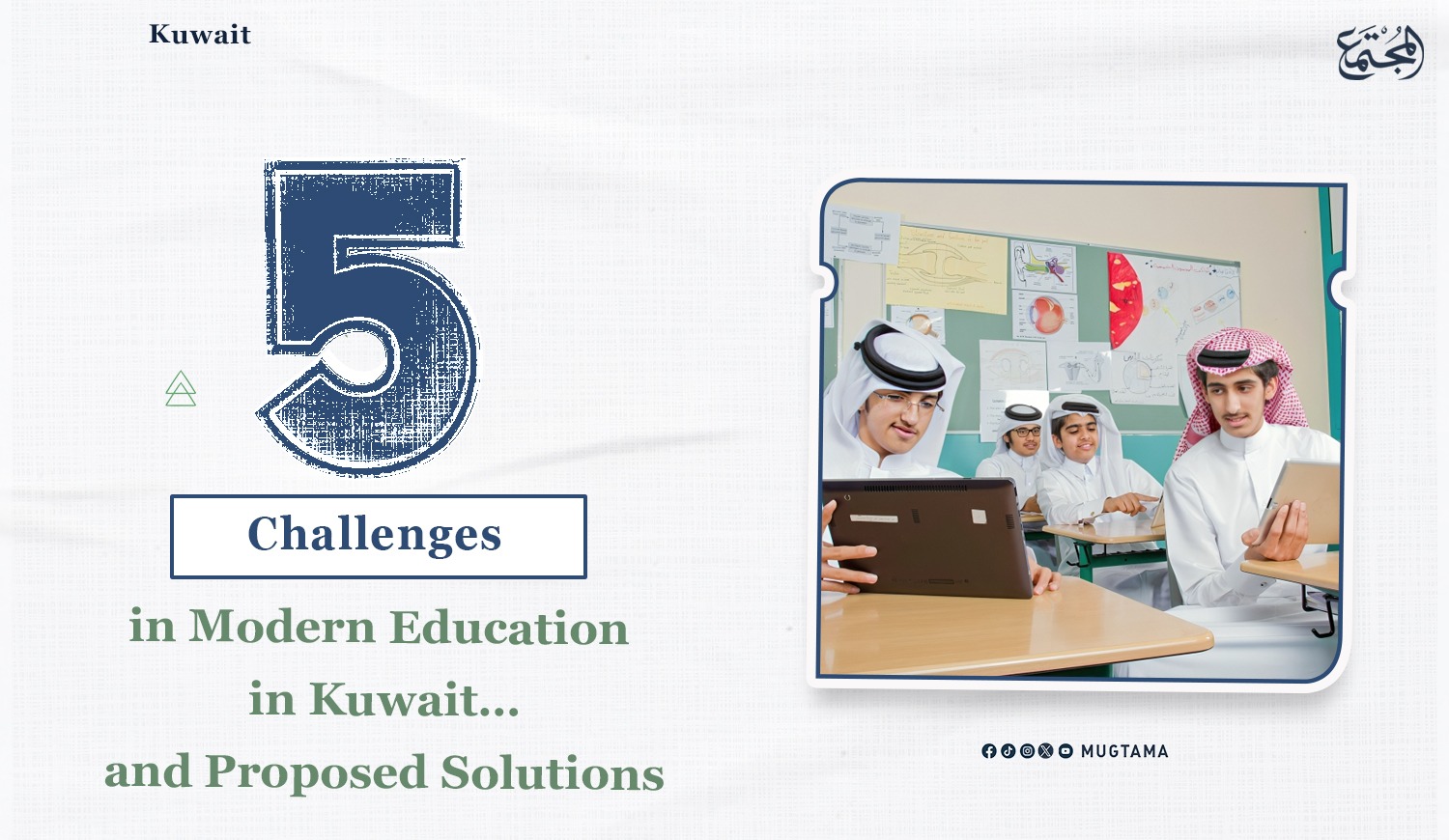
Education in Kuwait, like in the rest of
the world, is undergoing a deep transformation driven by the digital revolution
and global labor-market shifts. Yet this transformation, despite its
importance, comes with challenges that hinder the development of an effective,
modern educational system aligned with the state’s ambitions and the “Kuwait
2035” vision—challenges such as weak technological infrastructure, insufficient
training, and limited interaction.
Gaps have emerged that require innovative
solutions to enhance the quality of education and ensure globally competitive
outcomes. In the following lines, we highlight five major challenges and
propose practical solutions based on studies and Kuwait’s educational reality.
1.
Weak
technological infrastructure
- Challenge: Despite notable
efforts, disparities in internet speed have been recorded between regions,
in addition to the lack of sufficient electronic devices in some
households, which negatively affects the e-learning experience.
- Solution: Provide fast,
supported internet (fiber or classroom Wi-Fi) nationwide and secure school
and home devices through public-private partnerships.
2.
Insufficient digital training for
teachers
- Challenge: Many teachers,
despite having access to digital teaching tools, lack sufficient
experience in using educational technologies effectively and struggle to
convert traditional curricula into engaging digital environments.
- Solution: Launch annual
micro-credential training programs in educational technology for all
teachers, along with ongoing technical and on-site support in schools.
3.
Limited virtual interaction and weak
parental monitoring
- Challenge: Online
environments lack real-time interaction between students and teachers, and
parental monitoring of attendance and participation is limited, reducing
lesson impact and increasing students’ sense of isolation.
- Solution: Adopt interactive
educational tools and monitoring systems that allow parents to track
attendance and participation, alongside regular in-person interactive
sessions.
4.
Weak investment in vocational education
and its link to the labor market
- Challenge: The focus remains
largely on academic education, despite the real need for technical and
vocational training aligned with the labor market—especially within the
digital economy.
- Solution: Establish
partnerships between vocational schools and the industrial sector to
develop programs that combine training with real workforce integration.
5.
Weak educational inclusion of students
with disabilities
- Challenge: Although Kuwait
signed the Salamanca Statement on inclusion, implementation remains
limited, with current facilities serving only a small number of students
with minor needs.
- Solution: Reform education
policies to adopt a genuine inclusion model, including training teachers
in supportive interactive teaching methods and adapting classrooms and
tools to meet all students’ needs.
The five challenges facing modern education
in Kuwait are not merely technical or administrative obstacles—they are
indicators of the urgent need for a comprehensive educational vision aligned
with global developments. Education is not simply the transfer of information,
but the shaping of generations capable of creativity, productivity, and
adaptation.
Investing in infrastructure, developing
teachers, enhancing interaction, linking curricula to the labor market, and
empowering students with disabilities are not partial solutions; they are
foundations for a true educational renaissance. If Kuwait succeeds in turning
these challenges into opportunities, it will write a new chapter in its journey
toward building a fully developed knowledge-based society.
Read Also:
-
Developing Education Needs to be Reviewed, Enhanced, and Developed
- Societal Integration: The Foundation for Developing Education and Achieving Comprehensive Progress
-------------------------------------------------------------