







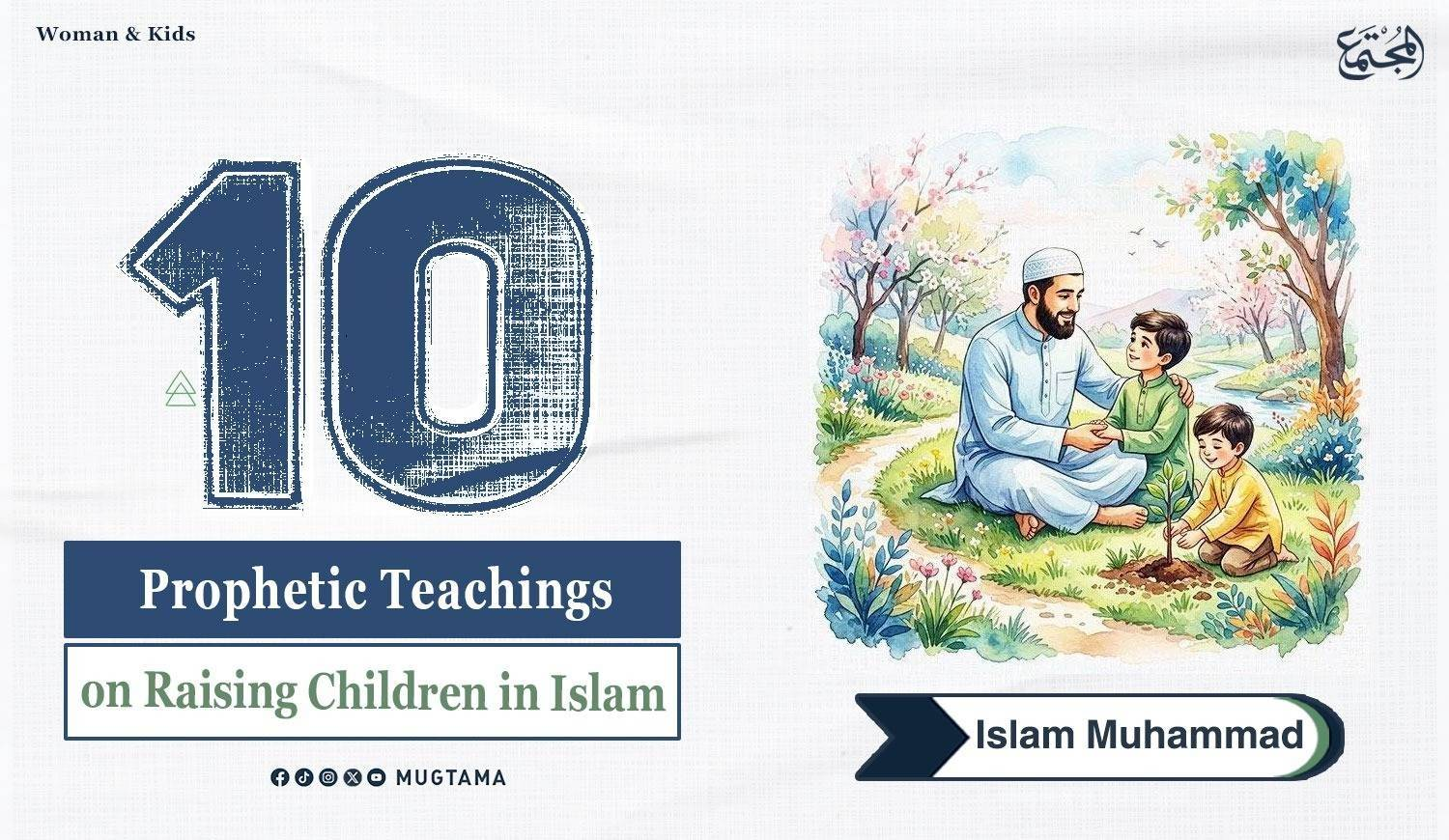
10 Prophetic Teachings on Raising Children in Islam

Raising children is a tremendous
responsibility entrusted to parents. It is a challenging test and a great
trust, with long-term consequences for the family, society, and the Muslim Ummah
as a whole.
There is no doubt that successful parenting
requires awareness, planning, and sound educational and religious approaches.
When carried out properly, it yields positive results that help build healthy,
prosperous, and strong societies, ensuring that a righteous generation is
raised with the ability to strike a balance between religious commitment and
worldly life.
Prophetic Teachings on
Raising Children
This article presents 10 Prophetic
teachings on raising children, drawn from numerous authentic hadiths of Prophet
Muhammad (peace and blessings be upon him).
1. Instill Love for Allah and
His Messenger
Instill in your child a love for Allah and His Messenger, and make the
Prophet (peace and blessings be upon him) their role model. This will help them
develop noble manners and good character. Teach them Islamic values, what is
lawful and unlawful, and how to distinguish truth from falsehood.
2. Be a Good Role Model for
Your Children
Lead by example, starting with your
own commitment to prayer, remembrance of Allah, and acts of worship. Learning through observation is one of the most effective methods of upbringing.
Remember that praying for your childre’s guidance and righteousness is a key to
their hearts.
3. Teach Your Children the
Quran
Make sure your children learn the
Noble Quran. The Prophet (peace and blessings be upon him) said, “The best among you is he who learns and teaches the
Quran.” (Narrated by Al-Bukhari)
4. Instill Sound Islamic
Beliefs in Their Hearts
Work to establish sound Islamic beliefs in your children’s hearts. The Prophet (peace and
blessings be upon him) said, “O boy! I will
instruct you in some matters. Be watchful of Allah (Commandments of Allah), He
will preserve you. Safeguard His Rights, He will be ever with you.”
(Narrated by At-Tirmidhi)
5. Teach Prayer and Acts of
Worship from an Early Age
Introduce your children to prayer
and acts of worship from an early age. The Prophet (peace and blessings be upon
him) said, “Command your children to pray when they
become seven years old, and beat them for it (prayer) when they become ten
years old.” (Narrated by Abu Dawud)
6. Use Encouragement and
Gentleness in Parenting
Encourage your children and treat them
with kindness and gentleness. Avoid violence and painful punishment. The
Prophet (peace and blessings be upon him) said, “He
who does not show mercy (towards his children), no mercy would be shown to him.” (Narrated by Al-Bukhari)
7. Encourage Your Children to
Seek Knowledge
Inspire your children to pursue
knowledge and lifelong learning. The Prophet (peace and blessings be upon him)
said, The search for knowledge is an obligation
laid on every Muslim.” (Narrated by Ibn Majah)
8. Make Time for Your Children
Every Day
Set aside time each day to sit with your children,
talk with them, and listen to their problems, thoughts, and ideas. Take them
along when engaging in good deeds, as these shared experiences strengthen the
relationship between parents and children.
9. Treat Your Children Fairly
and Avoid Injustice
Avoid injustice and ensure fairness among
your children. The Prophet (peace and blessings be upon him) said, “Fear Allah and treat your children equally.” (Narrated by Al-Bukhari)
Fair treatment prevents jealousy and resentment from developing among siblings and strengthens the
bonds of love, affection, and harmony between them.
10.
Teach Your Children Responsibility from an
Early Age
Teach your children to take responsibility from a
young age. This can include keeping their rooms tidy, completing their
schoolwork, working during the summer holidays, and learning a practical skill
or trade. Such activities help strengthen their personalities, build
independence, and lay the foundations for maturity and responsible adulthood.
-------------------------------------------------------------