





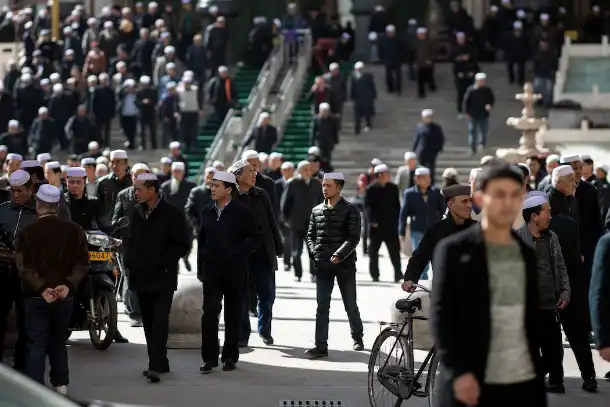



Controversy Over Muslim Call to Prayer
Who’s Fanning the Flames of Islamophobia in Dearborn?

Dearborn, Michigan-—home to one of the largest Arab American populations in the United States—is once again at the center of a cultural controversy. This time, the debate revolves around the Islamic call to prayer (adhan) broadcast from local mosques via outdoor loudspeakers. While the practice has been legally permitted since 2020 under city ordinance, a recent wave of complaints has reignited tensions and raised questions about islamophobia in the community.
The controversy gained momentum after a petition signed by 40 residents
was submitted to the Dearborn City Council, demanding that mosques lower the
volume of the adhan. Leading the charge is Andrea Unger, a longtime resident of
East Dearborn, who claims the sound invades her privacy and disrupts her daily
life—even with windows closed. Unger has spoken at multiple council meetings,
stating: “Your freedom of religion does not allow you to force me to listen to
your prayers in my yard or home”.
While Unger insists her concerns are about noise, not religion, many
Muslim residents and civil rights advocates see the backlash as part of a
broader pattern of Islamophobia. “This isn’t just about decibels,” said Fouad
Berry, board member at the Islamic Institute of Knowledge-. “We’ve complied
with city regulations, adjusted our schedules, and even eliminated early
morning prayers to be respectful. Yet the complaints continue”.
The mosque in question broadcasts the adhan twice daily for about two
minutes, well within the city’s noise ordinance, which prohibits loudspeakers
between 10 p.m. and 7 a.m. and limits daytime noise to 70 decibels. Police Chief Issa Shahin- confirmed that most
mosques are in compliance, and any violations are addressed with citations.
So who’s fanning the flames? Critics point to a small but vocal group of
residents who frame the issue as a public nuisance while ignoring the religious
and cultural significance of the adhan. Their rhetoric—often couched in
language about “quality of life” and “privacy”—echoes historical patterns of
exclusion faced by minority communities. Civil rights groups warn that such
framing can normalize anti-Muslim sentiment under the guise of civic concern.
Meanwhile, Muslim leaders in Dearborn continue to advocate for dialogue
and mutual respect. Akram Bazzi-, chair of the Islamic Institute of
Knowledge, emphasized: “We’re part of this community. We want harmony, not
division. But that requires fairness—not selective outrage”.
As Dearborn grapples with its identity as a multicultural city, the adhan
debate reveals deeper fault lines. Is this truly about noise—or is it a symptom
of lingering discomfort with visible expressions of Muslim faith? The answer
may lie not in decibel readings, but in the willingness of all residents to
embrace coexistence.
Sources:
Read also:
Most
Muslims in the UK say Islamophobia is rising: Survey