






When the Ummah Breathes with Both Its Lungs
I occasionally turn to reading Al-Bidayah wa An-Nihayah, and by divine decree my eyes fell upon Mundhir Al-Baluti, the Chief Judge of Al-Andalus. He was an
imam—learned, eloquent, a preacher, a poet, a man of letters—combining many
forms of goodness and piety. In one year the land suffered drought, so the king
ordered him to lead the people in the prayer for rain. When the message arrived
with the courier, he asked the messenger: ‘How did you leave the king?’ He
replied: ‘I left him at his most humble, constantly supplicating and
beseeching.’ The judge said: ‘You will be given rain, by Allah—if the tyrant of
the earth humbles himself, the Compeller of the heavens shows mercy.’
Then he said to his servant: ‘Call the
people to prayer.’ The people gathered at the place of prayer for rain, and the
judge ascended the pulpit while they looked on. When he turned to face them,
the first thing he addressed them with was the saying of Allah the Exalted: “When the believers in Our revelations come to you, say, ‘Peace
be upon you! Your Lord has taken upon Himself to be Merciful. Whoever among you
commits evil ignorantly ˹or recklessly˺ then
repents afterwards and mends their ways, then Allah is truly All-Forgiving,
Most Merciful.’” (Al-An`am 6:54)
He repeated it again and again. The people
began to weep, wail, repent, and turn back in penitence. They remained thus
until they were given rain, and they returned wading through water (1).
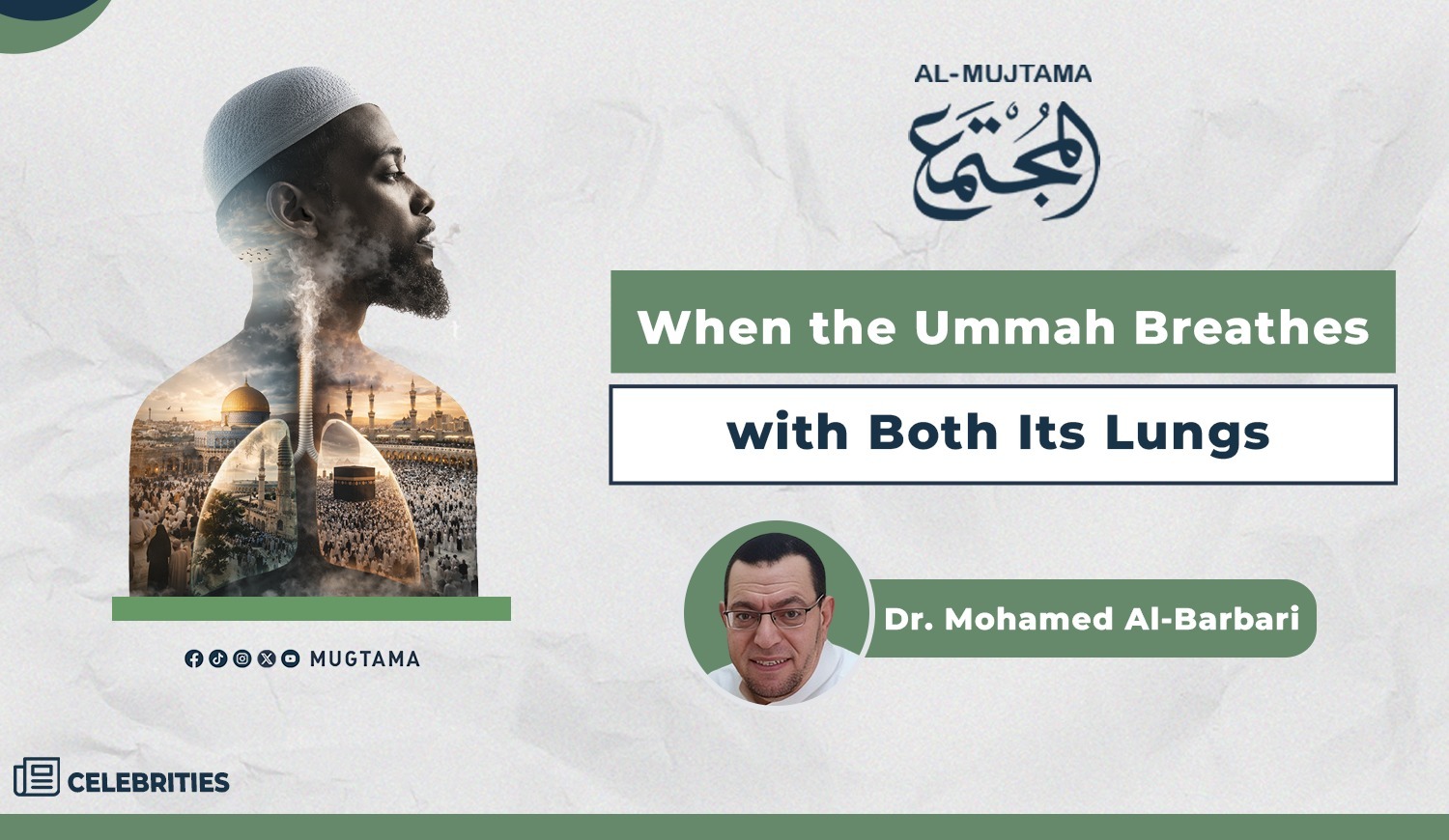
At that moment I said: How beautiful it is
when the Ummah breathes with both its lungs—righteous, sincere scholars, and
perceptive, devoted rulers. Then you will find our Ummah at the forefront of
nations!
The Godly Scholars
Knowledge and the scholars hold an
undeniable station in the religion, a vast merit scarcely bounded. Scholars are
the heirs of the prophets, the lamps of illumination, the delight of the eyes
of the righteous. They are the pillars of the Shari`ah and the guardians of
creed, repelling from Allah’s religion the distortions of the extremists, the
fabrications of the falsifiers, and the misinterpretations of the misguided.
They are the central link between the Creator and creation, and the shining
stars in the sky of the Lord of the worlds.
Whenever sweeping tribulations strike the
Ummah, they are the firm pillar and secure refuge. Their name is coupled with
the name of the Lord of the worlds and the noble angels: “Allah ˹Himself˺ is a
Witness that there is no god ˹worthy of worship˺ except
Him—and so are the angels and
people of knowledge. He is the Maintainer of justice. There is no god ˹worthy of
worship˺ except Him—the Almighty, All-Wise.” (Al `Imran 3:18)
They are the most upright of people and the
most fearful of Allah: “just as people, living
beings, and cattle are of various colours as well. Of all of Allah’s servants,
only the knowledgeable ˹of His might˺ are ˹truly˺ in awe
of Him. Allah is indeed Almighty, All-Forgiving.” (Fatir 35:28)
And He, Glorified and Exalted, says: “It is not appropriate for someone who Allah has blessed
with the Scripture, wisdom, and prophethood to say to people, ‘Worship me
instead of Allah.’ Rather, he would say, ‘Be devoted to the worship of your
Lord ˹alone˺—by virtue
of what you read in the Scripture and what you teach.’” (Al `Imran 3:79)
And the truthful, the one affirmed, (peace
be upon him) said: “Indeed, the scholars are the heirs
of the prophets. The prophets did not leave behind dinars or dirhams; they only
left knowledge. Whoever takes it has taken an abundant share.” (Sunan
Abi Dawud 3641)
Imam Ibn Al-Qayyim, may Allah have mercy on
him, says about them:
“They are the heirs of the messengers and their successors among their nations.
They uphold what they were sent with—knowledge, action, and calling creation to
Allah upon their paths and methodology. This is the highest rank of creation
after messengership and prophethood. These are the rabbanis, the firmly
grounded in knowledge. They are the intermediaries between the Messenger and
his Ummah—his successors, allies, party, elect, and the carriers of his
religion.” (2)
They are scholars who act—rightly guided
imams, leading masters, worshippers and ascetics—proclaiming the truth without
fear; trustees over the frontiers of Islam who do not deviate. Whenever one
star among them sets, the dawn of others rises:
“Indeed, this Ummah is the most complete of
nations and the best nation brought forth for people. Its Prophet is the Seal
of the Prophets—there is no prophet after him. Allah has made scholars in it
such that whenever a scholar dies, another succeeds him, lest the landmarks of
the religion be erased and its signs concealed. The Children of Israel—whenever
a prophet died, another succeeded him, and prophets governed them. For this
Ummah, scholars are like prophets were for the Children of Israel.” (3)
How much we need, in these times, to cling
to the guidance of godly scholars amid these accumulating tribulations, surging
trials, and successive doubts and desires!
The Sincere Rulers
Governance is a tremendous trust,
a heavy task, and a great responsibility that Allah places upon whom He wills
among His servants. The ruler should therefore be sincere and trustworthy, just
and knowledgeable, truthful and upright. Trust without strength is weakness,
and strength without trust is transgression. What does a rational person gain
if he rules the entire world yet fails to be just—then on the Day of
Resurrection he loses himself and his effort goes astray?
“Indeed, Allah commands you
to return trusts to their rightful owners; and when you judge between people,
judge with fairness. What a noble commandment from Allah to you! Surely Allah
is All-Hearing, All-Seeingg.” (An-Nisa’ 4:58)
“˹We
instructed him:˺ ‘O David!
We have surely made you an authority in the land, so judge between people with
truth. And do not follow ˹your˺ desires
or they will lead you astray from Allah’s Way.
Surely those who go astray from Allah’s Way
will suffer a severe punishment for neglecting the Day of Reckoning’.” (Sad 38:26)
Among the glories of our Islamic heritage
is a remarkable counsel sent by the pure-hearted Al-Ḥasan Al-Baṣri to the rightly
guided Umayyad caliph when he sought his advice. He wrote him a lengthy letter,
saying:
“Know, O Commander of the Faithful, that
Allah has made the just imam the support of every inclined matter, the
rectifier of every oppressor, the reformer of every corruption, the strength of
every weak one, the vindication of every wronged person, and the refuge of
every distressed one.
The just imam, O Commander of the Faithful,
is like a compassionate shepherd to his camels—gentle with them—seeking for
them the best pasture, warding them off from deadly grazing grounds, protecting
them from predators, and sheltering them from the harm of heat and cold.
The just imam, O Commander of the Faithful,
is like a tender father to his children—striving for them when they are young,
teaching them when they are grown, earning for them in his life, and storing up
for them after his death.
The just imam, O Commander of the Faithful,
is like a kind, dutiful mother to her child—she carried him with hardship and
gave birth to him with hardship, raised him as an infant, stayed awake with his
wakefulness and rested with his rest; she nurses him at one time and weans him
at another; she rejoices at his well-being and grieves at his complaint.
The just imam, O Commander of the Faithful,
is the guardian of orphans and the treasurer of the poor—raising their young
and providing for their elderly.
The just imam, O Commander of the Faithful,
is like the heart among the limbs: the limbs are sound by its soundness and
corrupt by its corruption.
The just imam, O Commander of the Faithful,
stands between Allah and His servants—he hears Allah’s word and makes them hear
it; he looks toward Allah and shows them; he submits to Allah and leads them.
So do not be, O Commander of the Faithful, with what Allah has entrusted to
you, like a servant whom his master entrusted with his wealth and family, and
he squandered the wealth and scattered the family—impoverishing his household
and dispersing his property.
Know, O Commander of the Faithful, that
Allah sent down the prescribed punishments to deter indecencies and
obscenities—so what if the one who enforces them commits them? And Allah sent
down retribution as life for His servants—so what if the one who exacts
retribution kills them?” (4)
A message that gathered much and
comprehended, concise yet most eloquent—containing a set of qualities that a
ruler must embody. How precise his description, and how brilliant his analogy!
The ruler is responsible before Allah the
Exalted for managing worldly affairs and guarding the religion, and upon the
subjects is hearing and obedience, seeking the pleasure of the Lord of the
worlds.
In conclusion: if scholars convey the
command, rulers execute the command. They are the two wings of the Ummah; by
them distress is lifted and darkness dispelled: “When the establishment of
Islam rests upon the two groups—the scholars and the rulers—and all people
follow them, then the rectitude of the world lies in the rectitude of these two
groups, and its corruption in their corruption. As `Abdullah ibn Al-Mubarak and others among
the Salaf said: Two categories of people—if they are righteous,
the people are righteous; and if they are corrupt, the people are corrupt. It
was said: Who are they? He said: the rulers and the scholars.” (5)
Allah knows that from the depths of our
hearts we wish for our Ummah to be firmly built, generous in giving, and
splendid in its outward form.
Read Also:
- 10 Rights of the People Over the Ruler
- Al-Qaradawi... the nation's jurist and the Imams' leader
- “The Elite” in Islamic Political Thought
-------------------------------------------------------------
Footnotes:
(1) Al-Bidayah wa An-Nihayah
(11/288–289).
(2) Tariq Al-Hijratayn (1/516).
(3) Miftaḥ Dar As-Sa`adah (1/451).
(4) Al-`Iqd Al-Farid by Ibn `Abd Rabbih (1/12).
(5) I`lam Al-Muwaqqi`in `an Rabb Al-`Alamin (1/10).