









The Political System of Israel
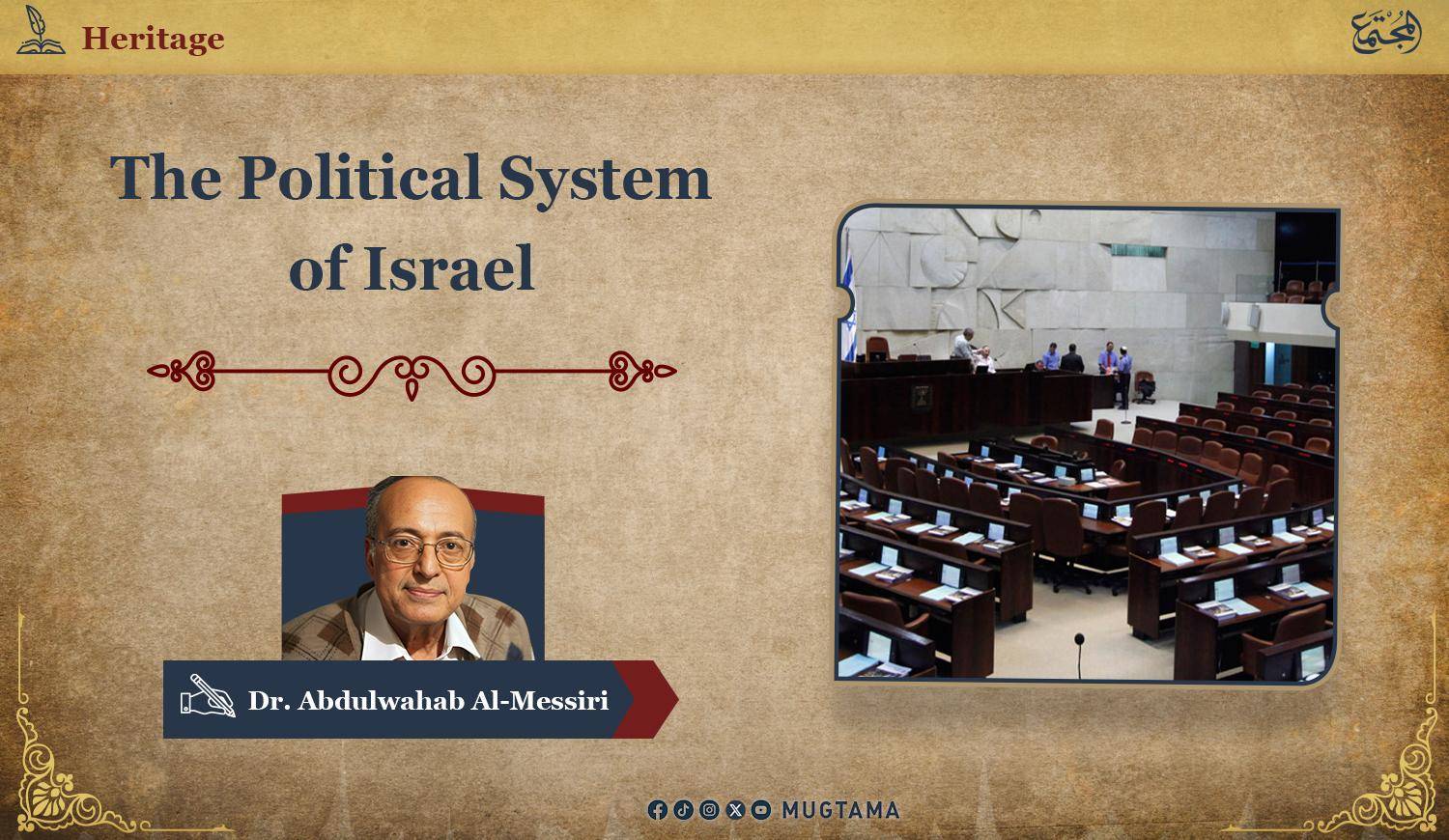
Zionists claim
that their political system is a parliamentary democracy based on a multi-party
structure and that it is the only democratic system in the region. As Ehud
Barak stated during his visit to the United States in 1996, "Israel is an
oasis of democracy in the jungles of the Middle East." Similarly, Benjamin
Netanyahu remarked, "We live in a rough neighborhood"—an expression
commonly used in American discourse to describe areas characterized by high
crime rates and social disintegration.
Yet the
democratic form of the state and its party pluralism are little more than form
without substance. Israeli democracy excludes Arabs, much as other settler
democracies did in places such as Algeria and South Africa.
Indeed,
democracy serves primarily as one of the mechanisms of settlement, used to
attract immigrants, organize them, and integrate them into the functioning of
the system. Proportional representation is necessary both for concentrating
power in the hands of major parties and for representing political forces in a
manner that guarantees the continuation of the Zionist framework. Likewise, the
absence of a constitution supports the state's expansionist projects,
accommodates divisions among Jewish communities and sects, and reinforces
discrimination against Arabs.
For this
reason, rather than describing the Israeli political system as a
"democratic system," it is more useful to classify it according to a
framework with greater explanatory power. It may therefore be understood as a
settler-colonial political system whose characteristics were shaped by the
requirements of settlement in a hostile environment—security, immigration,
colonization, and immigrant absorption. In this view, the settler nature of the
Zionist project is the primary determinant of all social and political
structures, as well as the direction of both internal and external relations.
National
Centralization and the Limits of Democracy
Perhaps the
most distinctive feature of the Israeli political system is its nationalist
centralization despite its parliamentary-democratic appearance. The system has
imposed limits on democracy and established rules that cannot be transcended,
defining the acceptable methods of political competition, the subjects open for
discussion, and the groups permitted to participate.
The central
government has concentrated sources of power in its own hands. It acquired vast
economic resources through financial inflows from abroad, whether from Western
governments or donations from the Jewish diaspora. It also appropriated
Palestinian property and legalized the seizure of Palestinian land. The state
controls approximately 94 percent of the land and all major natural resources.
The settler state established a centralized mixed economy consisting of three
sectors: governmental, Histadrut, and private. The state directly finances
economic projects.
Moreover, the
state exercises extensive control over the media and the educational system,
with education operating under direct governmental supervision.
Settler-Colonial
Characteristics and Institutional Duality
The
characteristics of a settler-colonial system are evident in the dual nature of
the state's relationship with the population. There exists an internal division
between its relationship with settlers and its relationship with the indigenous
population.
While racism
may exist unofficially in many societies, settler societies institutionalize it
and make it a guiding framework, since equality threatens the very foundations
of the settler system. Thus, the category "Jew" functions as a legal
category within the Israeli political and social order. The land is regarded as
the exclusive property of the Jewish people, and the Law of Return grants
immigration rights exclusively to Jews.
The Israeli
political system also displays increasing dependence on its imperial patron,
the United States, a dependence that limits its freedom of action and
diminishes aspects of its sovereignty.
Another
characteristic is institutional duplication and overlapping functions.
Ministries, political parties, and departments of the World Zionist
Organization—particularly those dealing with immigration, absorption, youth,
and education—often perform similar roles. Virtually all state institutions
focus on the same three strategic concerns: immigration, settlement, and
security.
It is worth
noting that before 1948 these institutions were essentially settler-colonial
bodies operating under the Jewish Agency. Following the establishment of the
state, their names changed while many of their functions remained intact. The
"Elected Assembly" became the "Provisional State Council"
and later the Knesset in 1949. The Executive Committee of the Jewish Agency
became the Provisional Government in 1948 and later the Cabinet. The Haganah
was transformed into the Israel Defense Forces (IDF).
After the
declaration of statehood, the new state assumed the functions of the Jewish
Agency while defining the boundaries between them. The agency's activities were
later regulated by the Law on the Status of the Jewish Agency. This process
aimed to establish the state's independence from the global Zionist movement
and distinguish it from local institutions, particularly the Histadrut.
Under the
leadership of David Ben-Gurion, the state succeeded in bringing major
institutions under its control, including military organizations, labor
offices, Palestinian refugee property, the educational system, and the
distribution of financial resources arriving from abroad.
State
Dominance and Executive Power
The strength of
the Israeli state has historically been reflected in the power of the executive
branch. The state positioned itself above society and remained largely detached
from it. It discouraged collective and individual local initiatives, whether political
or economic. The state planned, implemented, and defined the roles of
institutions, social groups, and individuals.
In pursuit of
immigrant absorption and settlement, the state refused to recognize
organizations based on class, ethnicity, or national identity, and efforts to
establish such organizations were systematically obstructed. The state was
dominated by the Ashkenazi elite of European origin, which controlled resource
allocation and defined political and economic priorities as national Israeli
values. New immigrants, especially Sephardic Jews, were expected to adapt to
this reality.
The standard
justification for this arrangement was security, based on the assumption of an
inevitable military and political conflict with the Arab world.
Structure
of Government
The Israeli
system of government rests on three pillars: the President, the legislative
branch (the Knesset), and the executive branch.
The powers of
the President are limited. The office holds no executive authority, the
President may not attend Cabinet meetings, cannot veto legislation passed by
the Knesset, and may not leave the country without government approval. The
presidential term lasts five years and may be renewed once. The President
cannot dissolve the Knesset or dismiss the government.
The executive
branch, represented by the Cabinet, is responsible for administering the state
and making direct decisions regarding domestic affairs, foreign policy,
economic matters, and military affairs. The government possesses the authority
to declare war.
Although the
government is theoretically accountable to the Knesset, in practice it
dominates decision-making because it generally commands a parliamentary
majority. The Prime Minister enjoys a position stronger than that of many
counterparts in other political systems.
The electoral
reforms that took effect in 1996 further strengthened the office of Prime
Minister through direct election. This made removal from office exceptionally
difficult, requiring either new national elections or the approval of
two-thirds of the Knesset—a threshold that is extremely difficult to achieve.
Consequently, the system can be viewed as approaching authoritarianism even in
its relationship with settlers, with effective power concentrated in the hands
of the leader of the majority party, who automatically becomes Prime Minister
and governs under a system commonly identified with the name of the Prime
Minister himself.
Attached to the
Prime Minister's Office are the principal civilian and military intelligence
services. The head of the Mossad reports directly to the Prime Minister.
The most
important ministries are Defense, Finance, and Foreign Affairs. Unlike most
states, Israel also maintains a Ministry of Immigration and Absorption,
established in 1968 in accordance with the state's settlement-oriented role.
Other ministries, such as Housing and Defense, also carry out
settlement-related functions.
In reality,
only a small group of ministers participates in major decision-making. These
individuals constitute the so-called "elite ministers" or "inner
cabinet," typically including the Ministers of Defense, Finance, and
Foreign Affairs, alongside the Prime Minister. Numerous ministers without
portfolio are often appointed to satisfy smaller coalition parties.
The
Absence of a Constitution
One of the most
significant features of the Israeli political system is the absence of a formal
constitution. This issue dates back to 1948 and the dispute between supporters
and opponents of drafting one.
Although the
Declaration of Independence set October 1948 as the deadline for adopting a
constitution, no constitution was produced. Supporters argued that a permanent
constitution would confer the status of a normal state, strengthen political
stability, and prevent abuses of power.
Opponents
ranged from religious groups, such as Agudat Yisrael, which viewed Jewish
religious law as Israel's permanent constitution, to political leaders who
feared that a constitution would restrict future ambitions. David Ben-Gurion
argued that a constitution should not be adopted before the immigration of the
remaining Jews of the world and before Israel reached its final territorial and
political form.
The controversy
culminated on January 13, 1950, when the Knesset resolved that "Israel
should have a written constitution to be prepared in the future,"
effectively postponing the issue indefinitely.
The absence of
a constitution has proven advantageous to Zionist leaders because it allows
them to enact whatever measures they deem necessary and continually adapt laws
to changing needs through a Knesset in which they generally enjoy a majority.
It also enables them to avoid contentious questions concerning the state's
identity and its internal contradictions.
The
Military and the Militarization of Society
The military
establishment plays an extraordinary role in Israeli life. Owing to the state's
settler-colonial character and its functional role, virtually all other
activities within the state are subordinated to the needs of the military
institution.
The armed
forces occupy a central position in the political, economic, and social
structure of the state, reflecting the priorities of a system whose principal
concerns remain security, settlement, and demographic expansion.
Read Also:
-
Zionism: Source of all Filth!
-
The Zionist Movement in the United States (1/10)
-
Zionism and Nazism are two sides of the same coin!
-------------------------------------------------------------
Source:
-
The
Encyclopedia of Jews, Judaism, and Zionism.
