




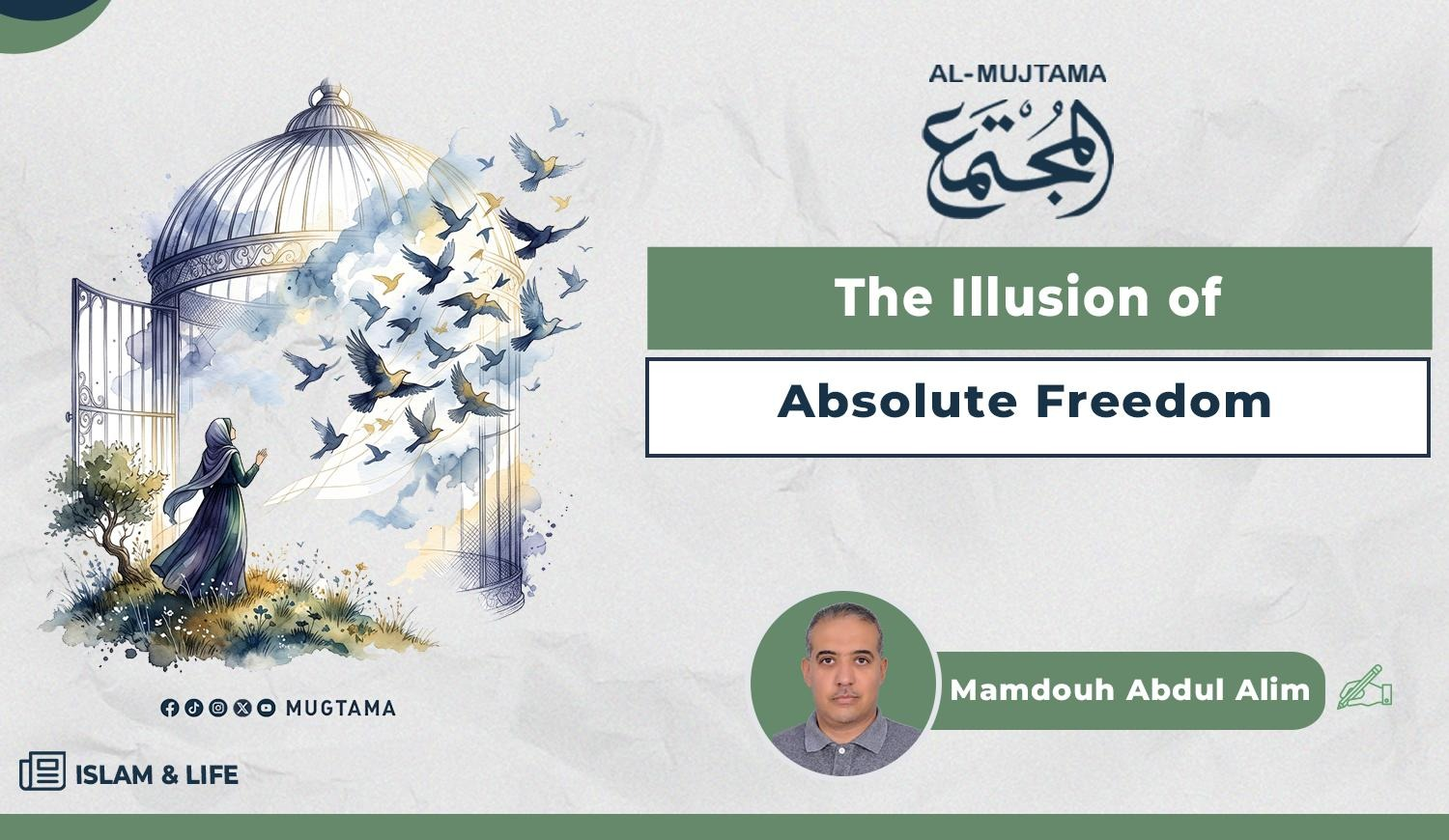
The Illusion of Absolute Freedom

Not
everything a person is capable of doing is something they have the right to do.
Nor does every desire that arises within them deserve to be turned into action.
Likewise, breaking free from restrictions does not necessarily lead to freedom.
This
brings us to one of the most pressing questions in contemporary life: Does
freedom mean doing whatever you want, whenever you want? Or does it mean
possessing the wisdom to recognize what you ought to do?
In some
contemporary discourse, the term freedom has
become a kind of ticket out of responsibility. People invoke it when they want
to do whatever they please and appeal to it when questioned about the impact of
their actions on others. It is as though the right to choose grants them
immunity from criticism, and independence from others means independence from
the consequences of their decisions!
Yet
reason, even before morality enters the discussion, confronts us with an
undeniable truth: human beings do not live alone, and every exercise of freedom
within a society necessarily intersects with the freedoms and rights of others.
Absolute Freedom: An Idea That Contradicts
Its Own Foundation
Absolute
freedom is not merely an idea that is difficult to put into practice. Taken to
its extreme, it contradicts the very foundation of what freedom means. When you
grant a person the right to act without limits, regulations, or laws, you
implicitly grant them the ability to overstep the boundaries of others. You
also grant them the ability to transgress the limits Allah Almighty has
established for His servants.
At that
point, their freedom becomes an assault on the freedom of other people and
society, as well as a transgression of Allah’s limits. How, then, can it make
sense for every person to possess an absolute right to do whatever they wish
when their desires and intentions may conflict with the rights of others?
Freedom
does not lose its meaning when it is governed by what is right. Rather, it
loses its meaning when it becomes a form of power that grants an individual
what it takes away from others.
Freedom
does not mean that your will has no boundaries. It means that the boundaries
governing your actions are just, that your choices are conscious and realistic,
and that your freedom does not become a restriction on the freedom of others.
Absolute
freedom does not create a society of free people. Instead, it opens the door to
a struggle between competing wills and desires, as everyone attempts to expand
their personal freedom, even at the expense of others, to satisfy their
impulses and cravings.
Here,
reason and logic lead us to a truth that must never be overlooked: freedom that
does not recognize the rights of others does not defend freedom at all. It
defends the right of the strongest to impose their will.
Absolute Freedom and the Contradiction of
Servitude to Allah
One of
the most dangerous aspects of the slogan of absolute freedom is that it may lead
a person away from the state of servitude to Allah, Glorified and Exalted is
He.
A servant
who seeks to permit themselves to do anything they desire, whenever they wish,
while justifying their actions with various arguments, is effectively saying to
themselves: “I know better than Allah! I am wiser than Allah!” Far exalted is
Allah above such claims!
Even if a
person cannot openly express this false and corrupt belief, the underlying
attitude remains. This is why Allah Almighty says, {Allah
knows, and you do not know.} [Al-Baqarah 2:216]
This
verse warns us against such destructive ideas, which we have imported from
non-Muslim societies.
Indeed,
the verse corresponds to truth, reality, and the world we live in. As human
beings, what we do not know far exceeds what we know.
How many
people have done something only to regret it later? How many have said words
that ruined their lives? How many have taken the wrong path and suffered
tremendous losses? How many have longed for something, only to find that once
they obtained it, it became a source of misery for them?
How many
have been overcome by sexual desire and pursued relationships forbidden by
Allah, only to be inflicted by HIV? How many have married a woman they believed
would bring them happiness, only to find that the marriage made their lives
miserable?
In such situations
such, the verse calls out to us powerfully: {Allah
knows, and you do not know.} [Al-Baqarah 2:216]
Those who
promote the slogan of absolute freedom often seek liberation from every form of
authority while remaining subject to the authority of their own whims, desires,
cravings, and pleasures. They imagine they have taken control of their lives,
when in reality, they may have become slaves to their own impulses.
True
freedom does not mean doing everything you desire. It means refusing to become
a prisoner of your cravings and impulses, and refusing to let your desires make
decisions on your behalf.
Nor does
freedom mean breaking free from every restriction. It means freeing yourself
from everything that enslaves your will, disables your reason, and corrupts
your conscience.
A person
does not become free simply by breaking the restrictions and rules around them.
Rather, they become free when they develop the awareness
necessary to govern their own decisions and the values that prevent them from
turning their freedom into a means of enslaving others.
Freedom in Islam: Choice Accompanied by
Responsibility
Islam
does not view freedom as an escape from every restriction, nor does it regard
human beings as creatures deprived of the ability to choose. Rather, Islam
affirms their right to make choices while holding them responsible for those
choices.
Not
everything the soul desires is lawful, not everything a person can do is
permissible, and no choice exempts its maker from the consequences, even if
they offer excuses.
Consider
this example. Allah Almighty says, {And say, ˹O Prophet,˺ “˹This is˺ the
truth from your Lord. Whoever wills let them believe, and whoever wills let
them disbelieve.”} [Al-Kahf 18:29]
Here,
Allah grants human beings the freedom to choose. He then explains the
consequences of that choice: {Surely We have
prepared for the wrongdoers a Fire whose walls will ˹completely˺ surround them.} [Al-Kahf 18:29]
This
establishes that possessing the freedom to choose does not mean being separated
from responsibility or exempt from bearing the consequences.
Here, the
greatness of the Islamic understanding of freedom becomes clear. A person is
indeed free to choose, but they are not entitled to redefine what is right
according to their own whims, nor may they use their freedom as a pretext for
violating the rights of others.
In Islam,
freedom does not mean doing whatever you want simply because you want to. It
means choosing consciously, acting according to what is right and just, and
accepting responsibility for your decisions before Allah and then before other
people.
The value
of a choice is not fulfilled merely by possessing the ability to make it.
Rather, it is measured by the justice and goodness it embodies and the
responsibilities it entails.
How to Raise Children to Exercise Freedom
Responsibly
One of
the most serious parenting mistakes is presenting children with two
contradictory extremes: either obedience that leaves no room for choice, or
freedom that gives them whatever they want without holding them responsible for
their actions.
Conscious parenting
does not produce a child who waits for instructions in every minor and major
matter, nor does it produce a child who believes every desire they have must be
fulfilled. Instead, it develops a person who understands how to choose, why
they choose, and what responsibilities follow from their decisions.
Teach
your child that they have the right to express their opinion, but not to insult
others; that they may choose among the available alternatives, but not impose
their desires on everyone else; and that they may respectfully reject something
they do not agree with, but should not turn rejection into a means of rebelling
against every form of guidance.
When you
give your child room to make choices and help them accept the consequences of
decisions appropriate to their age, abilities, and skills, you are doing more
than teaching independence. You are helping them develop an internal moral
compass that guides that independence.
We must
remember that the true goal of parenting is not to keep a son or daughter obedient
and dependent on us throughout their lives. Rather, it is to help them become
capable of making the right decision at the right time, especially when we are
not present to monitor their behavior.
There is
an enormous difference between a child who avoids wrongdoing out of fear of
punishment and one who refrains from wrongdoing out of conviction and an
understanding of the value of responsibility.
------------------------------------------------------------
