








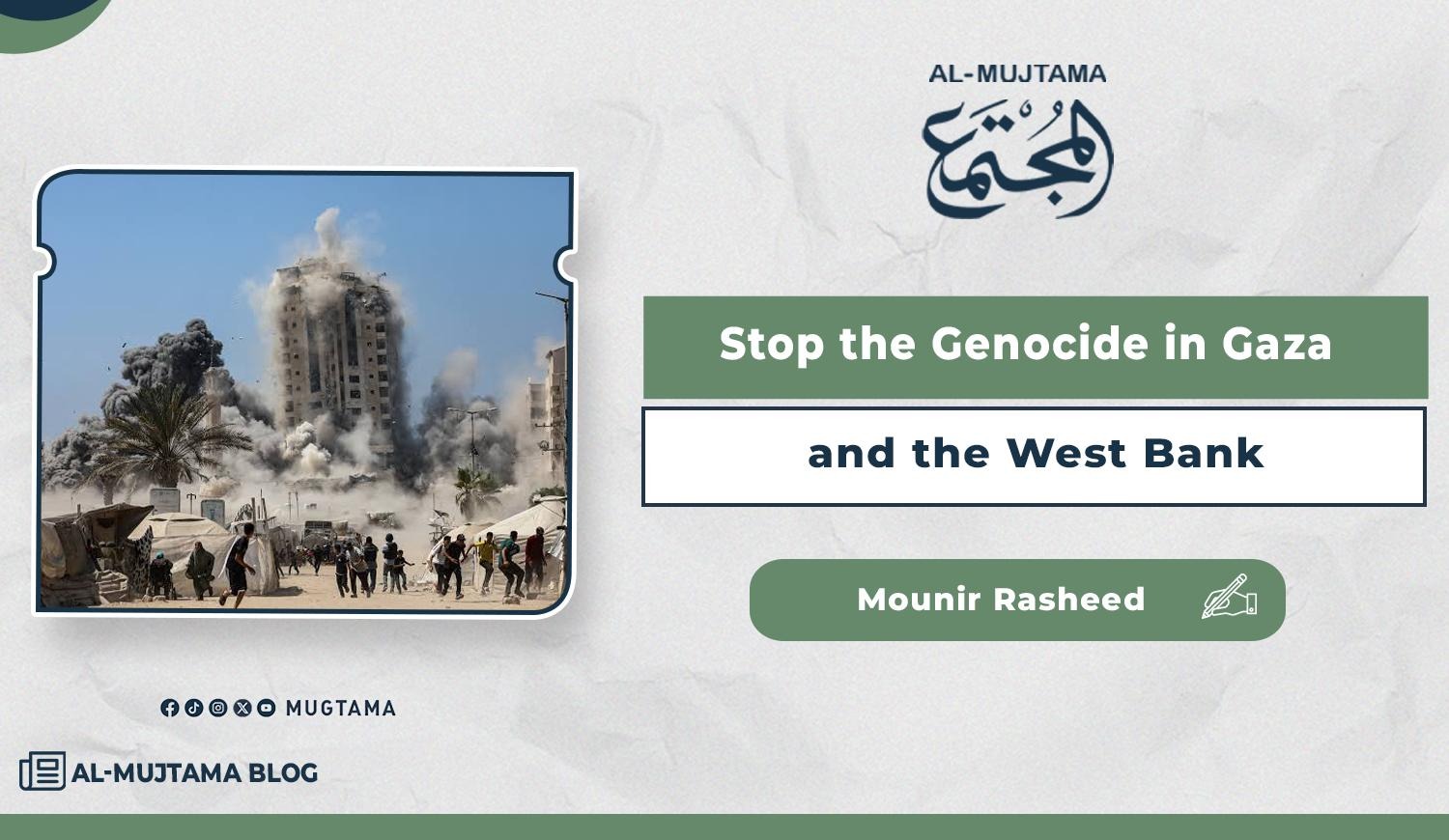
Stop the Genocide in Gaza and the West Bank
In light of the
killing, destruction, displacement, and grave violations inflicted on the
Palestinian people in Gaza and the West Bank, confronting the genocide and
standing in solidarity with Palestinians have become a humanitarian, moral, and
legal imperative, not merely a symbolic gesture.
October
10: A Rallying Point for Solidarity with the Palestinian People
October 10
serves as an opportunity to unite the voices of people, civil society
organizations, official institutions, and advocates for justice around the
world in rejecting the continuation of this tragedy.
True solidarity
must go beyond emotional expressions and translate into practical positions and
meaningful action to protect Palestinians, halt violations, and ensure the
delivery of humanitarian aid. It must also recognize that the Palestinian cause
is not merely a humanitarian issue, but the struggle of a people seeking
freedom, the right to return to their homeland, and the establishment of their
own state across their entire territory.
The Palestinian
people are enduring an exceptionally brutal period. In Gaza, destruction and
displacement continue, while in the West Bank, land confiscation, settlement
expansion, and the forced displacement of residents persist. These measures are
accompanied by the gradual seizure and annexation of land belonging to its
rightful owners, as well as the arrest of young Palestinians and their
imprisonment under the harshest forms of abuse and mistreatment.
In these
circumstances, international solidarity is no longer a political luxury or an
emotional gesture. It is a duty demanded by humanitarian and legal
responsibility. At its core, it is a stand for a people's right to life,
security, dignity, and freedom, as well as a call to ensure that war criminals
and perpetrators of genocide are not allowed to escape accountability.
Gaza and
the West Bank: Ongoing Suffering and Widespread Violations
It is essential
to recognize that what is happening in Gaza cannot be separated from the
realities facing Palestinians in the West Bank and Jerusalem. In the Gaza
Strip, the war has left massive destruction and a profound humanitarian crisis,
with tens of thousands killed, hundreds of thousands wounded and injured,
thousands of widows and orphans, and thousands of detainees and prisoners held
in harsh and inhumane conditions. Infrastructure, hospitals, and schools have
been destroyed, while vast numbers of people who have lost their homes are
living in tents, exposed to the scorching summer heat and the bitter cold of
winter.
In the West
Bank, military raids and arrests continue, alongside violent acts by settlers
and the expansion of settlements at the expense of Palestinians and their land.
Strict restrictions on daily movement further compound their suffering and
threaten their stability.
The full
picture of what Palestinians face in Gaza and the West Bank would remain
incomplete without addressing Jerusalem and Al-Aqsa Mosque. Daily incursions
continue under the protection of Israeli occupation police, alongside
restrictions on worshippers seeking to pray and exercise their freedom of
religion. Meanwhile, Palestinians in Jerusalem face mounting pressure intended
to force them from their homes and gradually empty the city of its inhabitants.
Jerusalem is
more than a city, and Al-Aqsa Mosque and the Church of the Holy Sepulchre are
integral to Palestinian, Arab, and Islamic identity, history, and collective
consciousness. They are not merely places of worship.
October
10: From Solidarity to Action
October 10
should serve as an occasion to unite international efforts and raise a clear,
unwavering voice in support of the Palestinian people's rights and an end to
their suffering. It offers an opportunity for people, organizations, and
governments to speak out against the occupation, demand an end to its massacres
and grave violations, and bring public and official positions together to form
a broad front of solidarity that supports the Palestinian people and presses
the occupying power to end its crimes and genocidal war.
It would be
dangerous for this day of solidarity to become a fleeting expression of
sympathy that fades once its events conclude. The real responsibility is to
transform these positions and emotions into political, legal, and humanitarian
action, as well as concrete programs to alleviate Palestinian suffering, hold
those responsible for war crimes and genocide accountable under international
law, and isolate the occupying state by refusing to engage with or normalize
relations with it.
Accordingly,
every effort must be directed seriously toward ending the occupation,
respecting the will and rights of the Palestinian people, and taking concrete
measures to protect them. Action must go beyond expressions of concern and the
issuing of statements.
The Palestinian
people need more than solidarity expressed through words and emotions, however
much they appreciate such support. They need an international stance that ends
the occupation, guarantees their rights, protects their holy sites, and paves
the way for their return to their homes and the establishment of their own
state across their entire homeland.
-------------------------------------------------------------
