






Stockholm Quran Desecration: A Sign of Deepening Racism in Sweden

.jpeg)
Don’t be deceived by
what you hear or read about Sweden in terms of freedom, liberalism, and
democracy. Sweden has witnessed—and continues to witness—a stark rise in
incidents of racism and Islamophobia,
revealing an ugly racist core that persists within Western societies. Do not
believe that Sweden is a leading state in liberal values, multiculturalism, and
human rights; its normalization of anti‑Muslim rhetoric and hate crimes strikes
at the heart of that image. The escalation of attacks—symbolic, verbal, and
physical—does not merely point to a small fringe that fails to represent
Swedish society, but exposes the bias found among segments of these countries
and their societies against Islam and Muslims. Understanding the significance
of these developments requires examining recent events, historical patterns,
the actors involved, and the state’s response.
Desecration of the Quran outside a Stockholm Mosque
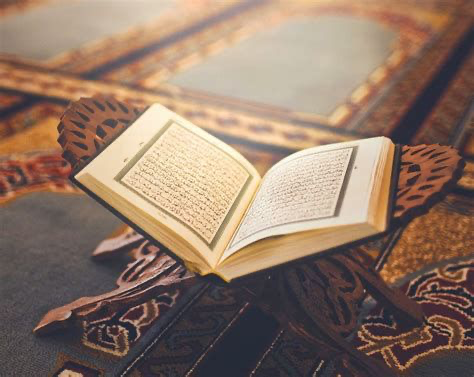
One of the most alarming recent incidents occurred outside the Stockholm
Grand Mosque, where worshippers discovered a desecrated copy of the Qur’an
chained to the mosque’s stair railings. The holy book had six bullet holes and a sticker in Arabic and Swedish telling Muslims it
was “time to go home” . Mosque officials described the act as a direct racist attack
targeting Muslims’ sense of safety and belonging. Police opened a hate‑crime
investigation, while community leaders emphasized that such incidents are
becoming increasingly frequent and increasingly bold.
This attack did not occur in isolation. It followed years of high‑profile
Qur’an burnings and desecrations by far‑right activists such as Rasmus Paludan
and Salwan Momika, whose actions—often carried out under police
protection—sparked international outrage and strained Sweden’s diplomatic
relations. The desecration outside the mosque thus represents both a continuation
and an escalation of a broader pattern of Islamophobic provocation.
A History of Racism and Islamophobia in Sweden
Although Sweden is often celebrated for its progressive social model,
racism and Islamophobia
have deep historical roots. Anti‑immigrant sentiment intensified in the late
20th century as Sweden received refugees from the Middle East, the Balkans, and
Africa. Over time, far‑right parties such as the Sweden Democrats capitalized
on fears about immigration, crime, and cultural change, normalizing anti‑Muslim
narratives in mainstream political discourse.
The past decade has seen repeated Qur’an burnings, mosque vandalism, and
online hate campaigns. In 2023, Salwan Momika burned the Qur’an outside the
Stockholm Mosque during Eid al‑Adha, provoking global condemnation and protests
across the Muslim world. Earlier that year, Rasmus Paludan burned a Qur’an
outside the Turkish embassy, triggering diplomatic tensions and violent unrest.
These incidents illustrate how Islamophobia
has become a recurring feature of Sweden’s public sphere.
Those Responsible for Racist and Islamophobic Practices
Responsibility for rising Islamophobia in Sweden lies with multiple
actors:
- Far‑right extremists who stage provocative Qur’an
burnings and spread anti‑Muslim propaganda.
- Online hate networks that amplify racist narratives
and normalize dehumanizing language.
- Political actors who exploit fears about
immigration and national identity for electoral gain.
- Media outlets that sensationalize stories
about Muslims, reinforcing stereotypes.
Individuals like Paludan and Momika have played outsized roles in shaping
public discourse, but they operate within a broader ecosystem that enables and
legitimizes their actions. Their provocations are not isolated acts of
hatred—they are strategic performances designed to provoke outrage, attract
attention, and push Islamophobic ideas into mainstream debate.
The Aims of Islamophobia and Racism
Islamophobia serves several political and ideological purposes:
- Marginalization: To push Muslims to the edges of
society by portraying them as foreign, dangerous, or incompatible with
“Swedish values.”
- Polarization: To create social division and
mobilize support for far‑right agendas.
- Provocation: To trigger emotional reactions
that can be used to justify further repression or discriminatory policies.
- Dehumanization: To strip Muslims of their
rights, dignity, and sense of belonging.
The desecration of the Qur’an outside the Stockholm Mosque—complete with
bullet holes and a message telling Muslims to “go home”—is a clear example of
how Islamophobia seeks to intimidate and exclude.
The Swedish State’s Stance on Racist and Islamophobic Practices
Sweden’s response to Islamophobia has been inconsistent. On one hand,
authorities have condemned hate crimes and opened investigations into incidents
like the recent Qur’an desecration. On the other hand, Sweden’s broad
interpretation of freedom of expression has allowed repeated Qur’an burnings to
proceed under police protection, despite their clear intent to incite hatred
and provoke violence.
International bodies—including the EU, UN, and Organisation of Islamic
Cooperation—have urged Sweden to take stronger measures against
Islamophobic hate crimes. Yet the state remains caught between protecting free
speech and addressing the real harm caused by racist provocations. This tension
has left many Muslims feeling unprotected and unheard.
The Position of Muslims in Sweden
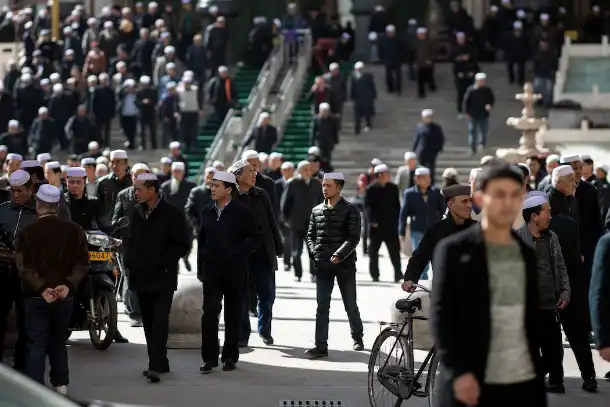
Muslims
in Sweden—estimated at around 8% of the population—are a diverse and integral part
of society. Yet they face disproportionate discrimination in employment,
housing, education, and policing. Mosque leaders emphasize that Muslims are “a
natural and integral part of Swedish society” and demand stronger protections
for their communities.
The rise in hate crimes has created a climate of fear, particularly for
visibly Muslim individuals such as women who wear the hijab. Many feel that
their religious identity is under attack and that the state is not doing enough
to safeguard their rights.
The rise of racist and Islamophobic attacks in Sweden is a warning sign
of deeper social fractures. The desecration of the Qur’an outside the Stockholm
Mosque is not merely an isolated hate crime—it is a symbol of a broader climate
of hostility, emboldened extremism, and political polarization. Addressing this
crisis requires more than condemning individual incidents; it demands
confronting the structural forces that enable racism, strengthening legal
protections, and reaffirming the rights and dignity of Muslim communities.
Sweden now faces a critical choice: uphold its democratic values or allow
hatred to erode the foundations of its society.