









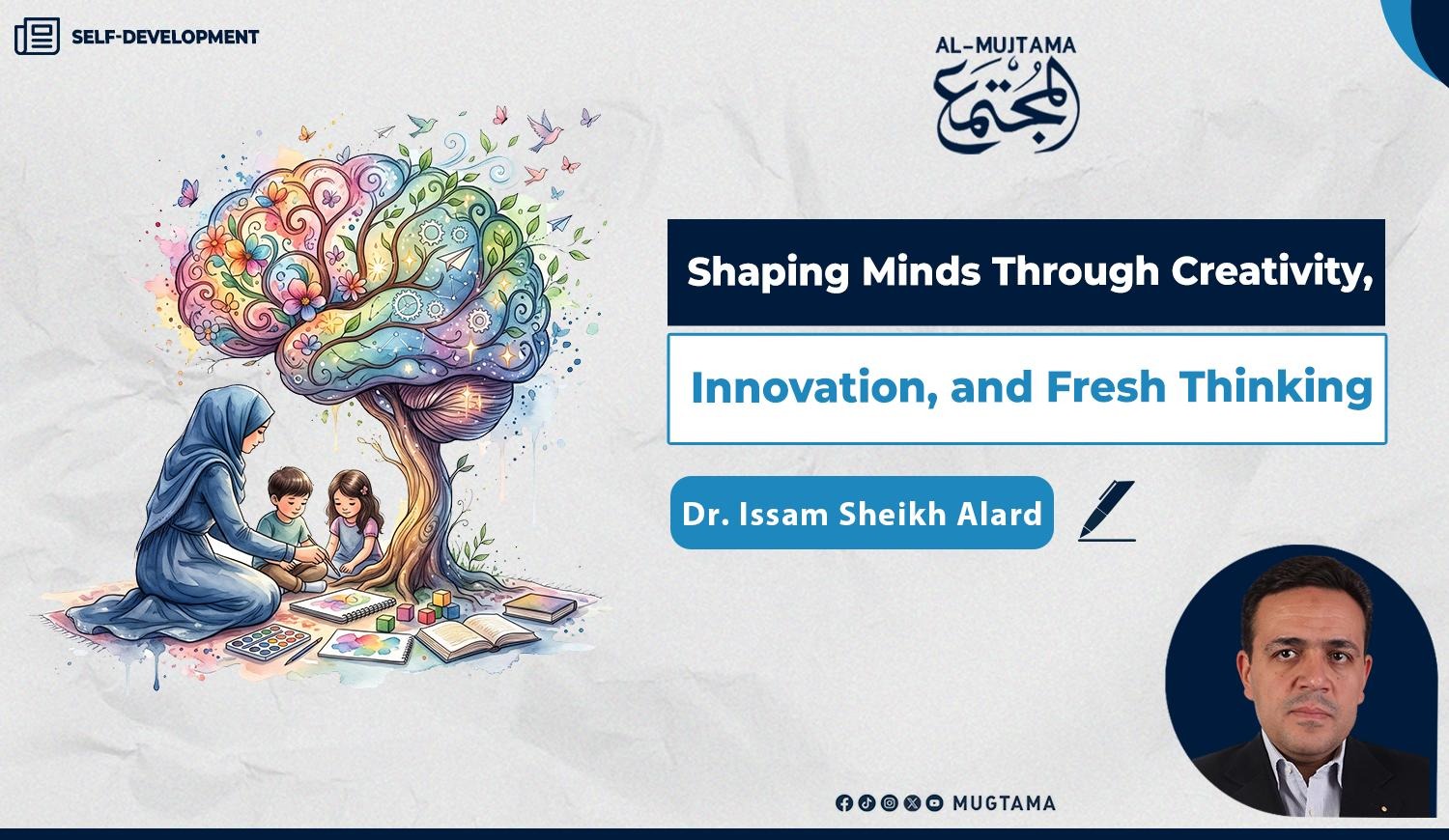
Shaping Minds Through Creativity, Innovation, and Fresh Thinking

Throughout
history, creative thinking has not only been essential as a survival mechanism,
but also crucial for improving our quality of life. Years ago, creativity and
innovation were primarily associated with art, entertainment, or recreation,
and only in very rare cases were they linked to the corporate world and
business. Today, however, that has changed. Innovation, and creativity in
particular, is considered fundamental across a wide variety of fields.
This shift is
reflected in the Future of Jobs report published by the World Economic
Forum in 2016, which ranked creativity among the top three most in-demand
skills for the future. This places a serious demand on organizations to
innovate in order to maintain their competitive edge in a global market.
Moreover, they must continually develop new products and services simply to
survive and remain relevant.
Creative
Thinking: Its Impact on Skill Development and Achievement
Research shows
that creative thinkers are more optimistic, confident, resilient, healthier,
and better equipped to handle stress. Creative students also tend to achieve
more, are more engaged in their work, and possess higher self-esteem.
Paul Torrance,
widely known as the "Father of Creativity," found that childhood
creativity is nearly three times stronger a predictor of lifetime achievement
than childhood IQ. Torrance developed his famous Tests of Creative Thinking
in 1962, which remain among the most widely used assessments in the world,
utilized for everything from identifying gifted students to placing them in
specialized educational programs tailored to their potential.
Yet, creative
thinking appears to be declining at an alarming rate. The good news, however,
is that creativity can be cultivated. While roughly 40% of our creativity is
rooted in genetics, 60% comes from our environment, specifically from richer,
more playful surroundings that encourage us to expand our thinking. This is
precisely why we must drive a cultural shift toward nurturing creative thinking
in the next generation.
As Albert
Einstein famously put it, offering a powerful reminder to produce our best work
and tap into our fullest potential: "The secret to creativity is
knowing how to hide your sources."
Creativity
and Innovation: The Engine of Competitiveness and New Ideas
Creativity is
critical to the competitiveness of companies, entire industries, and even
national economies. In today's business landscape, executives and organizations
must actively manage professional creativity within their specific contexts.
Every enterprise or entrepreneur needs to structure their operations in a
unique way that allows them to spot opportunities for innovation and execute
them successfully.
When Einstein
was once asked about the difference between himself and an average person, he
replied: "If you ask an average person to find a needle in a haystack,
they will stop looking the moment they find it. I, on the other hand, would
keep searching through the haystack to see if there might be other
needles."
Creative
development, then, lies in our ability to imagine and dream. Creativity is more
of a mindset than a task, and true creative growth often runs counter to
conventional knowledge. We don't necessarily need to become deeper experts in a
single niche or stockpile more facts about problem-solving; rather, we need to
learn how to stay open to new ideas and possibilities, and how to harness the
innate curiosity we are all born with.
As we grow
older, getting bogged down by the relentless demands and pressures of modern
life pulls us away from that innocent, playful, childlike approach to the world,
causing us to lose our ability to think creatively. Rediscovering this capacity
is more vital now than ever. Everything you learn, read, and practice adds to a
vast reservoir of experience and knowledge that subtly sparks fresh ideas
without you even realizing it. If there is one golden rule for unlocking
creativity, it is to read widely across diverse disciplines.
Steve Jobs, the
late co-founder and CEO of Apple, captured this perfectly: "Creativity
is just connecting things. When you ask creative people how they did something,
they feel a little guilty because they didn't really do it, they just saw
something. It seemed obvious to them after a while. That's because they were
able to connect experiences they've had and synthesize new things."
There are no shortcuts; you simply have to collect as many dots as possible so
your mind can connect them to invent something new. That is the very essence of
the creative process.
Ultimately,
nothing can put you in a truly creative state quite like working with passion
and genuine love for what you do. When you love your work, your mind enters an
optimal state for creativity, free from stress and the dread of feeling forced
into something you hate. The more effort you pour into work you care about, the
more creative breakthroughs will naturally emerge to help you overcome
practical obstacles along the way.
Whatever work
you do, turn it into an art form and a source of joy. The harder you work and
the more you learn, the greater success you will achieve, which in turn
motivates you to push even further toward mastery. That is when you reach the
stage of practical, applied creativity, all driven by a love for what you do.
-------------------------------------------------------------