



Head of the Swedish Council of Imams Sheikh Khaled Al‑Deeb to Al‑Mujtama‘: Imported Fatwas Are the Greatest Challenge Facing Muslims
Muslims in Sweden: Identity, Challenges, and Imported Fatwas
.jpeg)
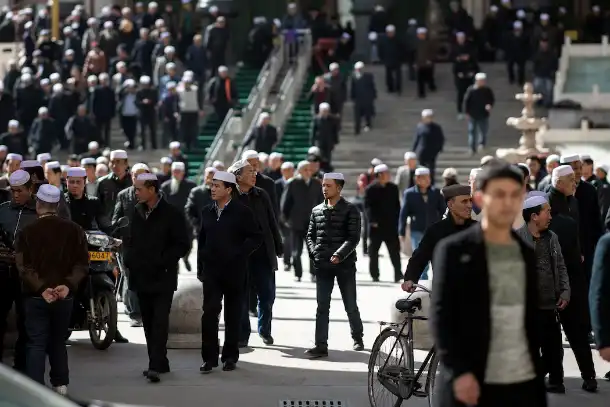
Islam is the second largest religion in Sweden and Europe, and the fastest growing over the past five decades. Muslims in Sweden make up about 8.1% of the total population of 10 million—around 875,000 people.
Muslims arrived from various Islamic countries and settled in Sweden more
than four decades ago, living mainly in major cities: Stockholm, Gothenburg,
and Malmö.
Al‑Mujtama‘ interviewed Sheikh Khaled Al‑Deeb, President of the Swedish Council of
Imams and Head of the Fatwa and Research Committee in Sweden, who spoke about
the challenges Muslims face and how they have established a presence in Swedish
culture and society.
Muslims in Sweden: Origins and Growth
Al‑Deeb explained that Muslim presence in Sweden dates back to the 1940s,
when some Tatars migrated in 1947 and settled in Stockholm, establishing the
first Islamic association. Since then, numbers have steadily increased, making
Islam the second largest faith after Protestant Christianity.
Discrimination and Islamophobia
He noted that feelings of discrimination and marginalization have grown
recently due to:
1. The rapid rise of political parties calling for expelling migrants.
2. Media amplification of individual violations by some migrants.
3. The spread of Islamophobia, escalating into attacks on Muslims.
Contradictions: Burning the Qur’an vs. Other Symbols
Al‑Deeb commented on contradictions such as the burning of the Qur’an
becoming a “trend,” while burning the LGBTQ flag or the Israeli flag is
criminalized. He said reactions varied: officially, Sweden’s constitution
guarantees freedom of expression, but legal measures have succeeded in
convicting some perpetrators. Religious leaders and mosques issued statements
condemning the acts, warning they fuel hatred and division.
Child Protection Laws and Muslim Families
On the issue of Muslim children being taken from families, Al‑Deeb
explained that Sweden’s Social Services law allows intervention if children
face violence or harm—even from parents. The law grants wide powers for early
intervention, including family support meetings and therapy, aiming to prevent
crime and addiction. He advised Muslim parents to strengthen dialogue, love,
and compassion in raising children.
Muslim Duties in Western Societies
Al‑Deeb summarized Muslim responsibilities in two areas:
- Understanding
Western reality and respecting laws: obeying public order, positive
civic participation, mastering the local language and culture.
- Preserving
Islamic identity: instilling faith and worship in
youth, building strong institutions like Islamic centers and schools,
engaging society without losing identity, and presenting values wisely.
Religious Institutions and Fatwas
He noted that Sweden allows wide legal space for Islamic practice,
including mosques, centers, and religious activities. However, Muslims lack a
unified religious authority. Seven official unions exist (Shi‘a, Bosnian,
Turkish, Islamic organizations), covering 60 mosques and associations. Efforts
are underway to form one council, but the biggest challenge remains imported
fatwas from outside Europe, which fail to reflect local realities.
Muslim Contributions in Sweden
Muslims contribute in various fields:
- Growing
presence in business and entrepreneurship.
- Arab, Turkish,
and Somali Muslims establishing companies in transport, trade, and
import/export.
- Second and
third generations entering higher education and professions like medicine,
engineering, and IT.
- Political
participation, with some Muslims elected locally and even to parliament,
though experiences were short‑lived.
Cultural Integration
Muslims respect Swedish traditions that do not contradict Islamic
beliefs, participating in public cultural events. They also influence Swedish
cuisine and culture, with halal food and Eastern dishes like saffron and ginger
cakes becoming popular. Muslim chefs and media figures promote halal cooking
and Eastern cuisine, linking Islamic culture with Swedish society without
conflict.
-----------
Read the article in
Arabic
