

Muslim Women and Social Justice: Beyond Stereotypes
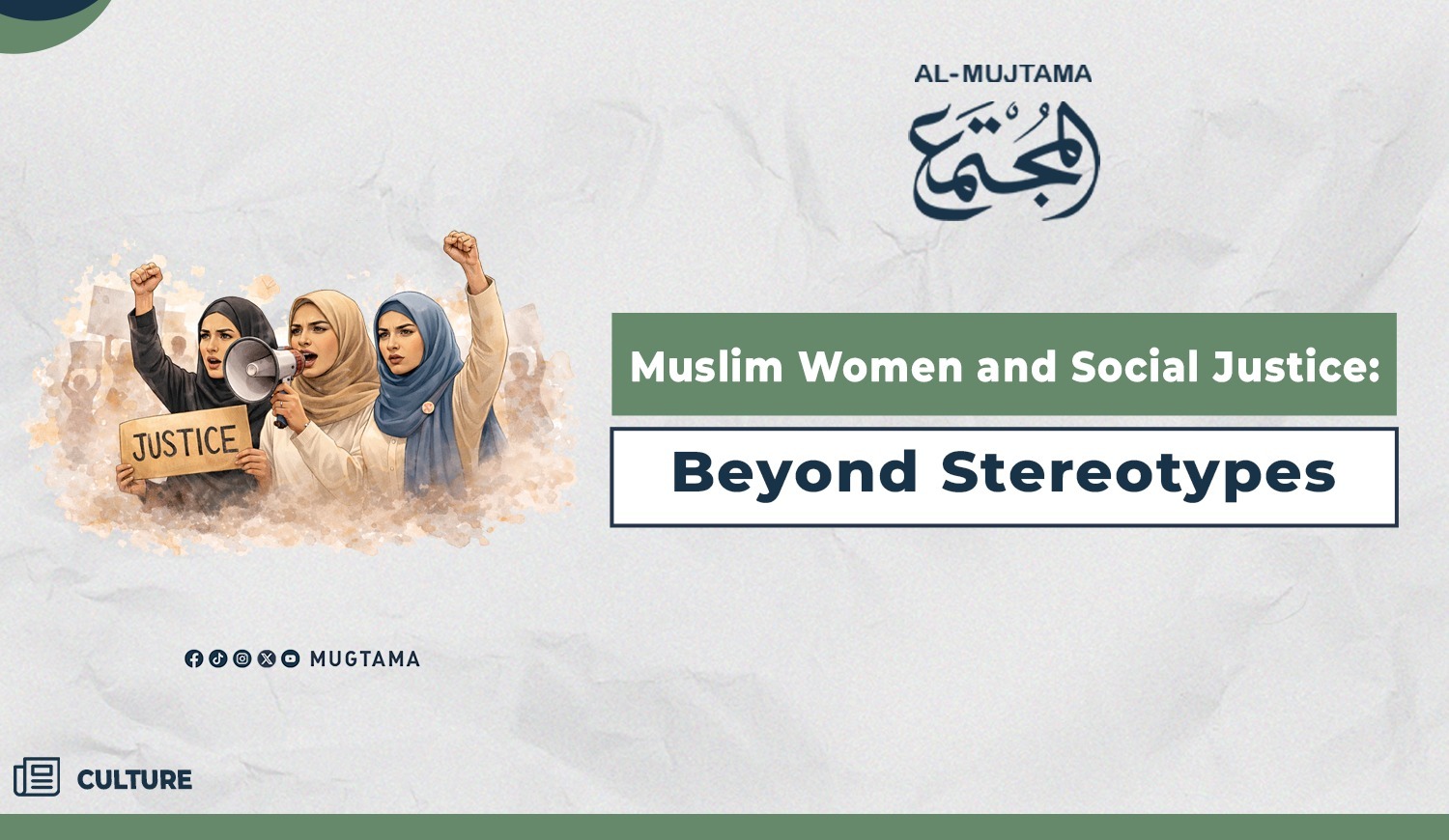
In the global discourse on social justice, Muslim women are
often — and wrongly — portrayed as figures in need of “rescue.” This narrow
view ignores a historical and contemporary reality: Muslim women have been at
the forefront of defending human rights, advancing education, and leading
politically for more than 1,400 years. On this International Women’s Day, as we
reflect on equality, it is time to recognize that the pursuit of progress by
millions of women is not a rejection of faith, but a profound expression of it.
The
Legal Mandate for Equality
The foundation of women’s struggle in Islam does not lie in
modern secularism, but in the revelation of the Qur’an in the 7th century. At a
time when female infanticide was practiced and women were denied inheritance,
the Qur’an introduced a radical principle of equality. The text describes men
and women as allies — protectors and supporters of one another — entrusted with
the collective duty of “enjoining what is right and forbidding what is wrong”
(Qur’an 9:71).
Prophetic traditions reinforced this concept. The Prophet
Muhammad (peace be upon him) famously said: “Women are the twin halves of
men,” establishing biological and spiritual parity that mandated education
and social participation. These were not mere suggestions, but foundational
legal principles granting women rights to own property, sign contracts, and
choose their spouses centuries before similar rights were codified in the West.
The
Legacy of Institutional Leadership
Islamic civilization is marked by women who viewed
leadership as worship. Their contributions were not marginal, but
comprehensive.
- Pioneers of Education: In 859 CE, Fatima al-Fihri used
her inheritance to establish the University of al-Qarawiyyin in Morocco.
Recognized by UNESCO as the world’s oldest degree-granting university, her
vision set the model for higher education we follow today.
- Jurists and Diplomats: Aisha bint Abu Bakr (RA) was a
leading intellectual authority, teaching both men and women. Her expertise
in medicine, poetry, and Islamic jurisprudence made her a beacon of
knowledge in early Islam.
- Economic Pillars: Khadijah (RA), a successful
merchant, exemplified the professional Muslim woman. Her financial
independence and strategic support were cornerstones upon which the early
faith was built.
The
2026 Landscape: Data vs. Perceptions
Moving from history to the present, data challenges the
widespread notion of “oppression.” According to World Bank (2025) and UN Women
statistics, Muslim-majority countries are witnessing transformative shifts in
women’s roles:
- STEM Education: In nations such as Jordan,
Algeria, and the UAE, women often comprise 50–60% of university students
in engineering and science — higher than in many G7 countries.
- Political Rise: From the UAE’s Federal National
Council (with 50% female representation) to grassroots peace movements led
by women in Sudan and Indonesia, Muslim women draw on faith to negotiate
peace and policy.
- NGO Impact: The World Bank’s 2026 Women,
Business and the Law report notes that 68 economies enacted legal
reforms enhancing women’s economic inclusion in the past two years, with
significant progress in the Middle East and North Africa on wage equality
and workplace protections.
Today, Muslim women’s advancement is marked by major
transformations in education, governance, and law. Women now make up more than
50% of university graduates in MENA, surpassing gender parity in many STEM
fields. Political representation is rising, with countries like the UAE and
Bangladesh meeting or exceeding the global average of 27.2% in parliaments.
These gains are reinforced by legal reforms in 68 countries, expanding women’s
mobility, wage equality, and entrepreneurship opportunities — signaling a systemic
shift toward comprehensive empowerment.
Reframing
the Future: Justice as a Spiritual Duty
The challenges facing Muslim women today — from regional
conflicts to barriers in leadership — are real. Yet the solution increasingly
lies within their own values. Contemporary activists are not demanding
“liberation” from their faith, but urging society to fulfill the faith’s
original promises of justice and compassion.
As we celebrate International Women’s Day, we must move
beyond stereotypes. We see women leading climate initiatives in Pakistan, tech
startups in Riyadh, and peace negotiations in West Africa. Their activism
demonstrates that when women draw strength from their spiritual identity, they
transform not only their own lives but their entire communities.
The legacy of Khadijah bint Khuwaylid, Aisha (RA), Fatima al-Fihri, and
others is not a relic of the past, but a roadmap for a more just, educated, and
peaceful global future.
You may also like:
Historical Roots of Oppressing Women in Western Civilization