








Charity in Kuwait
Kuwaiti Philanthropy and Its Role in Advancing Human Rights

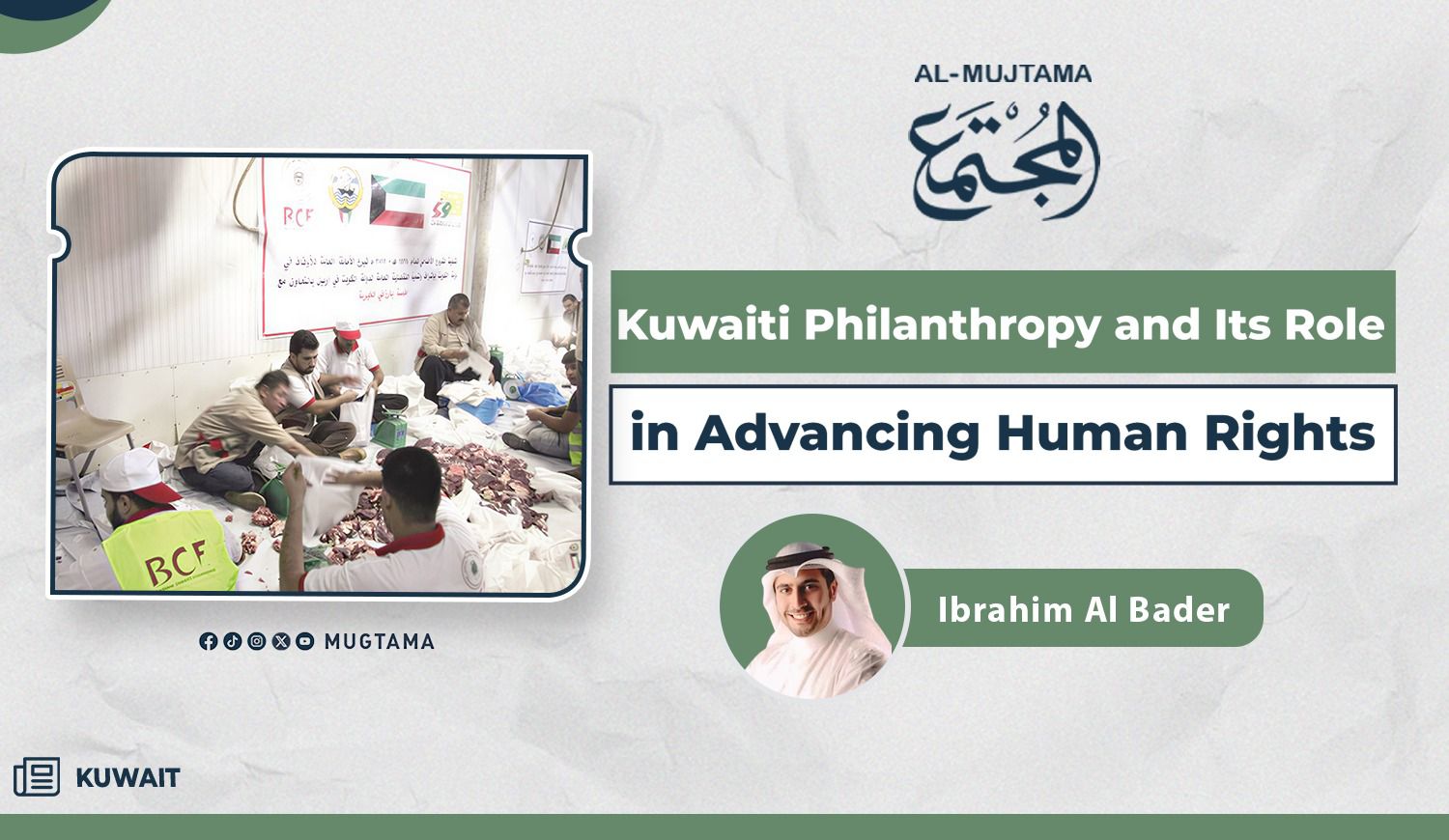
In a world where crises accelerate and the gaps between resources and needs continue to widen, Kuwaiti philanthropy emerges as a powerful force helping to bridge those divides. Its institutions shoulder their responsibilities toward humanity by launching vital humanitarian initiatives whose impact extends to strengthening the broader human rights framework and improving quality of life.
Kuwait is by Your Side
For decades, Kuwait has gone beyond
the role of a “traditional donor,” shaping for itself a distinctive
humanitarian model that treats giving as a civilizational mission and a tool
for preserving human dignity. It has combined material support with moral
values, making its humanitarian slogan—“Kuwait is by your side”—a genuine expression of its ethical
and human commitment to people everywhere.
This approach is rooted in the solid
foundations of the Kuwaiti Constitution of 1962, which established the values
of freedom, justice, and equal opportunity as the basis of a dignified life. It
enshrined rights to education, healthcare, housing, decent work, and the
protection of family, childhood, and youth.
Kuwaiti humanitarian interventions are not emergency aid, but a response to inherent rights
These constitutional principles have
been translated by Kuwaiti charitable institutions—foremost among them the International Islamic Charitable Organization—into practical policies and institutional systems
implemented on the ground. This has placed Kuwait at the forefront of Arab
countries that have integrated human rights into the core of their social
programs. Over time, this approach has shaped the unique identity of Kuwaiti
philanthropy at home and abroad, built on the integration of humanitarian
purpose and rights‑based commitment.
The concept of Kuwaiti charitable
work has evolved from individual benevolence to a modern institutional vision
that views humanitarian interventions not as temporary acts of charity, but as
responses to fundamental rights. When Kuwaiti organizations fund education
projects in Africa or water projects in Asia, they reinforce the human right to
knowledge, health, and a dignified life—not merely offering short‑term
assistance.
Sustainable Development Goals
From this rights‑based perspective,
Kuwait has ensured that its charitable efforts align with the international human rights framework—from the Universal Declaration of Human Rights
and the two International Covenants to the Sustainable Development Goals
(2030). The programs supported by Kuwaiti institutions directly intersect with
global goals to combat poverty and hunger, ensure quality education, promote
gender equality, provide clean water and energy, and build safe and stable
communities.
This commitment has translated into
tangible initiatives that have made a real difference in people’s lives—from
building schools and training centers in Yemen, Syria, Lebanon, and Palestine,
to empowering thousands of young people through education and vocational
training; from establishing hospitals and health centers in crisis‑stricken
areas, to funding drinking‑water projects in African countries,
thereby safeguarding the rights to life, health, and dignity.
Kuwait has moved beyond the traditional donor role to craft a unique humanitarian model
Through this approach, Kuwaiti
philanthropy has become a strategic pillar for human rights. It does not merely
provide relief to those in distress; it works to build human capacity and
secure long‑term futures. This vision rests on three essential pillars:
- a constitutional foundation that frames giving within the values of justice
and equality,
- political will that embraces humanitarian action and provides institutional
support and legal protection,
- and a deeply rooted social consciousness grounded in Kuwait’s longstanding culture of
generosity, where the efforts of individuals complement those of the state
and civil society.
Unique Balance
With this unique balance between
legal, political, and societal dimensions, Kuwait has secured a leading
position among donor nations and has become a humanitarian platform that
inspires the world. It demonstrates that integrating philanthropy with the human
rights system is the most effective path toward building a more just,
equitable, and stable world.
The Kuwaiti experience has proven that
giving and rights are not opposites, but rather two wings that uplift the human
being and safeguard dignity. In every school built, every well dug, and every
patient treated, the core principle is reaffirmed: the human being comes first.
And so, Kuwait continues its
humanitarian journey with confidence and capability, affirming that the
philanthropic sector is a fundamental partner in comprehensive development
alongside the public and private sectors.