






Jerusalem: The Heart of the Palestinian Cause

.jpeg)
What a
large segment of the world fails to realize is that the Palestinian cause has
no solution outside the framework of justice, equality, and the national and
collective rights of the Arab Palestinian people. What those who have only
recently become acquainted with the Palestinian cause—through the normalization of some
Arab states—often overlook is that this cause has occupied the Arab mind and
conscience since the early twentieth century.
The intense struggle over land and rights in the face of colonialism and Zionism began with momentum during the Ottoman era, then
evolved and intensified significantly under British rule over Palestine
starting in 1917.
Why Does Jerusalem Hold Such Central Importance?
Some wonder
why Jerusalem carries
such immense significance. What must not be forgotten is that Palestine and
Jerusalem embody the soul of the Arab nation, which has been subjected to
injustice for decades due to systematic targeting—on one hand by Zionism, and
on the other by dominant colonial powers.
The occupation of Jerusalem and the efforts to seize the homes of its people are
nothing but a continuation of Zionism’s foundational mission: replacing an
indigenous people with settlers.
To
surrender Jerusalem is to surrender the Arab world to a will of dispossession
and absolute domination over its lands. The success of Zionism in Palestine is
a prelude to its success in other vulnerable Arab regions. Conversely,
confronting Zionism in Palestine is the path that protects the Arab depth from
dark and unjust destinies ahead. It is also the path that liberates Arabs from
their fragmented and difficult reality.
In Jerusalem lies the
measure of liberation or submission for a nation, and thus, the conflict
reignites and intensifies at every turning point.
For many
reasons, the struggle over Jerusalem and Palestine has become a benchmark for human dignity—and Arab
dignity alike. Where else in the world are sacred sites stripped and lands
stolen with such violence and force?
Thus, whoever resists in Jerusalem is defending the rights of all Arabs,
defending the future, and defending other lands deep within Arab countries that
Zionism and dominant powers may one day seek to seize or subjugate—whether
through deception, force, or violence.
The
confrontation in Jerusalem is also a confrontation with global powers whose presence we see across Arab lands, such as in
Syria, Iraq, and elsewhere—powers that seek to keep Arab societies weak,
divided, and ruled by authoritarianism.
To relinquish Jerusalem, Palestine, justice, and rights is to relinquish
something far deeper than land or geography—it is a surrender of what remains
of Arab and Muslim values and worth.
The Religious and Historical
Significance of Jerusalem
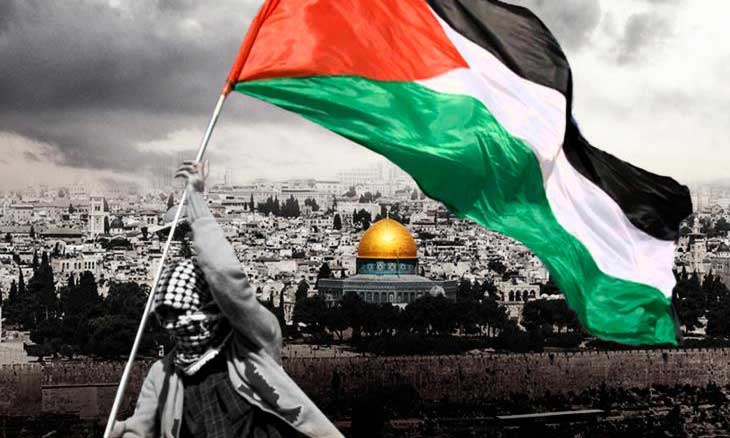
Jerusalem
holds a special place in Islamic and Arab history. It is home to the first direction of prayer (qiblah)
and the third holiest mosque in Islam, and it possesses a long history across
Islamic as well as Christian eras.
Jerusalem’s value also lies in the fact that it is inseparable from the cause of a people who remained steadfast on their land, were forcibly
displaced in 1948, and yet rose again and again in search of identity,
belonging, and rights.
The
Palestinian story is not a fleeting narrative destined to fade away. It has
sparked multiple Arab-Israeli wars, fueled revolutions, struggles, and
political movements, and has become intertwined with the present and future
fate of the Arab world. This connection has always been—and remains—embedded
within the Arab-Palestinian condition.
From Past Uprisings to Today’s Resistance
The
scenes unfolding today in Jerusalem speak directly to the scenes of yesterday: the
First Intifada of 1987, the Second Intifada of 2000, and the continuous, daily
confrontations in Jerusalem and throughout Palestine across all stages.
Jerusalem
itself was the birthplace of the Prophet Musa (peace be upon him) uprising in
1920, protesting land confiscation, Jewish immigration, the Balfour
Declaration, and Britain’s imposition of Hebrew and the Balfour Promise within
the legal framework of the British Mandate.
The same Jerusalem witnessed the Al-Buraq uprising of 1929, which mobilized all
of Palestine. It was also—along with the rest of Palestine—a central hub of the
Great Palestinian Revolt of 1936–1939, and the place that sheltered Abdul Qader
Al-Husseini, the Army of the Holy Jihad, and the Battle of Al-Qastal in 1948.
Jerusalem at the Center of the World’s Conscience
For a
moment, Jerusalem appears
to be the center of the world. When it moves, Palestine moves with it—and so
does the world.
The mobilization of Jerusalem’s people, their uprising, heroic resistance,
demonstrations, and the clear solidarity campaigns across major Western and
Eastern capitals alike are evidence of Jerusalem’s sanctity and proof of the
universal importance of justice at a time when the global system
increasingly leans toward brutality and racism.
The
so-called “eternal capital” of the occupying state is in reality a usurped
capital, built on stolen lands and seized territories—lands defended
relentlessly by a people who have never ceased to protect them.
For Further Reading:
- Who Deserves the Honor of Defending Human Rights?
- Caliphate Demise Reshaped the World Map, Brought Anguish to Palestine
- Historically, How European Powers Smashed the Political Islamic Unity? (1)
-------------------------------------------------------------