




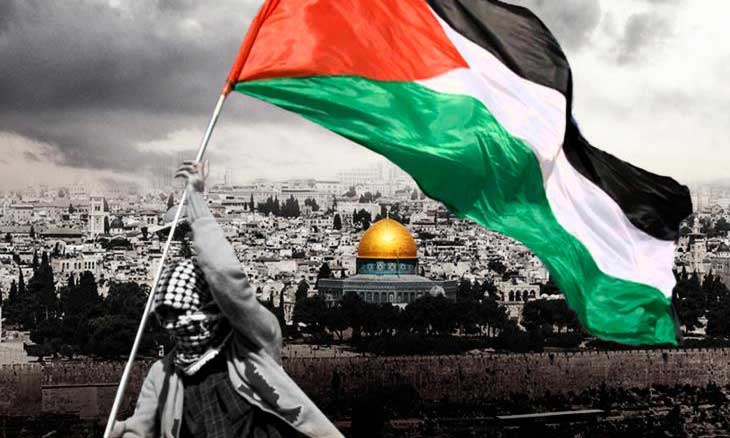

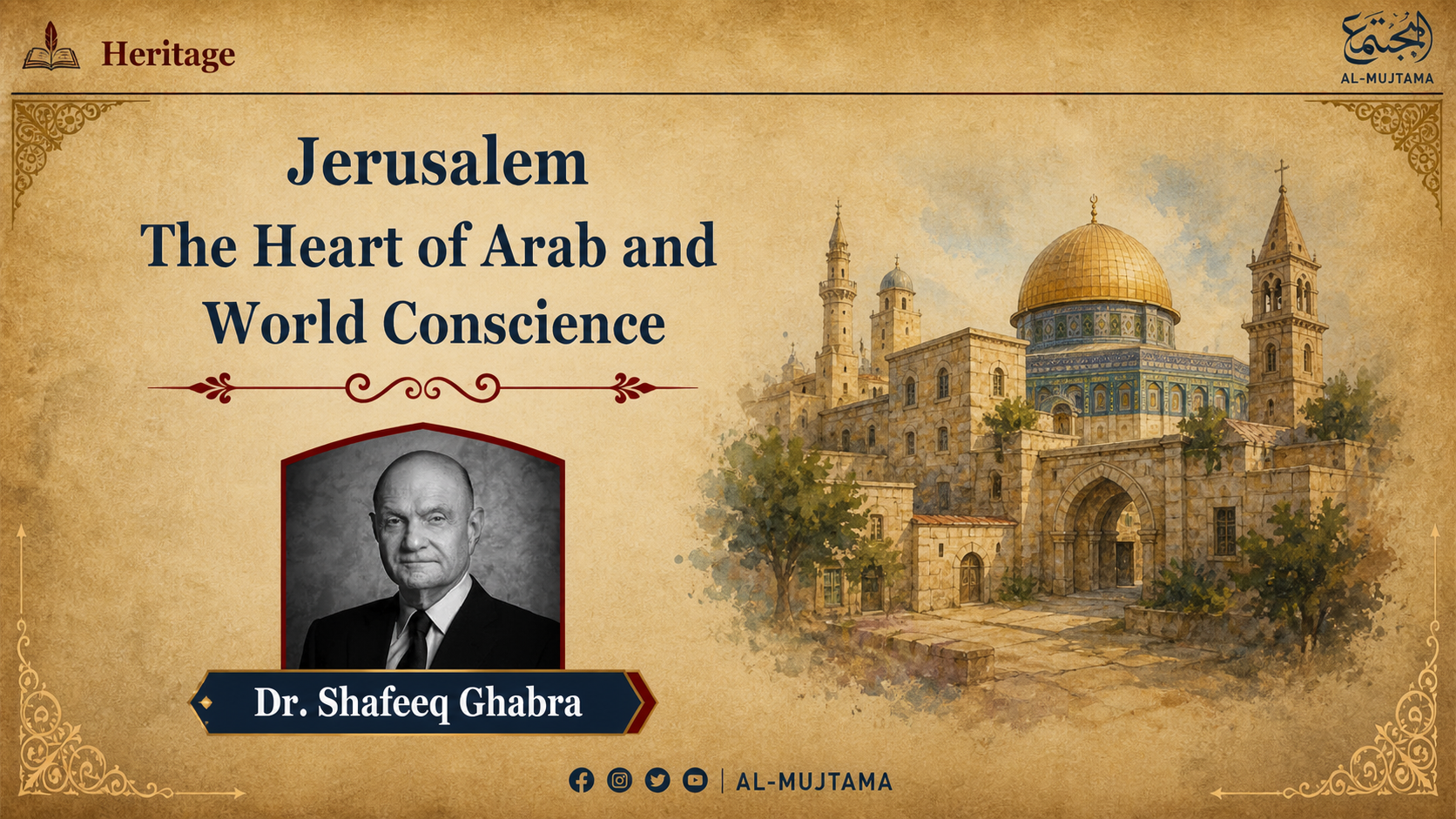
Jerusalem… The Heart of Arab and World Conscience
What a
large segment of the world fails to grasp is that the Palestinian cause has no
solution outside the framework of justice, equality, and the national and civic
rights of the Arab Palestinian people. What those who only became acquainted
with the Palestinian cause days or months ago — through the normalization agreements
signed by some Arab states — fail to notice is that this cause has occupied the
Arab mind and conscience since the early twentieth century, and that the
intense struggle over land and rights against colonialism and Zionism began
with momentum during the era of the Ottoman Empire, then evolved and
intensified from the time of British rule over Palestine in 1917.
Jerusalem: The First Line of Defense for the Arab Heartland
Some ask
why Jerusalem carries such immense importance. What must never be forgotten is
that the cause of Palestine and Jerusalem contains the very soul of the Arab
nation — a nation that has been wronged for long decades through systematic
targeting by Zionism on one hand, and by dominant colonial powers on the other.
The occupation of Jerusalem and the relentless drive to seize the homes of its
people is nothing but a continuation of Zionism's core mission: to replace a
people with settlers. For Jerusalem to submit is for the Arabs to yield to a
will of dispossession and absolute dominion over their lands. The success of
Zionism in Palestine is a prelude to its success in other vulnerable Arab
regions. Likewise, standing firm against Zionism in Palestine is the path that
shields the Arab heartland from dark and unjust fates yet to come — and it is
the path that liberates Arabs from their fragmented and troubled reality. In
Jerusalem lies the measure of liberation or submission for an entire nation,
and it is for this reason that this conflict ignites and intensifies at every
turning point.
For many
reasons, the struggle over Jerusalem and Palestine has become a measure of
human dignity as much as Arab dignity. For who else among the nations has their
sacred sites seized and their lands stolen with such violence and such
overwhelming force? It is for this reason that whoever resists in Jerusalem
defends the totality of Arab rights — and defends the future as well, and
defends other lands deep within Arab territories that Zionism, along with
dominant powers, may one day find justification to carve away or subjugate
through cunning as much as through force and violence.
Jerusalem and the Schemes of Fragmentation
The
confrontation in Jerusalem is equally a confrontation with global powers —
powers we see operating across Arab lands in Syria, Iraq, and elsewhere —
powers that seek to keep the various Arab worlds weak, divided, and under the
authority of the dictator. To squander Jerusalem, Palestine, rights, and
justice is to squander something far deeper than place and land, for it touches
what remains of the values and worth of Arabs and Muslims alike.
Jerusalem
holds a singular place in Islamic and Arab history: within it lies the first of
the two qiblas and the third of the two holy sanctuaries, and within it
stretches a long and storied history across all Islamic as well as Christian
ages. The value of Jerusalem lies also in the fact that it is part of a cause
standing behind a people who held fast to their land, were forced into exile in
1948, and rose again and again in pursuit of their identity, their place, and
their rights. The Palestinian story is not a fleeting tale to be scattered to
the winds — it has given rise to several Arab-Israeli wars, sparked
revolutions, struggles, and political movements, and has been bound to the fate
of the Arabs both in the present and in the future. This interconnection was
and remains deeply embedded within the Arab-Palestinian condition.
The Record of Steadfastness: Jerusalem, Cradle of the Great
Uprisings
The
scenes of today in Jerusalem speak to the scenes of yesterday — the First
Intifada of 1987, the Second Intifada of 2000, and then the perpetual daily
confrontations in Jerusalem and across the rest of Palestine at every stage. In
Jerusalem itself began the Nabi Musa Uprising of 1920, in protest against land
seizure, Jewish immigration, the Balfour Declaration, and Britain's imposition
of the Hebrew language upon Palestine alongside the embedding of the Balfour
Declaration within the laws of the British Mandate. In that same Jerusalem
erupted the Buraq Uprising of 1929, which set all of Palestine in motion. And
Jerusalem was, as was all of Palestine, a principal center of the Great
Palestinian Revolt of 1936–1939 — and was at the same time the place that
sheltered Abd al-Qadir al-Husseini, the Holy Jihad Army, and the Battle of
al-Qastal in 1948.
For a
moment, Jerusalem appears to be the center of the world — for when it stirs, it
stirs Palestine and the world along with it. The movements of Jerusalem's
people, their uprising, their heroic resistance, the demonstrations and the
conspicuous solidarity campaigns visible in the most prominent capitals of the
West and East alike, are testament to the sanctity of Jerusalem and testament
to the importance of justice across every corner of the world — in an age of a
global order that tilts toward savagery and racism. The so-called eternal
capital of the occupation state is nothing but a usurped capital, built upon
plundered lands and seized territories, which its people — who have never for a
single day ceased to defend it — strive to protect.
You may
also like:
The Plot Against Jerusalem and the Al-Aqsa Mosque (1/2)
The Plot Against Jerusalem and the Al-Aqsa Mosque (2/2)