






Islamic Conquest of Jerusalem.. A Brilliant Lesson in Tolerance, justice and humanity

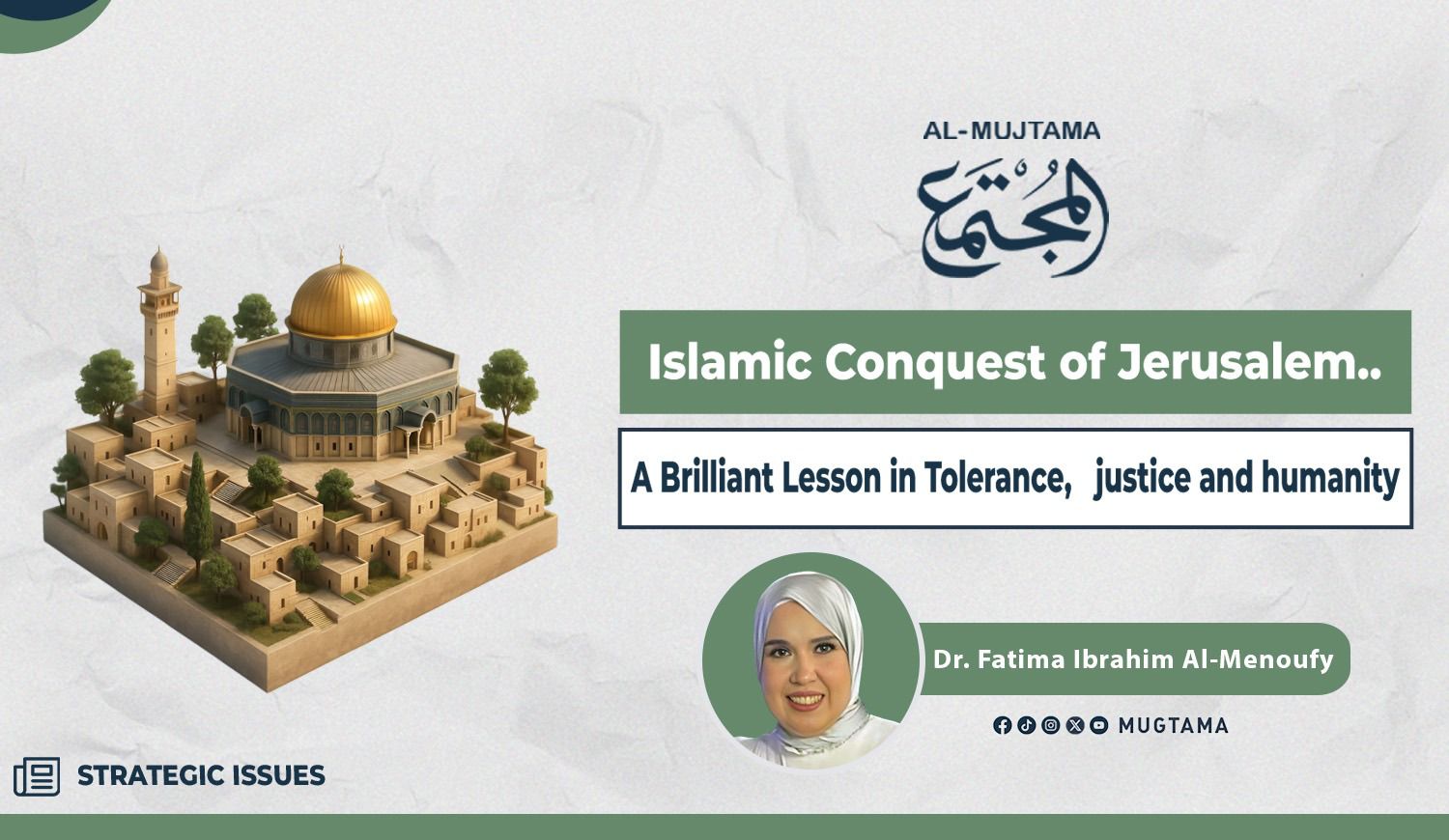
About the caliph Omar Ibn Al Khattab, May Allah Be Pleased with him, The Times of Israel writes: “Brilliant, sensitive, tolerant and an administrative whiz, Omar visited Jerusalem soon after Muslim Arabs conquered the Holy City in 638. Omar revered many of the Old Testament’s most significant personalities, and greatly honored Judaism’s holy sites – including the peak on which Solomon erected the magnificent First Temple.
Thus when he ascended to the Temple Mount and found it overflowing with trash, Omar was enraged. He immediately ordered the rubbish removed — and, say some, he helped clear it out with his own hands.”
A Model of a Just Ruler
William Muir and Edward Gibbon portrayed Omar in their
writings as a model of a just ruler, Guy Le Strange, Philip K. Hitti, Bernard
Lewis and others clearly assert that the Muslim entry into Jerusalem was "one
of the most peaceful conquests of the Middle Ages." They argue
that the city's submission was not the result of overwhelming military force,
but rather of political equilibrium and religious understanding.
A Model of Living in Harmony
Without a doubt, the conquest of Jerusalem by the caliph Omar in 637–638 CE stands as one of the most remarkable episodes in Islamic and indeed world history. It was a moment defined not by destruction or domination, but by humility, justice, and coexistence.
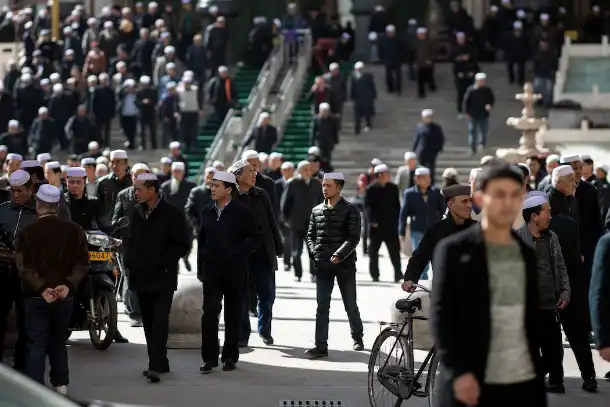
Muslims, Christians, and Jews lived in harmony and peace under Arab Muslim rule
This story not only marked a peaceful transfer of power but also set a significant precedent for religious tolerance in the whole world, and remains a model of how Muslims, Christians, and Jews lived in harmony and peace under just and ethical Muslim leadership.
The Muslim army avoided shedding blood in the conquest of Jerusalem
Conquest without Bloodshed
The Muslim forces, during the siege of Jerusalem, avoided shedding blood in this holy city. “After Muslim armies laid siege to Jerusalem, then known by its Roman name Aelia Capitolina, they waited patiently for the Byzantine defenders to surrender in order to achieve its conquest without bloodshed.” The Times of Israel states.
Peaceful Surrender
The Patriarch of Jerusalem, Sophronius, realizing that fighting against the muslim forces was futile, agreed to surrender the city under one condition: the keys to the city must be handed over to Caliph Omar ibn Al-Khattab, himself. Hearing this, the Caliph personally traveled from Medina to Jerusalem, marking his first visit to the city.
Supreme Human Nobility
In 637 CE, Omar ibn al-Khattab arrived in Jerusalem wearing simple garments, accompanied by only one servant and a single mount they shared along the journey. Though he was ruler of an empire stretching from Persia to Egypt, he entered the Holy City not as a conqueror but as a pilgrim and servant of God. His humility impressed the Christian clergy, who welcomed him with respect.
Peak of Religious Tolerance
One of the most striking features of Omar’s entry into Jerusalem was the protection he guaranteed to its Christian inhabitants. Churches were safeguarded, property was respected, and worship was preserved.
When invited by Sophronius to pray inside the Church of the Holy Sepulchre, Omar declined. He feared that praying inside might later be used as justification for Muslims to seize the church and turn it into a mosque. Instead, he prayed outside—where the Mosque of Omar stands today. This gesture became a defining symbol of Islamic respect for Christian holy sites.
Islamic, Jewish and Christian sources alike describe Omar’s visit to the Temple Mount as a lesson for humanity in tolerance and justice. Shocked at its neglect after centuries of disuse, he ordered the area to be cleared of debris—some accounts say he personally assisted in the cleaning. His actions paved the way for the later construction of Al-Aqsa Mosque and the Dome of the Rock under the Umayyads.
Omar’s Restoration of Jewish Presence
Before the Muslim conquest, Jews had been barred by the Romans—and later the Byzantines—from residing in Jerusalem. Following the Bar Kokhba revolt in 135 CE, the city was renamed Aelia Capitolina, and Jewish life within its walls was severely restricted. Later, after Jews supported the Persians during their brief conquest in 614 CE,m Byzantine reprisals were brutal: many Jews were killed, and the community was expelled.
Thus, when Omar entered Jerusalem, Jews were largely absent. According to historical tradition, he asked Sophronius about their absence, who informed of their being slaughtered and killed by the Romans.
Determined to restore balance and justice, Omar permitted Jews to return to Jerusalem after centuries of exclusion. He instructed a Yemeni Jewish convert to Islam to bring Jewish families to settle in the city, asserting that they too have a rightful connection to this holy place. Around 70–80 families are said to have resettled the city under his protection.
Cosmopolitan Spiritual Center
Under Muslim administration, Jerusalem evolved into a cosmopolitan spiritual center. Armenian merchants traded alongside Arab scholars; Jewish families returned to reclaim their heritage; Christian communities continued to guard their ancient churches. Markets, schools, and holy sites coexisted in the same narrow streets, reflecting a unique mosaic of faiths.
This era contrasted sharply with later periods of conquest. When the Crusaders captured Jerusalem in 1099, chroniclers record the slaughter of both Muslims and Jews. The Jewish population was nearly annihilated; survivors were sold into slavery, sometimes thirty for a single dinar. Crusader zeal framed this violence as retribution for the death of Jesus the Christ, peace be upon him.
From Tolerance Peak to Abyss of Racism
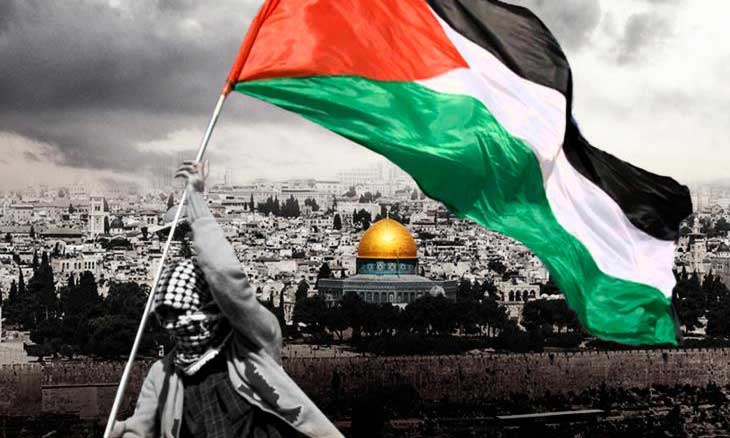
Today, as bulldozers reshape Jerusalem’s horizons and laws declare it “exclusive” to what they claim to be the “Chosen People”, Omar’s legacy lingers by its gates. The caliph who ruled a vast empire, chose humility; he held supreme authority yet protected the worship of others. He recognized that Jerusalem—loved by billions—cannot belong to one people alone in a spirit of exclusion, but its doors must welcome all.
Islam’s greatest gift to Jerusalem was not conquest, but compassion. Under Muslim stewardship, the city became a shared sanctuary, its sacred sites preserved not as trophies of victory but as trusts for all humanity.
The echo of Omar ibn al-Khattab’s footsteps through Jerusalem’s gates remains a reminder of the greatness of our religion.
Sources:
1. The Great Arab Conquests: How the Spread of Islam
Changed the World We Live In,: A Book Review
by Hugh Kennedy
https://www.irfi.org/articles/articles_1601_1650/great_arab_conquests.htm
2. The History of the Decline and Fall of the Roman
Empire, Gibbon, Edward (1737-1794)
https://www.ccel.org/ccel/g/gibbon/decline/cache/decline.pdf
3. William Muir — The Caliphate: Its Rise, Decline,
and Fall
4. Palestine Under The Moslems-Guy Le Strange-1890
https://www.scribd.com/document/266829770/Palestine-Under-the-Moslems-Guy-Le-Strange-1890
5. Bernard Lewis, The Middle East and the West
https://www.britannica.com/event/Siege-of-Jerusalem-70
https://www.timesofisrael.com/inside-jaffa-gate-remembering-the-caliph-who-revered-the-temple-mount/
https://en.wikipedia.org/wiki/Bar_Kokhba_revolt#Course_of_the_revolt
https://en.wikipedia.org/wiki/Jewish_revolt_against_Heraclius
https://www.britannica.com/place/Roman-Empire