









Islam and Capitalism
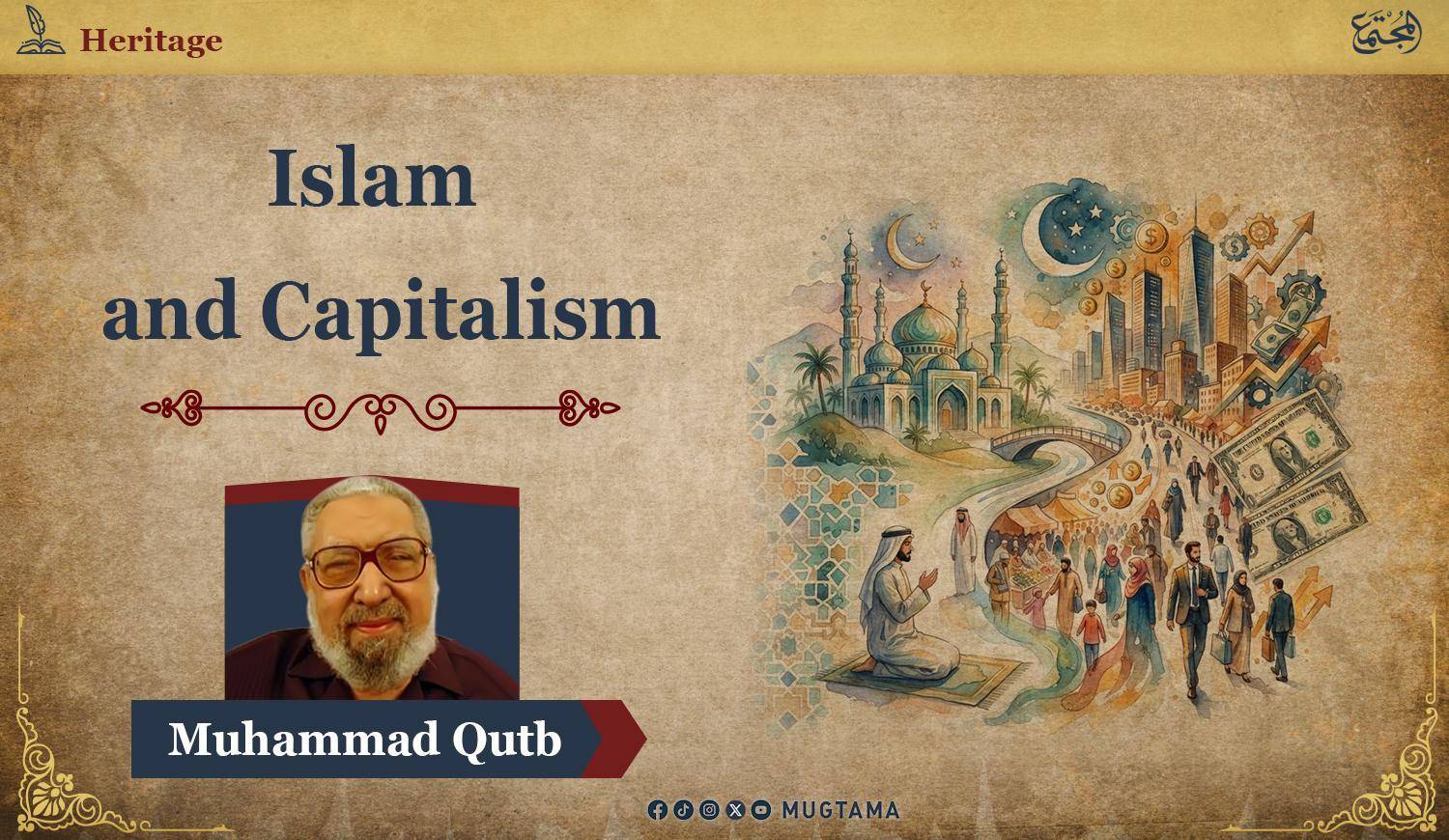
Capitalism did
not originate in the Islamic world as it came into being only after the
invention of the machine in Europe.
Capitalism was
imported into the Islamic world at a time when it was under European
domination. Together with the wave of development, it spread into the Islamic
world when it was suffering from poverty, ignorance, illness and backwardness.
This made some people think that Islam approves of capitalism, with both its
evils and merits. They also claim that there are no provisions in the Islamic
law or regulations such as might be in conflict with capitalism. They argue
that since Islam permitted individual ownership, it must likewise permit
capitalism.
In answer to
this accusation it might suffice to point out that capitalism cannot prosper or
grow without usury and monopoly both of which were prohibited by Islam about
one thousand years before the existence of capitalism.
But let us
tackle the question at some greater length. If the invention of the machine had
taken place in the Islamic world, how would Islam have faced the economic
development resulting from such invention? How would Islamic legislations and
laws have organized work and production?
There is
consensus of opinion among economists-including those who are opposed to
capitalism e.g. Karl Marx-that capitalism at the start brought about great
progress and rendered considerable services to humanity. Production was
increased, means of communications were improved and national resources were
exploited on a larger scale. The standard of living among the working classes
became higher than when they were mostly or completely dependent on
agriculture.
The
Failures of Capitalist Development
But such a
glorious picture did not last long because the natural development of
capitalism, as they say, led to the amassing of wealth in the hands of
capitalist owners and to a relative diminution of the properties owned by the
working classes. This enabled the capitalist owners to use workmen-the real
producers in communist eyes-in considerably stepping up the production of
various commodities but the wages paid to workmen were too low to ensure decent
life because the employers took all the profits and spent them leading a life
of luxury and corruption.
Besides this
the scanty wages paid to workmen did not enable them to consume all the
production of capitalist countries. This led to the accumulation of surplus
production. As a result of this the capitalist countries began to look for new
markets for their surplus production, which in turn gave rise to colonialism
with all its incessant conflicts among different nations over markets and raw
material resources. Destructive wars were the inevitable outcome of all
this.
Moreover, the
capitalist system is always exposed to periodic crises resulting from
depression caused by low wages and the scantiness of world consumption in
relation to increasing production.
Some
propagandists of materialism refer all the problems of the capitalist system to
the nature of capital itself rather than to any ill-will or desire for
exploitation on the part of the capitalists. Such naïve and strange reasoning
means that man with all his emotions and thoughts is but a helpless creature in
the face of the power of economy.
Islam's
Alternative Economic Vision
There is no
doubt that Islam would have encouraged the good and progressive achievement
that were brought about by capitalism without legislation to organize it and to
preclude any exploitation which might result from ill-will on the part of the
employers or from the very nature of capital. The Islamic principle which was
laid in this respect entitles the workmen to share the profit with their
employers. Some Maaliki jurisprudents went so far as to give to the employee an
equal share in the profit. The employer provides all capital and the workman
does the work; the two efforts are equal and accordingly they are entitled to
an equal share in the profit.
The
above-mentioned principle illustrates Islam's great concern with the
establishment of justice. Such concern for the establishment of justice was
voluntarily introduced by Islam. It was not forced thereon by any economic
exigency nor was it the result of the struggle among classes which is regarded
by the propagandists of certain economic doctrines as the sole effective factor
in the development of economic relations.
In the
beginning, industry consisted of simple manual work involving a small number of
workmen who worked in simple workshops. The above-mentioned principle would
have organized the relation between work and capital on an equitable basis such
as Europe had never had.
The
Prohibition of Usury and Monopoly
Economists say
that the development of capitalism from its early benevolent phase to its
present morbidly evil phase was accompanied by its increasing dependence on
national loan. This led to the creation of banks which carried on financial
operations, and advanced loans in return for some interest. Such loans as well
as the majority of banking operations are based on usury which is expressly
prohibited by Islam.
On the other
hand, tough competition, which is another feature of capitalism, leads to the
destruction of minor companies or to their merger into major ones. This
encourages monopoly which is also prohibited by Islam, as is borne out by some
sayings of the Prophet (peace be upon him). He said: "He that monopolizes is
a wrongdoer." Because Islam prohibited usury and monopoly it
would have been impossible for capitalism to develop under Islam into its
present evil stage which involves exploitation, colonialism and war.
-------------------------------------------------------------
Source: Book “ISLAM
THE MISUNDERSTOOD RELIGION” By Muhammad Qutb