









Influencers Replacing Traditional Role Models

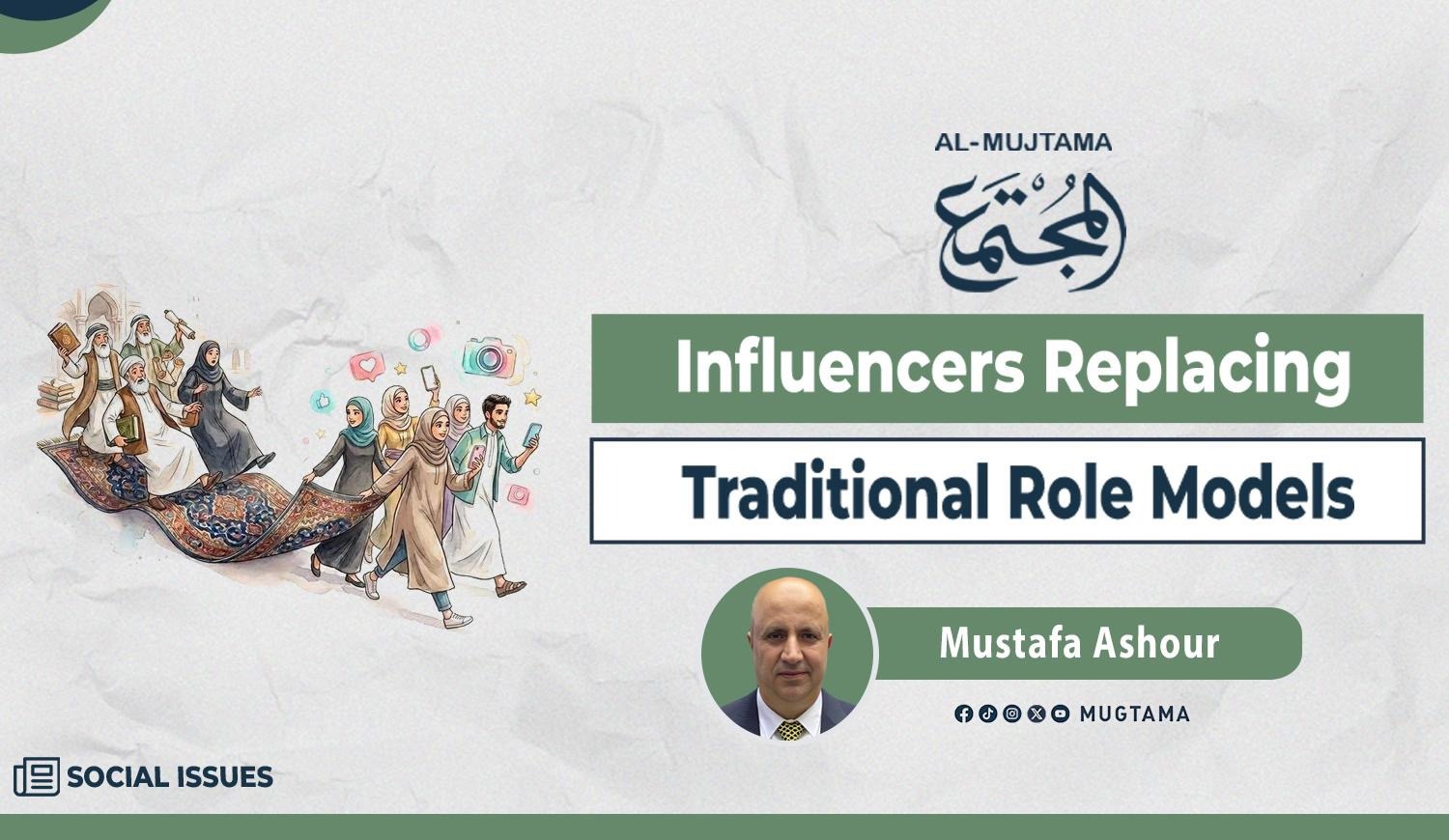
Over the past
two decades, the global landscape of role models has undergone a profound
transformation. Digital influencers have risen to prominence, gradually
displacing traditional figures of guidance such as parents, teachers,
intellectuals, writers, religious scholars, and respected community leaders.
A 2018 study by
the American Pew Research Center found that more than 95% of teenagers own a
smartphone, while 45% are online almost constantly. In a follow-up study
published in 2023, the Center reported that nine out of ten teenagers use
YouTube, making it the most popular platform among young people. Seven in ten
visit the platform every day, and nearly 16% are online almost continuously. A
2025 survey further estimated that teenagers spend between four and seven hours
each day attached to their smartphones.
The enormous
amount of time young people spend on social media has fundamentally reshaped
the hierarchy of role models. Internet influencers have become the primary
figures they admire and emulate, while the influence of parents, intellectuals,
and religious leaders has diminished—unless those figures themselves maintain a
strong and engaging presence in the digital world.
Role
Models by Digital Standards
Learning and
entertainment have always been among the primary reasons people consume media.
Before the digital era, the role models presented by society generally
reflected these two purposes. They either offered knowledge and values or
provided joy, entertainment, and inspiration.
In the digital
age, however, the very definition of a role model has been reconstructed. A
person's status is now measured by the size of their audience and the number of
likes, shares, and interactions their content receives. The greater these
numbers become, the more likely that person is to be regarded as an
"influencer"—a role model according to digital metrics—regardless of
whether their content contains genuine value or meaningful knowledge. In many
cases, superficiality and lighthearted content prove even more successful
because they align with the fast-paced spirit of modern life, which constantly
seeks instant gratification through fast food, ripped fashion, loud music, and
endless entertainment.
Young People See the New Icons of the
Digital World as Their Peers, Strengthening Their Willingness to Admire and
Emulate Them
The meaning of
a role model has therefore shifted dramatically. Rather than representing the
pursuit of virtue and moral excellence, today's digital icons often symbolize
glamorous lifestyles, luxury, consumerism, extravagant travel, gourmet cuisine,
and fashionable living.
As a result,
educational and cultural influence has gradually moved away from the family and
traditional institutions—such as schools, newspapers, and conventional
media—and into the hands of digital influencers. These individuals enjoy
credibility among young audiences not because they embody moral perfection, but
because they possess exceptional communication skills. They speak the language
young people understand and produce exactly the content they want to watch.
Their deep understanding of digital platforms allows them to present themselves
as approachable, spontaneous, ambitious, and relatable. Rather than striving to
project flawless images, they encourage dreams of luxury, consumption,
unrestricted freedom, and limitless enjoyment.
The digital
role model has become a mirror reflecting the aspirations of young people who
dream of wealth and comfort. After spending countless hours each day in front
of screens during the critical years of identity formation, the boundary
between admiration and imitation gradually disappears. Role models are
increasingly shaped by carefully crafted images and visually appealing
lifestyles that captivate the imagination far beyond the limits of reality.
Visibility itself has become one of the defining qualities of influence in the
digital age.
Another
important factor is that young people perceive these online personalities as
peers rather than distant celebrities. This sense of similarity strengthens
imitation because they feel they belong to the same world and believe they,
too, can achieve fame and success. One study found that 70% of teenage YouTube
users view influencers as peers, while 60% say they would follow influencers'
recommendations about what products to buy.
Parents' Talks About Values Fall on Deaf
Ears as Many Young People View Them as Constraints on Their Freedom
Age similarity
therefore plays a significant role in shaping admiration and imitation.
Moreover, digital influencers are often perceived as accessible public figures
whose popularity was built through continuous interaction with their audiences
rather than distance from them. For many young people, influencers feel more
like friends than untouchable celebrities.
Fame as
a Profession
In her book Internet
Celebrity: Understanding Fame Online, Singaporean researcher Crystal Abidin
offers an insightful analysis of the influencer economy. One of her key
observations is that online fame is built largely through direct engagement
with audiences. Compared with traditional celebrities, influencers are far more
effective at cultivating active communities, maintaining constant interaction
across digital platforms, and creating content that is simple, appealing, and
highly accessible.
Abidin also
highlights another significant reality: online fame has evolved into a
profession capable of generating substantial income through advertising,
sponsorships, and brand partnerships. This type of fame follows its own rules
and can be deliberately built. An individual may suddenly become famous because
of a single viral video, incident, or moment, transforming overnight from an
unknown individual into a permanent public figure. Unlike traditional fame,
which often resulted from years of accumulated achievement, digital fame is
increasingly shaped by commercial incentives and the dynamics of
algorithm-driven promotion.
Are
Parents Still Role Models?
Whether parents
remain role models for younger generations has become a global concern as the
family's role in raising children continues to weaken and the father's symbolic
authority steadily declines. Across the world, the image of the knowledgeable
and inspiring parent has faded in the digital era. Many young people now view
their parents as less familiar with technology than they are. In many
households, children possess greater digital knowledge than their parents,
creating a constant comparison between parental guidance and the pace of
technological change.
As a result,
parental advice is often dismissed as outdated moralizing. Conversations about
values, ethics, and character frequently fail to resonate with young people
immersed in a culture dominated by consumerism, entertainment, and visual
media. In a world where appearance often outweighs substance, many teenagers
come to regard moral values as restrictions that hinder personal freedom rather
than principles that enrich life.
Meanwhile,
parents themselves are often consumed by the responsibilities of providing for
their families, leaving them little time or ability to adapt to rapidly
evolving digital technologies. This gap encourages young people to seek
alternative figures who share their interests, language, and aspirations.
Moreover, the daily sacrifices and struggles of parents rarely appear on
screens, making them less visible and therefore less likely to be admired or
emulated by their children.
Restoring Traditional Role Models for
Today's Youth: Parents Must Enter the Digital World as Influential Voices
A survey
conducted by Deloitte found that roughly half of American teenagers—members of
Generation Z—still consider their parents to be their role models. At the same
time, many parents acknowledge that they lag behind their children when it
comes to understanding digital technology.
One proposed
solution for restoring the influence of traditional role models is for parents,
educators, scholars, and other respected figures to establish an active
presence in the digital world. Increasingly, experts speak of the need for
"digital parents"—adults who understand the nature of digital
platforms and engage with younger generations using communication styles suited
to the online environment rather than simply transferring traditional methods
into virtual spaces. Such an approach may help cultivate trustworthy,
inspiring, and meaningful role models for a generation whose worldview has
largely been shaped by the internet.
-------------------------------------------------------------
