







Questions Grow Over Transparency, Authority and Voter Rights
India Purges Over 130 Million Names from Draft Electoral Rolls

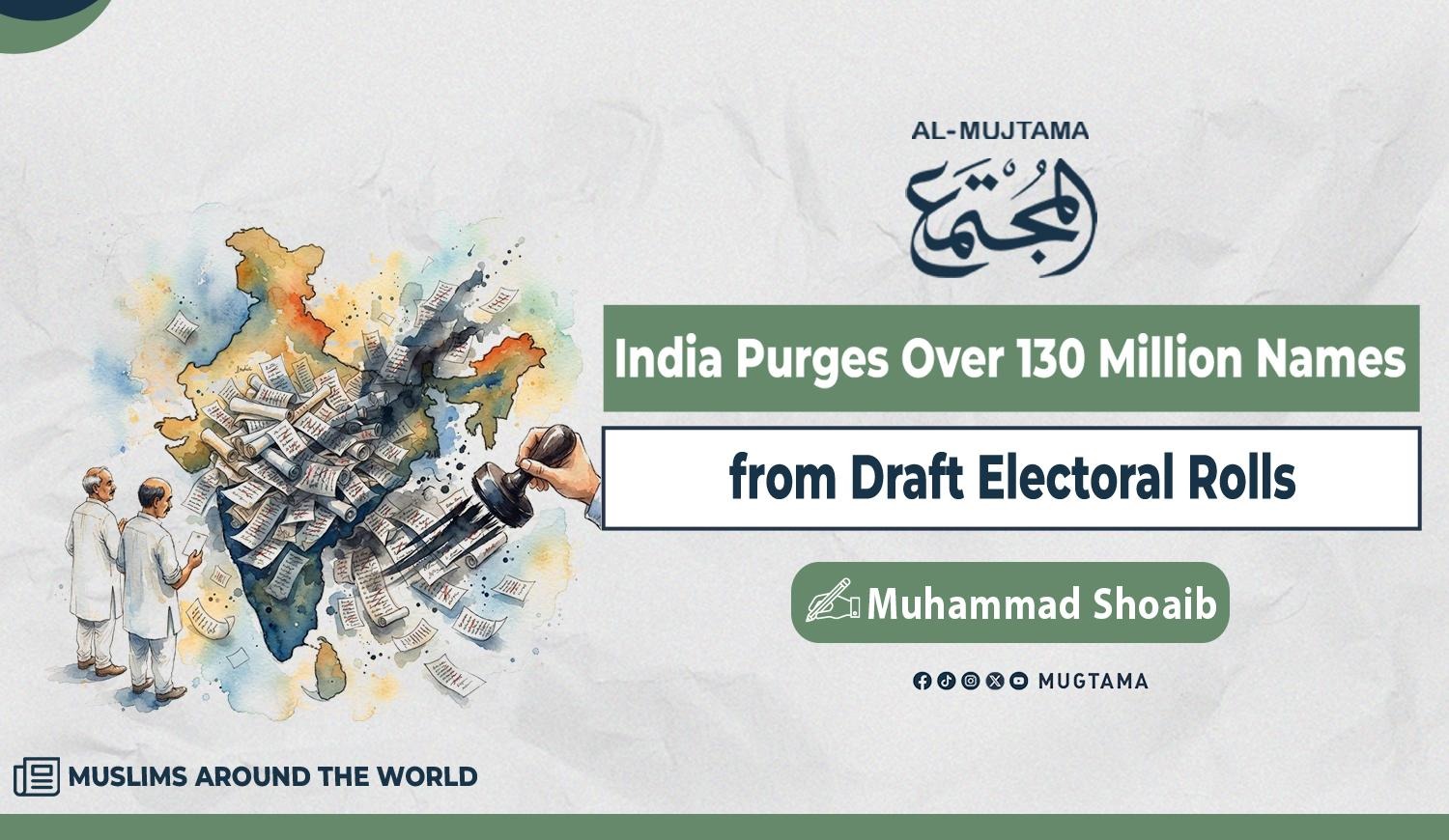
India’s electoral system is facing one of its most significant controversies in recent years after more than 130 million names were removed from draft electoral rolls during a nationwide voter-list revision exercise. While the Election Commission of India (ECI) maintains that the deletions are part of a legal and administrative process and are not final, the scale of the exercise, combined with internal disagreements within the Commission itself, has triggered a broader debate about transparency, accountability and the balance of power between election officials and centralized digital systems.
At the center of the dispute is the Election Commission’s Special Intensive Revision (SIR) of electoral rolls, a process intended to
verify voter records and improve the accuracy of electoral databases. Yet
critics argue that the exercise raises fundamental questions about who controls
India’s voter rolls, how citizens can challenge removals, and whether
technology is beginning to exercise influence over decisions that should remain
subject to legal authority and administrative oversight.
The controversy intensified following reports that two
Election Commissioners, Sukhbir Singh Sandhu and Vivek Joshi, repeatedly
recorded objections to decisions taken during the implementation of the SIR
process. According to reports, the commissioners lodged at least fourteen
written objections over a period of ten months, arguing that key decisions were
being taken without adequate consultation or formal approval from all members
of the Commission.
These revelations transformed what initially appeared to be a
technical exercise in voter-list management into a much larger institutional
debate concerning the functioning of India’s election administration.
Massive Deletions Raise Concerns
The most controversial aspect of the SIR process is the
reported removal of more than 130 million names from draft electoral rolls
across 30 states and Union Territories.
The Election Commission has emphasized that these deletions
are not necessarily permanent. Individuals whose names were removed may submit
claims, provide supporting documents and seek restoration. However, critics
argue that the scale of the removals itself is unprecedented and deserves
closer scrutiny.
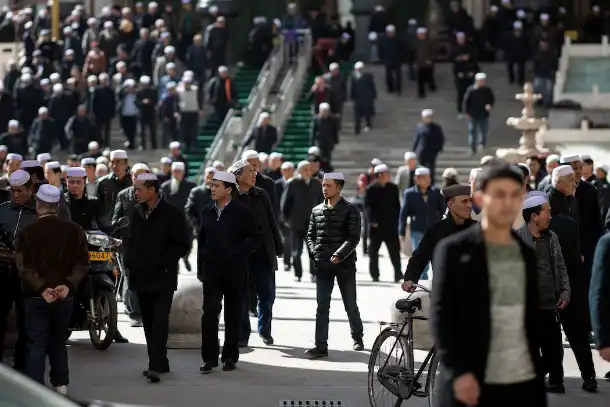
Questions have also emerged regarding the demographic
composition of those affected. Reports indicate that substantial numbers of
Muslims were among those whose names disappeared from draft electoral lists.
This has fueled concerns among political parties, civil society organizations
and voting-rights advocates about whether the revision process could
disproportionately affect particular communities.
Although the Commission insists that the exercise is
administrative rather than political, the sheer number of deletions has made it
impossible to separate technical procedures from larger questions of
representation and electoral participation.
The Form 6 Controversy
One of the most contentious disputes concerns Form 6, the
official document used by new applicants seeking inclusion in the electoral
roll.
As part of the SIR process, additional questions were
reportedly introduced requiring applicants to disclose whether their names, or
the names of their parents or grandparents, had appeared in previous
electoral-roll revisions.
Critics immediately questioned whether such requirements could
legally be attached to a statutory form without a formal amendment to existing
rules.
Among the strongest critics was Election Commissioner Sukhbir
Singh Sandhu, who reportedly described the change as both unauthorized and
illegal. His objections raised a fundamental procedural question: can
administrative authorities alter requirements associated with a legally
prescribed electoral form without first modifying the rules through the
established legal process?
The controversy extends beyond the contents of the form
itself. It also concerns the way digital systems were configured to enforce
these requirements and whether all commissioners had approved those changes
before implementation.
Technology Versus Legal Authority
Perhaps the most significant issue emerging from the
controversy concerns the relationship between technology and legal authority.
The Election Commission now relies heavily on ECINET, a
centralized digital platform used to manage voter information and electoral
databases across India. While such systems are intended to improve efficiency
and consistency, critics argue that problems arise when software systems appear
capable of overriding decisions taken by officials who possess legal authority
under existing laws.
The case of Goa has become the most frequently cited example.
According to reports, local Electoral Registration Officers
(EROs) and Assistant Electoral Registration Officers reviewed the cases of 97
voters and determined that they were eligible for inclusion in the electoral
roll. However, difficulties within the centralized software allegedly prevented
those names from being restored before publication of the final voter list.
Officials reportedly requested technical intervention multiple
times, seeking a mechanism to reverse the deletions and restore the voters. Yet
the required software functionality was not activated before the final list was
published, leaving the affected individuals excluded.
This incident has generated a simple but profound legal
question: if an ERO is empowered by law to determine voter eligibility, can a
centralized software platform effectively block that determination from taking
effect?
Former Chief Election Commissioner S. Y. Quraishi has argued
that technology should serve as an instrument for implementing the law rather
than functioning as an alternative source of authority. In other words,
computers and algorithms may assist election officials, but they should not
possess the power to override legally empowered decision-makers.
Questions About Institutional Transparency
The controversy expanded further after reports emerged
regarding the Commission’s internal decision-making procedures.
Observers began asking how agendas for Commission meetings
were prepared, how disagreements among commissioners were documented, and
whether the instructions issued by commissioners were consistently implemented
by officials.
In response, the Election Commission announced several
procedural reforms, including the advance circulation of meeting agendas and
the formal recording of minutes after meetings. While these steps have been
welcomed, they have also generated new questions.
If the Commission now considers agendas and minutes necessary
safeguards, critics ask why such procedures appear to have become prominent
only after disputes emerged publicly.
Similarly, if officials must now ensure that commissioners’
instructions are “carefully followed,” observers naturally wonder whether
earlier instructions were not consistently implemented.
The issue is not merely administrative. It goes directly to
the governance of one of India’s most important democratic institutions.
The Election Commission’s Response
The Election Commission has vigorously defended its actions
throughout the controversy.
According to the Commission, differences of opinion among
commissioners are a normal part of institutional deliberation and do not
necessarily signal dysfunction. The Commission has also emphasized that major
decisions related to the SIR exercise were approved unanimously by all three
Election Commissioners.
Following its September 26 meeting, the Commission announced a
range of corrective measures designed to address concerns raised during the
revision process.
Under the new arrangements, voters who receive notices linked
to SIR-related issues will no longer be required to appear personally before
Electoral Registration Officers. Instead, Booth Level Officers (BLOs) will
visit voters at their homes, collect the necessary documents and upload them
through official digital platforms.
The Commission also announced the creation of an expert
committee to examine whether ECINET operates in a manner fully consistent with
electoral laws and related regulations. Future software modules and digital
portals will reportedly undergo review before implementation.
In addition, the Commission stated that the declaration
associated with the revised Form 6 procedure remains consistent with relevant
Supreme Court judgments.
Steps have also been promised to restore eligible voters who
were excluded from electoral rolls because of software-related limitations.
Corrective Measures or Delayed Safeguards?
While many observers welcome these reforms, critics argue that
the central issue remains unresolved.
Home visits by Booth Level Officers may reduce inconvenience
for citizens, but they do not eliminate the burden of documentation. If voters
lack the documents being requested, critics argue that sending officials to
their homes does little to address the underlying problem.
Similarly, special camps for homeless people, migrant workers
and vulnerable groups may improve outreach efforts. However, these populations
are often the least likely to possess extensive documentary records. The
effectiveness of such measures will therefore depend on how officials evaluate
evidence and verify eligibility.
The broader concern is whether the announced reforms represent
genuine innovations or merely safeguards that should have existed before the
controversy erupted.
The West Bengal Questions
The controversy is especially acute in West Bengal, where
millions of electoral appeals have been filed.
Reports indicate that more than 2.2 million appeals were
submitted by individuals seeking restoration of names removed from electoral
rolls, while more than 1.6 million appeals challenged the inclusion of names on
those same rolls.
Such enormous numbers raise significant questions about
authorization and accountability.
Who approved these appeals? Who initiated them? What evidence
was presented? And under whose authority were such challenges filed?
Election Commissioner Sukhbir Singh Sandhu reportedly
questioned who had authorized appeals submitted in the name of the Election
Commission itself.
Without detailed public disclosure regarding these cases,
critics argue that it is impossible to fully understand how the system operated
and whether legal procedures were consistently followed.
The Core Democratic Question
Ultimately, the debate extends far beyond voter-list
management.
The central issue can be summarized in a single question: Who
controls India’s electoral rolls, through what process, and under whose legal
authority?
This question touches on fundamental democratic principles.
Electoral rolls determine who can vote, whose political voice is heard and who
participates in the democratic process. Any uncertainty surrounding their
preparation inevitably affects public confidence in elections.
The Election Commission’s recent reforms suggest recognition
that concerns exist and that improvements are necessary. However, many
observers argue that procedural corrections alone cannot fully restore
institutional trust.
Restoring confidence requires more than promises about future
conduct. It requires transparency regarding past decisions, clear explanations
about disputed actions, and answers to unresolved questions surrounding
authority, accountability and voter rights.
The controversy over the removal of more than 130 million
names from draft electoral rolls has therefore evolved into something much
larger than a dispute over administrative procedures. It has become a test of
how democratic institutions balance technology, legal authority and public
accountability in the management of one of the world’s largest electoral
systems.
For many critics, the issue is straightforward: technology should implement electoral law, not redefine it. And institutional credibility cannot be restored simply by announcing better procedures for tomorrow. It also requires a full explanation of what happened yesterday.