


Eid al-Adha
How Muslims in East Asia Celebrated Eid al-Adha

Eid al-Adha, a significant Islamic festival, is celebrated
with immense joy and spiritual fervor by Muslims worldwide. This article,
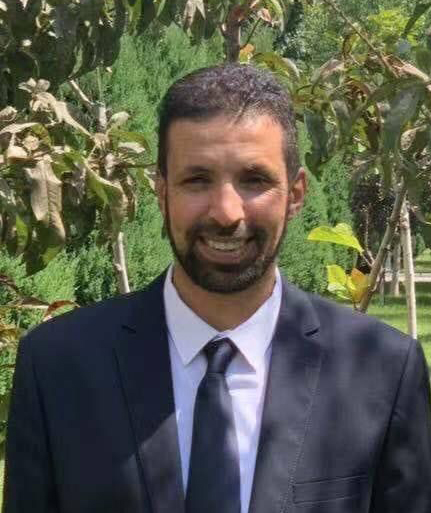
penned by Dr. Osama Mansour, offers a fascinating glimpse into how this blessed
occasion is observed by Muslim communities across East Asia, specifically
focusing on the unique traditions and collective spirit found in China, Taiwan,
and Vietnam.
In China
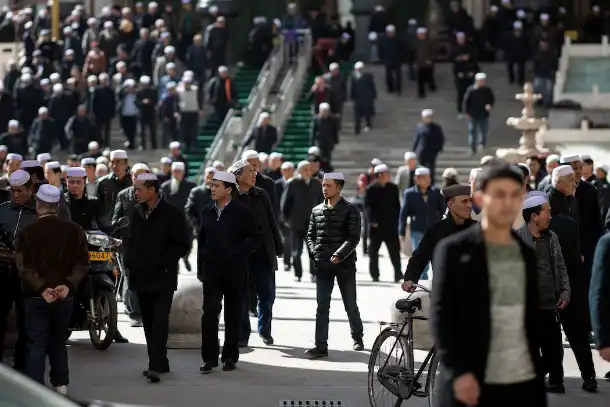
Chinese Muslims are accustomed to performing Eid prayers in
large open areas, delaying them until 10:00 AM to allow the largest possible
number of Muslims to gather.
In Ningxia, in northwest China, where the largest Muslim
community in the country resides, men, women, and children are keen to attend
Eid prayers. The squares and congregational mosques witness thousands of
Muslims flocking on this blessed day.
It's customary for most Muslims to purchase sacrificial
animals on Eid day and present them to mosque imams, who then slaughter, cut,
and distribute the meat to the poor. The owners of these sacrifices do not take
any part of the meat for themselves.
As for the general Muslim populace, if they perform a
sacrifice, they distribute a portion of the meat to the poor, share another
part with their relatives as gifts, and then consume the remaining sacrificial
meat during the days of Eid. No meat remains after the Eid days are over. This
is a custom for them, as they believe the sacrifice is exclusively for Eid, and
no meat should remain after the afternoon of the fourth day.
The Shixia Mosque, in the north of Yinchuan, the capital of
Ningxia, witnesses a remarkable presence of Muslims from all sects: men, women,
and children. However, what's striking is the large attendance of students, as
the mosque is located amidst three universities: Ningxia University, University
of Nationalities, and Chunghua University. Therefore, the majority of attendees
are students from these universities.
As for the Nanguan Mosque in the south of Yinchuan, it is the
city's main congregational mosque and its most famous. A large number of
Muslims attend prayers there, and it is surrounded by shops, markets, and
butcheries selling halal meat for those who did not offer a sacrifice.
In Qinghai province, in the far northwest, small mosques close
their doors, and all Muslims gather to pray at Dongguan Mosque. Their numbers
exceed one hundred thousand worshippers, filling the mosque's courtyards, side
streets, and some main streets in the city.
Sheikh Ismail Jing Biao, the Imam of Dongguan Mosque, says:
"Chinese Muslims call Eid al-Adha 'Eid al-Qurban' (the Feast of
Sacrifice), where sacrifices are slaughtered, and their meat is distributed to
the poor and needy. Eid here in Qinghai lives up to its name; we gather, visit
each other, and joy spreads among Muslims."
He added: "During this time, we make sure to visit
relatives, the sick, the poor, the elderly, and prominent Muslims who have had
a positive impact on Islam and Muslims in Qinghai."
In Taiwan
In Taiwan, Muslims prepared for Eid and usually gather at the
Grand Taipei Mosque in the capital, Taipei, as well as the Taichung Mosque and
some other mosques. For slaughtering sacrifices, a prior permit from the
municipal administration is required, specifying the number of sacrifices and
the location where the slaughter will take place.
The Muslim community in Taiwan is a mix of Taiwanese and other
Muslim nationalities residing in Taiwan, mostly from Indonesia. On Eid day,
they gathered in the Sun Yat-sen Memorial Hall Square (named after the first
president of the Republic of China in 1911, known as the "Father of
China"), arriving early in the morning chanting 'Takbir' (Allahu Akbar).
They then performed Eid prayers at 9:00 AM Taiwan time. Immediately after the
prayer, worshippers proceeded to slaughter their sacrifices and distribute the
meat to relatives and friends.
In Vietnam
In Vietnam, Muslims are accustomed to gathering in large
mosques during Eid to express their joy and ensure the attendance of the
largest number of people, as well as to meet relatives and friends. An Giang
province, with its Cham Muslim majority, is where the manifestations of Eid are
clearly visible.
On the morning of Eid, Muslims flocked to Nur al-Iman Mosque,
where they performed Eid prayers together in an atmosphere of joy and
tranquility, praying to Allah Almighty to sustain His blessings of faith and
love and to increase their good. After the prayer, some charitable
organizations in An Giang slaughtered a number of sacrifices and distributed
their meat to the poor, especially in Chau Gong village, which has a large
number of poor Muslims.
From the bustling prayer grounds of China to the communal
gatherings in Taiwan and Vietnam, the celebration of Eid al-Adha in East Asia
beautifully showcases the unity and diversity within the global
Muslim community. Despite geographical distances and cultural nuances, the core
values of sacrifice, charity, and familial bonds remain
central to their observances, reinforcing the profound spiritual significance
of this cherished holiday.