





How Muslim Women Contribute to the Advancement of Society

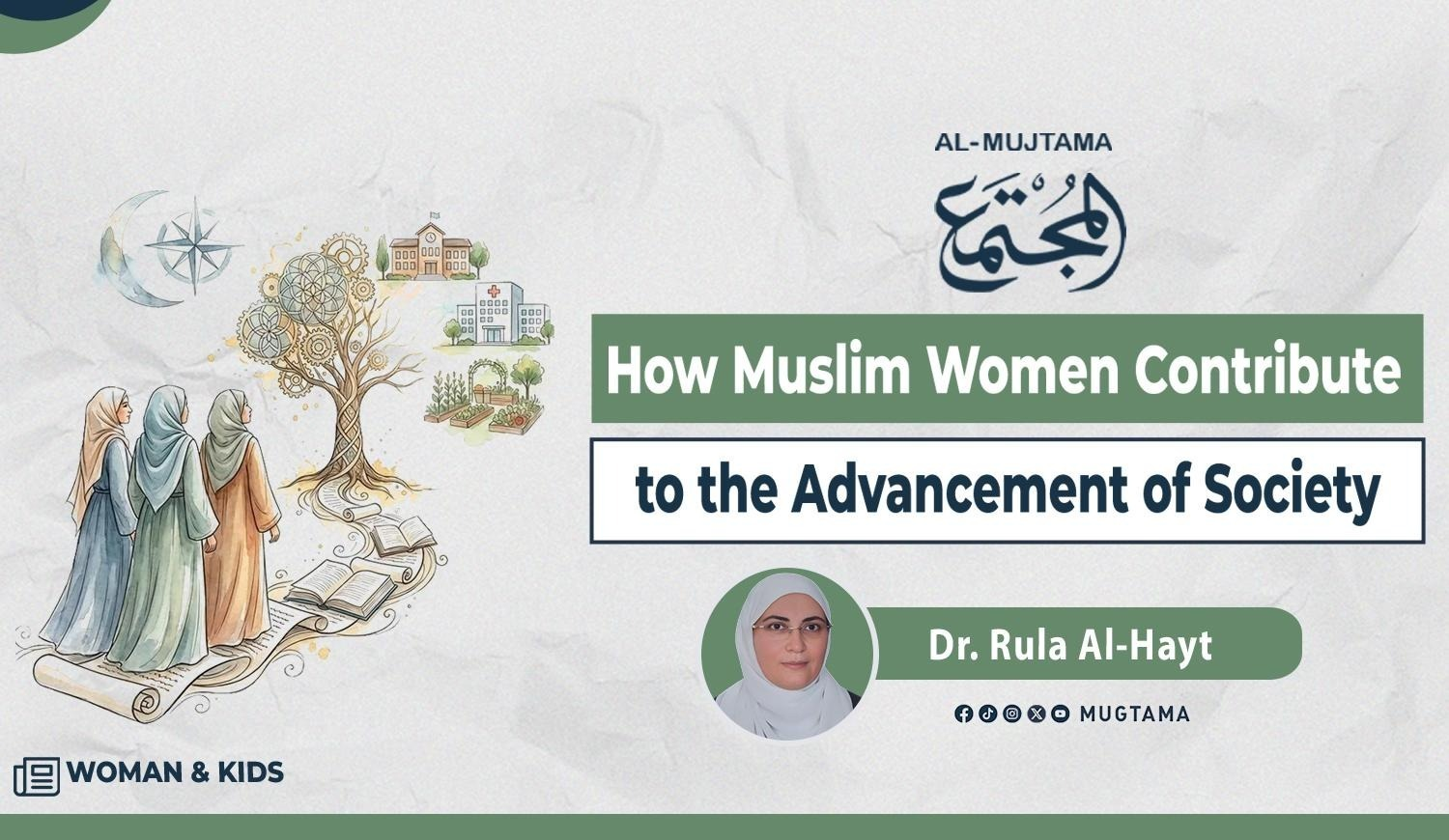
It is
essential to recognize from the outset that the advancement of societies is a
shared project involving all their members. By “shared,” we mean a project that
begins with raising a child and extends all the way to decision-making. Through
this integration, we can ensure a safe ascent toward the top—a strong society
that takes pride in its identity while intelligently utilizing the tools of its
age.
Since
society is composed of different elements, balance among those elements is
indispensable. Activating the roles of society’s members requires a strategy of
integration. No society can flourish through competition between its members in
a way that allows one side to dominate another or one role to overshadow the
rest.
The
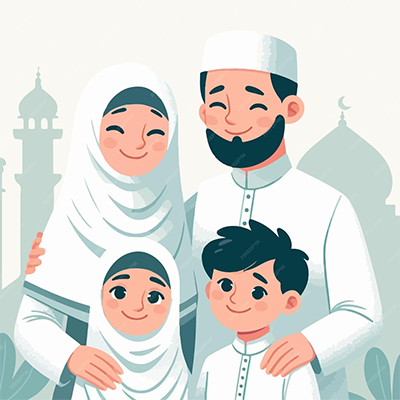
golden rule in this regard is that men and women are not participants in a
relay race; rather, they are rowing together in the same boat. If either one
attempts to jump out or assume complete control, the boat will sink.
Society Functions as One Unified Body
In
sociology, society operates as a single body. As the Prophet Muhammad said, it
is “like a brick for another believer, the one
supporting the other.”
Disruption
occurs when one side seeks to eliminate the other. The solution lies in
distributing roles according to competence while respecting natural
distinctions and utilizing the strengths of men in what suits them and the
strengths of women in what suits them—while recognizing the vast areas where
both share intellectual, creative, and productive capacities.
Historically,
this reality is abundantly clear. Women have
always played an effective role in the advancement of civilizations, just as
men have. This article focuses specifically on the role of women in societal
development.
From the
moment that Lady Khadijah Bint Khuwaylid contributed her wealth and wisdom to provide security
for the earliest Muslim community, history has testified that the advancement
of Muslim nations was never a poem written by men alone. Rather, it was a
partnership crafted by the efforts of both men and women.
Among the
lights of knowledge that illuminated Islamic civilization was the house of
Ash-Shifa’ Al-`Adawiyyah, the first educational institution for women in the
history of Madinah. It established a comprehensive intellectual and human model
through which literacy was preserved from neglect and writing was rescued from
ignorance and loss.
Likewise,
from the walls of the University of Al-Qarawiyyin, whose foundations were laid
by Fatimah Al-Fihriyyah,
emerged one of history’s greatest educational achievements. Recognized by both
Guinness World Records and UNESCO as the oldest continuously operating
university in the world, it was not limited to Muslims nor merely a mosque for
prayer. Rather, it became the earliest model of a modern university and a
beacon of learning sought by students from East and West alike.
What Can History Teach Us About Reviving
Society Today?
The
question before us today is this: How can we contribute to the advancement of
society through our reading of history, with its enduring values and unique
models, while also responding to contemporary needs?
Achieving
this requires a social vision capable of producing both balance and genuine
progress.
The
starting point lies in activating the roles of society’s members, particularly
women. The role of women must be
empowered if societies wish to reach their highest potential and avoid moral
decline. This can be achieved through three parallel pathways.
1. Knowledge and
Intellectual Independence for Women
The first
pathway is intellectual and educational independence.
Women’s
education must move beyond the mere acquisition of certificates and credentials
toward the cultivation of critical thinking and intellectual awareness.
The
significance of this cannot be overstated. A woman often forms a child’s
earliest consciousness and worldview. If she possesses deep awareness and
understanding, she helps build a generation protected against intellectual
confusion and ideological collapse.
2. Smart Legislation That
Supports Family and Professional Life
The
second pathway is intelligent legislation. Societal decline often occurs when
women are forced to choose between two extremes: either your home or your
career.
True
empowerment requires laws and policies that support flexible work arrangements
and digital home-based economies. Such measures allow women to contribute
professionally without sacrificing their family responsibilities, which remain the cornerstone of
social stability.
Our
history itself provides inspiring examples of women’s empowerment in areas such
as administration, supervision, planning, and public service, without
undermining the essential functions of any member of society.
3. Functional Integration:
Unlocking the Potential of Every Citizen
The third
pathway is functional integration. A society contains enormous potential within
all its members—women and men, young and old alike. These energies must be
utilized without creating social chaos.
This is
achieved through the principle of complementary roles and by investing in
underutilized talents, particularly among recent graduates and creative
homemakers. Supporting small businesses and entrepreneurial initiatives
emerging from these groups transforms individuals into productive economic
contributors rather than passive consumers.
Every
person should be provided with the tools most appropriate to their skills and
circumstances so that they can contribute their maximum potential toward the
advancement of society.
Lessons in Leadership from the Prophet
Muhammad
At this
point, we may reflect upon the life of the Prophet Muhammad (peace be upon him),
who assigned responsibilities to his Companions according to their talents and
abilities.
Anas Ibn
Malik narrated that the Messenger of Allah (peace be upon him) said: “The most compassionate member of my people towards my
people is Aba Bakr, the most rigorous regarding God's affair is `Umar, the most
genuinely modest is `Uthman, the one who knows most about obligatory duties is
Zaid B. Thabit, the one who knows best how to recite the Quran is Ubayy B. Ka
b, and the one who has most knowledge about what is lawful and what is
prohibited is Mu`adh B. Jabal. Every people has a trustworthy guardian, and the
trustworthy guardian of this people is Abu `Ubaida B. Al Jarrah.”
The Importance of Effective Leadership
and Management
Successful leadership values the efforts of its members and identifies
individuals according to their expertise and abilities. Responsibilities are
then assigned based on the nature of each task and the qualifications required.
The
Companions of the Prophet excelled in diverse fields. Some distinguished
themselves in military service and defending the community. Others specialized
in teaching and recitation of the Quran. Some excelled in jurisprudence and
issuing legal rulings, while others focused on education, guidance, trade,
economics, administration, and governance.
Each
individual excelled in his area of specialization, preserving knowledge and
conveying it with excellence. Together, they formed an integrated system of
expertise and competence upon which the Islamic civilization was built.
Continuous
education for both men and women—particularly in understanding contemporary
realities and human interactions—is essential.
Equally
important is legal protection that safeguards human dignity, whether for men or
women.
Finally,
collective responsibility must be built upon the recognition that societal
advancement is a shared project that begins with raising children and extends
to shaping public policy and leadership.
Through
such integration, societies can safely ascend toward excellence, becoming
strong communities that value their members while preserving their identity and
moral foundations.
Why Women's Empowerment Is Essential for
Sustainable Development
The
advancement of societies is not the achievement of one group at the expense of
another. Rather, it is the product of conscious functional integration that
invests in the natural and acquired talents of every individual.
The model
of “rowing together” demonstrates that empowering women through knowledge,
intellectual independence, and intelligent legislation is not merely an
academic ideal. It is a structural necessity for protecting societies from both
moral and developmental decline.
When
historical models are combined with modern tools and opportunities, they
provide a clear roadmap for societal advancement—a roadmap that begins with
shaping women’s awareness, passes through flexible and supportive laws, and
culminates in the construction of a strong social structure united by shared
responsibility and a confident sense of identity.
It is
important to emphasize that any woman who seeks to play an effective role in
society must possess three fundamental pillars:
Vision: The ability to identify a problem or recognize an
opportunity.
Initiative: The willingness to create change rather than merely
waiting for it.
Sustainable
Impact: Ensuring that the benefit of her
knowledge and efforts extends beyond herself to others.
In
practical terms, the societal impact women can achieve begins in the smallest
circles.
The mother who raises a conscious generation, the teacher who plants values in her students, and
the doctor who serves society with sincerity are all contemporary examples of
women actively contributing to the advancement of their communities.
For Further Reading:
- 8 Proofs That Kindness Strengthens Leadership
- The Waves of Marriage: Between the Captain and the Ship
- Identity Struggle Between Islamic Principles and Modernist Currents
-------------------------------------------------------------