









How Islam Builds Resilience in Our Children
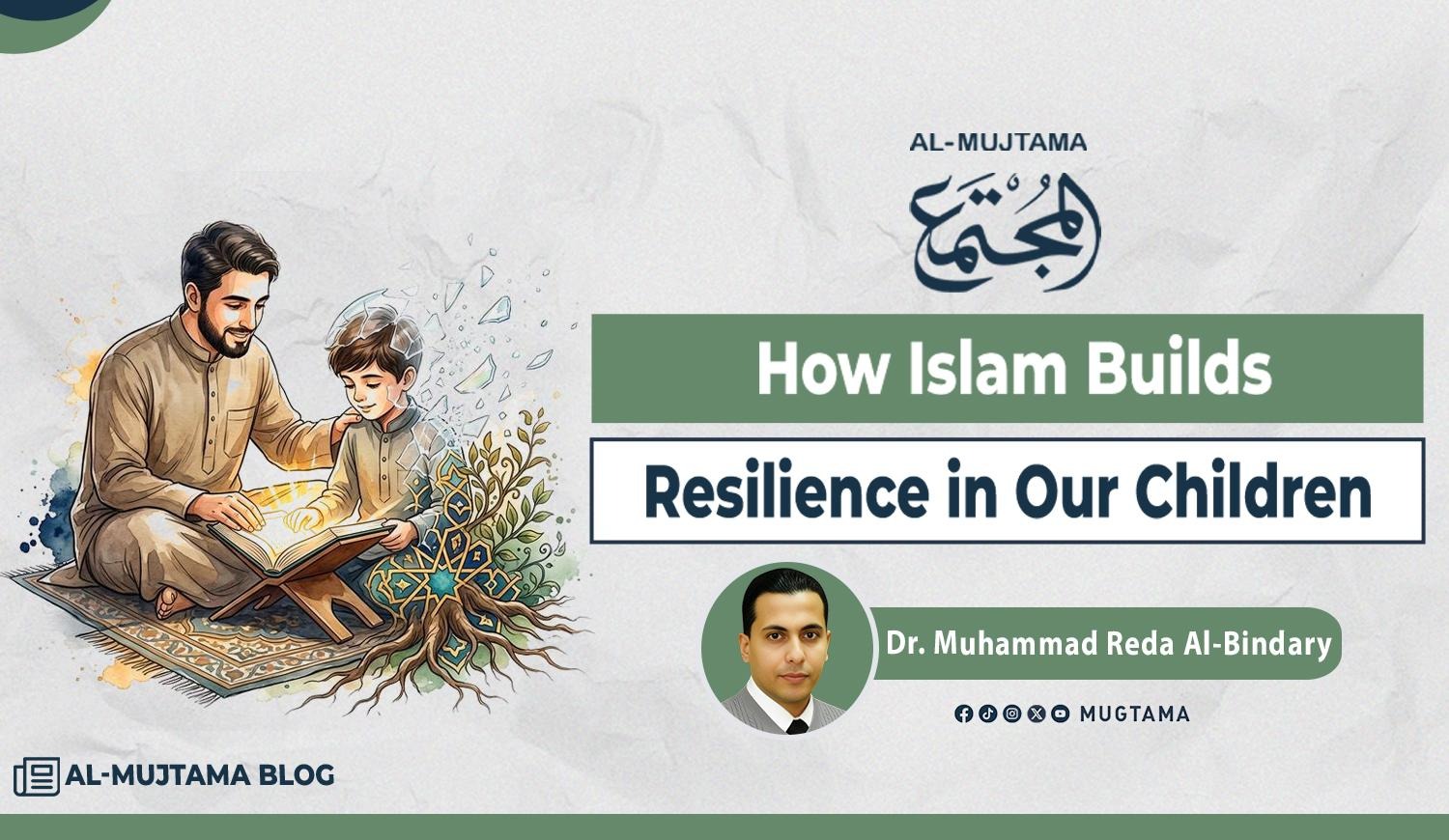
In recent
years, parents and educators have noticed a striking phenomenon: young people
in the prime of life whose determination crumbles at the first obstacle, whose
spirits are crushed by a word of criticism, and who view every responsibility
as an unbearable burden. Contemporary writings have given this phenomenon a
telling name: “psychological fragility.”
The purpose of
addressing this issue is neither to condemn an entire generation nor to indulge
in a naive longing for a past we imagine was free of weakness. Rather, it is to
understand how this fragility has developed and how we can cultivate mature resilience
in our children, guided by divine revelation.
Recognizing
Psychological Fragility and Understanding Its Limits
Psychological
fragility manifests itself in several recurring traits, including:
1.
Low
frustration tolerance: Failing an exam or falling short at
work is interpreted as the end of the road rather than one stage along the way.
2.
Emotional
magnification: Temporary distress is treated as a
catastrophe, and every experience of sadness is regarded as trauma warranting
withdrawal.
3.
Extreme
sensitivity to criticism: Advice is perceived as an insult,
while guidance is viewed as an attack on one’s sense of self.
4.
Avoidance
of responsibility: Blame is consistently placed on
circumstances and other people, without examining one’s own role in what has
happened.
Fairness,
however, requires an important distinction: psychological fragility is not the
same as a genuine mental health condition. Depression, clinical anxiety, and
other mental disorders have their own causes and require appropriate treatment
from qualified professionals. Neither religion nor reason permits people to be
shamed for such conditions or to have them dismissed as signs of weak faith.
This discussion concerns a pattern of educational and cultural attitudes toward
hardship and how people respond to it, not conditions that require clinical
treatment.
The
Roots of the Crisis
Psychological
fragility does not emerge in a vacuum. It develops through a combination of
educational and cultural influences, most notably:
1.
Overprotective
parenting: Out of love, some parents remove every obstacle from
their children's paths. As a result, their children grow up without ever
learning to confront problems independently.
2.
Consumer
culture and instant gratification: When every
desire can be fulfilled at the touch of a button, the virtues of patience and
waiting gradually weaken.
3.
A
culture that glorifies the self: A widespread
cultural narrative promotes the idea that an individual's feelings are the
ultimate standard and that anything causing discomfort should be removed from
their path.
4.
Social
media: Constant exposure to carefully curated images of
other people's lives fuels comparison, leaving young people to undervalue what
they have and exaggerate what they lack.
5.
The
absence of meaning: This is perhaps the deepest cause.
Those who do not understand why they live will find life's burdens heavier and
the value of enduring them harder to recognize.
The
Quranic Approach to Building Resilience
The Quran
begins by establishing a realistic understanding of life, affirming that
hardship is inherent to the human condition: {Indeed,
We have created humankind in ˹constant˺ struggle.} [Al-Balad 90:4]
Those who
internalize this truth are less likely to be caught off guard by adversity or
to regard hardship as an injustice that singles them out from everyone else.
The Quran then
presents trials as an intentional part of life with a purpose: { We
will certainly test you with a touch of fear and famine and loss of property,
life, and crops. Give good news to those who patiently endure.} [Al-Baqarah
2:155]
From this
perspective, hardship is not meaningless. It is an arena in which character is
refined. Believers can also find reassurance in the knowledge that Allah does
not burden a soul beyond its capacity: {God does
not burden any soul with more than it can bear.} [Al-Baqarah 2:286]
They are also
reminded that relief accompanies hardship: {So,
surely with hardship comes ease. So, surely with hardship comes ease.} [Ash-Sharh 94:5–6]
The Quran
establishes a balanced approach to emotions, protecting people from both
despair and arrogance: {˹We let you know this˺ so that you neither grieve over what
you have missed nor boast over what He has granted you.} [Al-Hadid 57:23]
The Sunnah
brings this principle together in the Prophet’s (peace be upon him) words: “Strange are the ways of a believer for there is
good in every affair of his and this is not the case with anyone else except in
the case of a believer for if he has an occasion to feel delight, he thanks
(God), thus there is a good for him in it, and if he gets into trouble and
shows resignation (and endures it patiently), there is a good for him in it.” (Muslim)
In Islam,
resilience does not mean suppressing emotions. The Prophet (peace
be upon him) wept and grieved when his son Ibrahim died. Rather,
resilience means not allowing grief to lead to helplessness, as reflected in
his words: “Cherish that which gives you benefit (in the Hereafter) and seek help
from Allah and do not lose heart.” (Muslim)
Above all, the
Quran connects the heart to the source of its tranquility: {Surely in the remembrance of Allah do hearts find
comfort.} [Ar-Ra'd 13:28]
The
Responsibility of Families and Islamic Outreach
Families must
move away from excessive protection toward gradually empowering their children:
1.
Give
children responsibilities appropriate to their age and allow them to experience
the consequences of their smaller decisions.
2.
Make
room for their feelings without exempting them from their duties. Compassion
does not mean removing responsibility.
3.
Set an
example of patience and contentment through daily actions, not merely through
words of advice.
Islamic
outreach must likewise move beyond a fruitless dichotomy: an approach that
berates young people and questions their faith whenever they express distress,
and another that accommodates a culture of appeasement by relieving them of all
responsibility.
What is needed
is an approach that is both compassionate and firm: one that listens to young
people's struggles and acknowledges them, then helps them develop the strength
to carry their own burdens and rediscover the meaning that makes patience
worthwhile.
Preachers and
educators would also do well to collaborate with trustworthy mental health
professionals, learning when kind words and guidance are sufficient and when
referral to a doctor or therapist is necessary.
Our children
are not made of glass, but many have never been given the opportunity to test
their own resilience. Resilience is neither inherited nor instilled through
instruction alone; it is built through experience, responsibility, and a sense
of purpose, just as muscles are strengthened through exertion.
When a young
person develops a realistic understanding of life, conviction in the wisdom
behind trials, a family that empowers rather than overprotects, and guidance
that offers compassion without indulgence, they can emerge from adversity
stronger than when they entered it.
This is the
strong believer described by the Prophet (peace be upon him): “A strong believer is better and is more lovable to Allah
than a weak believer, and there is good in everyone.” (Muslim)
-------------------------------------------------------------
