









How Does Social Media Shape Consumer Culture?
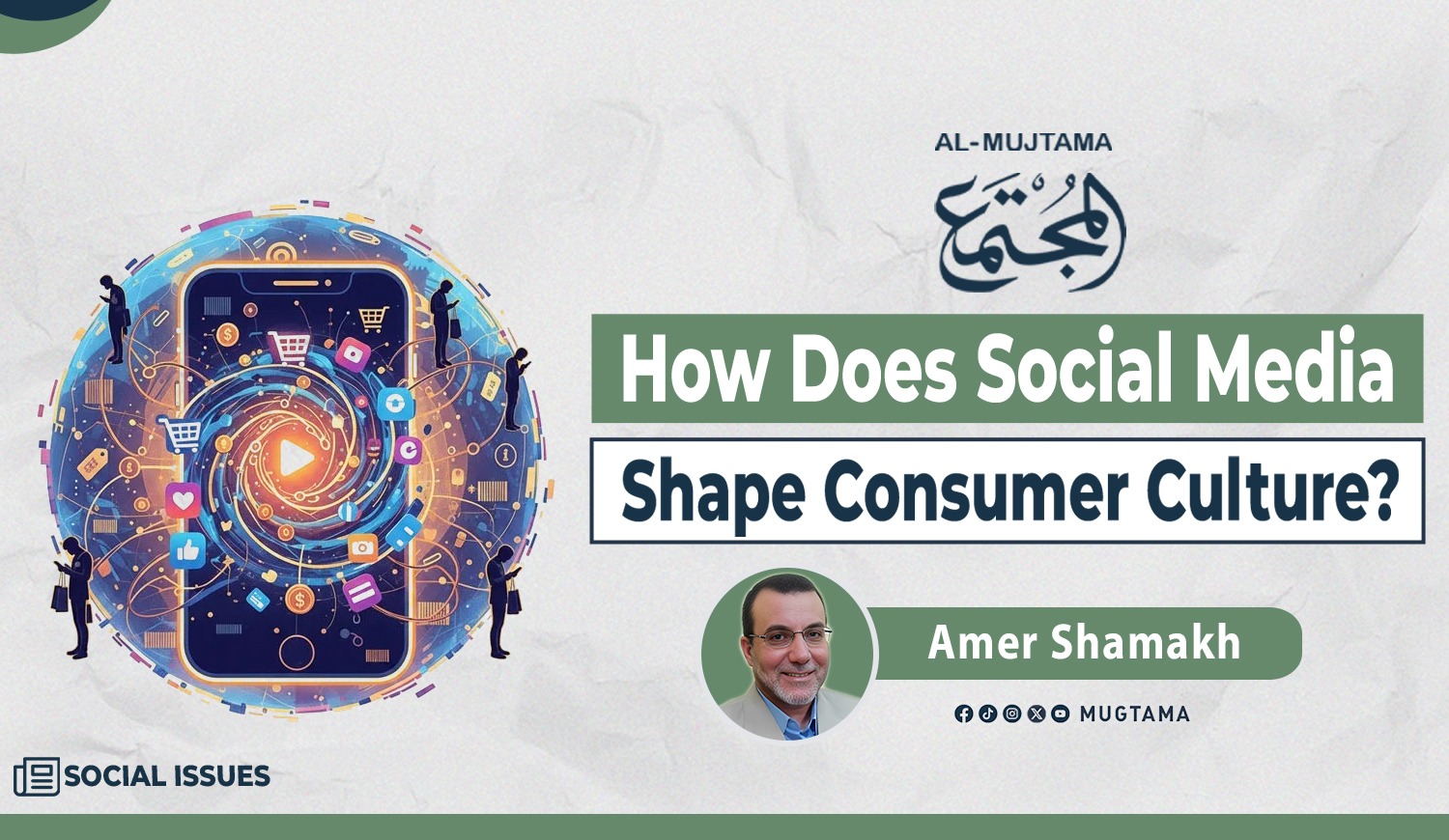
In the age of
the communications revolution, distances have shrunk, social bonds have
strengthened, and—consequently—a new culture of consumption has emerged, one
rooted in excess. Under the influence of social media patterns, consumer
standards have been reproduced in ways that negatively affect individuals’
habits and tastes. This marks a serious social shift; consumption is no longer
a free choice, and luxury is no longer an exception. Instead, both exist within
an endless race.
The blue sphere
is filled with complaints about this transformation, and about how social media
has shifted from an entertaining space into a tool for reshaping consumer
culture—especially among children and adolescents—creating both family and
economic burdens. Here is a ten-year-old child pressuring his parents to buy
him an iPhone simply because the TikToker he follows owns the same model. There
is also a young woman fully convinced that much of what appears on social media is fake, yet
she simultaneously rejects advice against excessive travel, outings, fashion,
and beautification—lest she be labeled unsuccessful or left behind.
A Dominant Force
Social media
has emerged as a dominant force, surpassing traditional marketing channels and
heralding a new era in consumer decision-making—one characterized by constant
change and the blurring of boundaries between evaluation and purchase. Social
media has not only changed what we buy, but why we buy—even amid economic
pressure—after becoming a primary and essential source of information. It has
emphasized the globalization of consumer culture,
assigning certain goods and services social meanings that exceed their tangible
value. Users are exposed to hundreds of marketing messages within the content
they browse.
Social media
has also contributed to the rise of “instant consumption,” where a consumer can
move from viewing an advertisement to the purchase page in a single moment.
This integration of content and shopping is no longer merely a means of
communication but an economic intermediary that has shortened the time between
the desire to buy and the act of purchasing—thus increasing consumerist
tendencies. The consumer no longer buys merely to meet a need, but to become
part of a culture or lifestyle promoted by others.
Influencers and the Manufacturing of Consumer Desire
A housewife
complains of losing trust in much promotional content after purchasing kitchen
tools from well-known pages based on excellent “reviews,” only to discover that
reality was entirely different in terms of quality, with no ability to return
the item or hold anyone accountable. This opens the discussion about the role
of influencers in manufacturing consumer desire by presenting idealized images
of life, prompting followers to aspire to similar consumption patterns. An
influencer is someone followed by thousands—perhaps millions—including
celebrities from the worlds of art, sports, and thought, whom companies enlist
to market their products in exchange for payment or gifts. The user is the
target—indeed, the victim.
Given the
dominance of social media compared to traditional advertising, influencers have
become key actors in shaping consumer culture through content that appears
spontaneous and simple but carries deeply influential messages. They do not
promote the product merely as a commodity; rather, they integrate it into an
attractive personal and lifestyle context. Instead of purchasing based on
rational decision-making, users are driven by emotional desire linked to the
influencer’s image. The more creative and subtle the influencer is in indirect
promotion, the greater their ability to shape followers’ purchasing
convictions.
“Trend” Culture and the Consumption of Conformity
In reality, the
“trend” is no longer merely a popular topic; it has become a culture in itself,
driven by rapid spread. The more interaction there is, the wider the reach; the
wider the reach, the stronger the urge to participate—even if the content is superficial
or meaningless. Out of fear of digital isolation, users feel compelled to
follow everything people are discussing. In doing so, they lose the ability to
reflect, deliberate, and analyze purchasing choices, as products promoted
across platforms are presented as keys to happiness. They rush to buy without
realizing the emotional impact of advertising on their decisions.
Influencers
rely on clever psychological and marketing techniques to accelerate excessive
consumption, such as fear of missing out and the promise of enhanced social
status. This generates an urgent desire to acquire new products. The purchasing
decision then becomes driven by the need to keep up with influencers or others
and to prove one’s status—under the pressure of repeated exposure and abundance
of offerings—rather than genuine conviction.
“Algorithms” and the Direction of Purchasing Behavior
Algorithms—the
hidden mind that decides what you see, how you see it, and in what order—are
powerful tools in directing consumer behavior on social media. They do not
merely display products; they reshape users’ desires and needs, presenting
advertisements and promotional posts aligned with their inclinations, thereby
increasing the likelihood of influence and purchase.
Repeated
exposure to brands with which a user has interacted creates a sense of
familiarity and trust, known as the “mere exposure effect,” which increases
purchasing likelihood without full consumer awareness.
There is also a
psychological dimension: after a flow of commercial ads appears following the
viewing of certain content, the user may feel that the decision to purchase
stems from personal interest rather than external guidance. Thus, advertising
shifts from direct promotion to desirable content linked to personal
experience, and algorithms become an invisible partner in guiding purchasing
behavior.
A Call for Conscious Consumption
There is no
doubt that social media’s influence on consumer behavior has become a complex
and multidimensional phenomenon. It must therefore be addressed within a
developmental vision aimed at building a stable digital society—economically
and ethically. It is necessary to adopt awareness strategies for safe and
responsible use of social media by establishing systems that promote critical
thinking and limit excessive consumption. Influencers bear part of the
responsibility toward society; ethical standards should be established for
promotional practices to ensure transparency, avoid exaggeration, and consider
the diversity of audiences and their economic and social circumstances.
At the
individual level, users must be aware of what is happening—that social media is
designed to entice them to purchase. They should recognize hidden marketing
tactics and content that creates feelings of deficiency or need.
It is
beneficial to reduce exposure to pages focused on goods and products and
replace them with content of scientific or practical value. Before pressing the
purchase button, one should reassess actual needs, avoid being driven by
emotion, and free oneself from the false sense that others are living better
lives.
Read Also:
-
5 Powerful Islamic Concepts to Confront Excessive Consumerism
-
Chasing Material Possessions: An Economic Perspective
-------------------------------------------------------------