






Gaza Peace Council and the New American Project
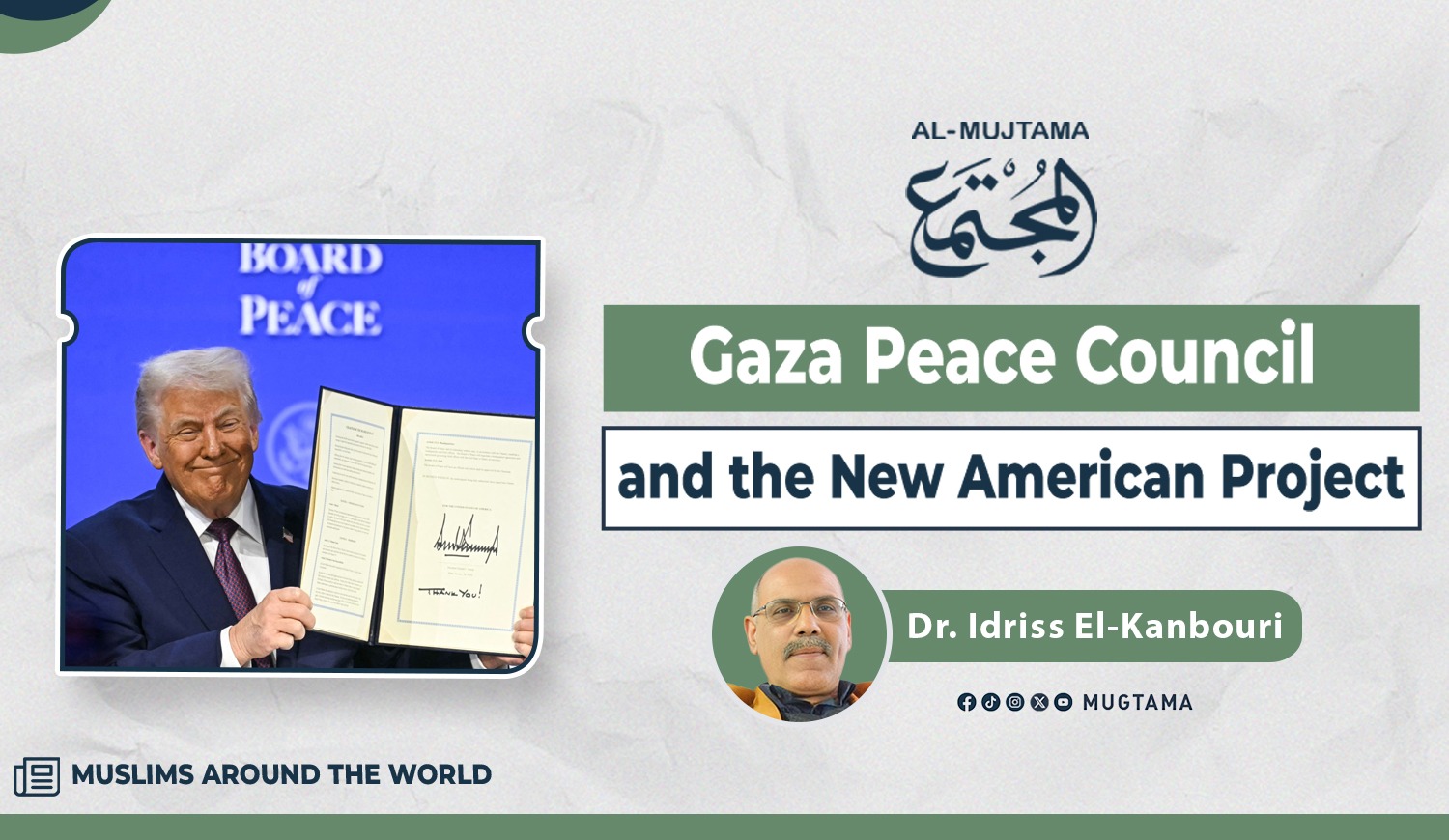
At last, the final contours of the so-called “Peace Council”
for Gaza have come into view. Announced months ago by U.S. President Donald Trump
and formally launched last October, the council was unveiled at the World
Economic Forum in Davos with the participation of 35 nations out of nearly 40
that pledged to join.
Founding Charter and Intentions
To grasp the essence of this council and the American
intentions behind it, one must first examine its founding charter, presented by
Trump in Davos. That document offers a revealing glimpse into the world
Washington and Tel Aviv envision for the coming era.
Structure and Membership Rules
The charter, composed of 13 articles, declares in its preamble
that the council will have “the courage to move away from failed approaches and
institutions”—a direct reference to the United Nations and its affiliated
bodies. In effect, the council is designed as an alternative to the UN and the
Security Council.
It describes the new body as a “global organization”
tasked with enforcing peace in conflict zones, theoretically replacing the UN
and its blue-helmeted peacekeepers. The U.S. president is designated as the
council’s head, empowered to appoint his successor in case of withdrawal or
incapacity. Membership is not open to all nations but restricted to those
chosen by the president—Trump himself. Each member state must contribute $1
billion in the first year, and representation is limited to heads of state or
government.
Powers and Global Reach
Even more striking, the council will establish branches
worldwide, ratify international agreements, and issue decisions unanimously.
Any resolution can only be overturned by a two-thirds veto.
Exclusion of Global Powers
What emerges is a new global organization engineered by
Washington to dismantle the UN
and impose an American-led order. By stipulating that only U.S.-approved
nations may join, the council effectively excludes powers such as China and
Russia, creating a binary world divided into “forces of light” and “forces of
darkness”—phrases repeatedly invoked by Trump and Israeli Prime Minister
Benjamin Netanyahu during the “Al-Aqsa Flood” campaign.
Putin’s Response
Russian
President Vladimir Putin, with a touch of sarcasm,
remarked that Moscow was ready to join and pay its billion-dollar fee using
frozen Russian assets in Western banks.
U.S.-Israeli Strategy
The U.S.-Israeli
strategy behind this council is clear: to entrench the occupation,
seize remaining Palestinian lands, and undermine resistance. In essence, the
council is a global alliance to shield Israel, sidelining the UN, which both
Washington and Tel Aviv accuse of failing to deliver peace. Trump and Netanyahu
have repeatedly leveled such charges, explicitly blaming the UN in the White
House’s Gaza plan.
Role of Arab States
The most alarming aspect is the inclusion of Arab states whose
role, according to the charter, would be to participate in military
operations—effectively turning Arab weapons against the Palestinian people.
This raises the question: are we witnessing the birth of a global alliance
against Palestine?
Gaza as a Platform for Global Domination
Another critical question often overlooked: why do the U.S.
and Israel insist that the Gaza Council be a global body intervening in
regional and international conflicts? Why has Gaza—and the Palestinian
cause—been transformed into a platform for global domination?
Palestine as a Global Issue
The answer lies in the recognition that Palestine is not
merely a local issue but a global one, central to the struggle for world
control. Since the American-Jewish orientalist Bernard Lewis declared, “Whoever
controls the Middle East controls the world,” it has been evident that the U.S.
project seeks to tighten its grip on the region as a means of global hegemony.
Historical Context
Indeed, the Middle
East has always revolved around Palestine. American and Western
interest in the region only surged after World War II and the creation of
Israel. Without Palestine, the Middle East would never have commanded such
attention.
Global Solidarity and Rejection of Dominance
Looking back at the “Al-Aqsa Flood” and the wave of global
solidarity with Palestinians, it becomes clear that popular support was not
only a stand with Palestine but also a rejection of U.S.-Israeli dominance. The
occupation of Palestine is perceived not merely as the seizure of Muslim land
but as part of a broader project of global control led by Washington.