









A Historic Night in Queens
First Palestinian Elected to State Office Celebrates Victory with Palestinian Flag

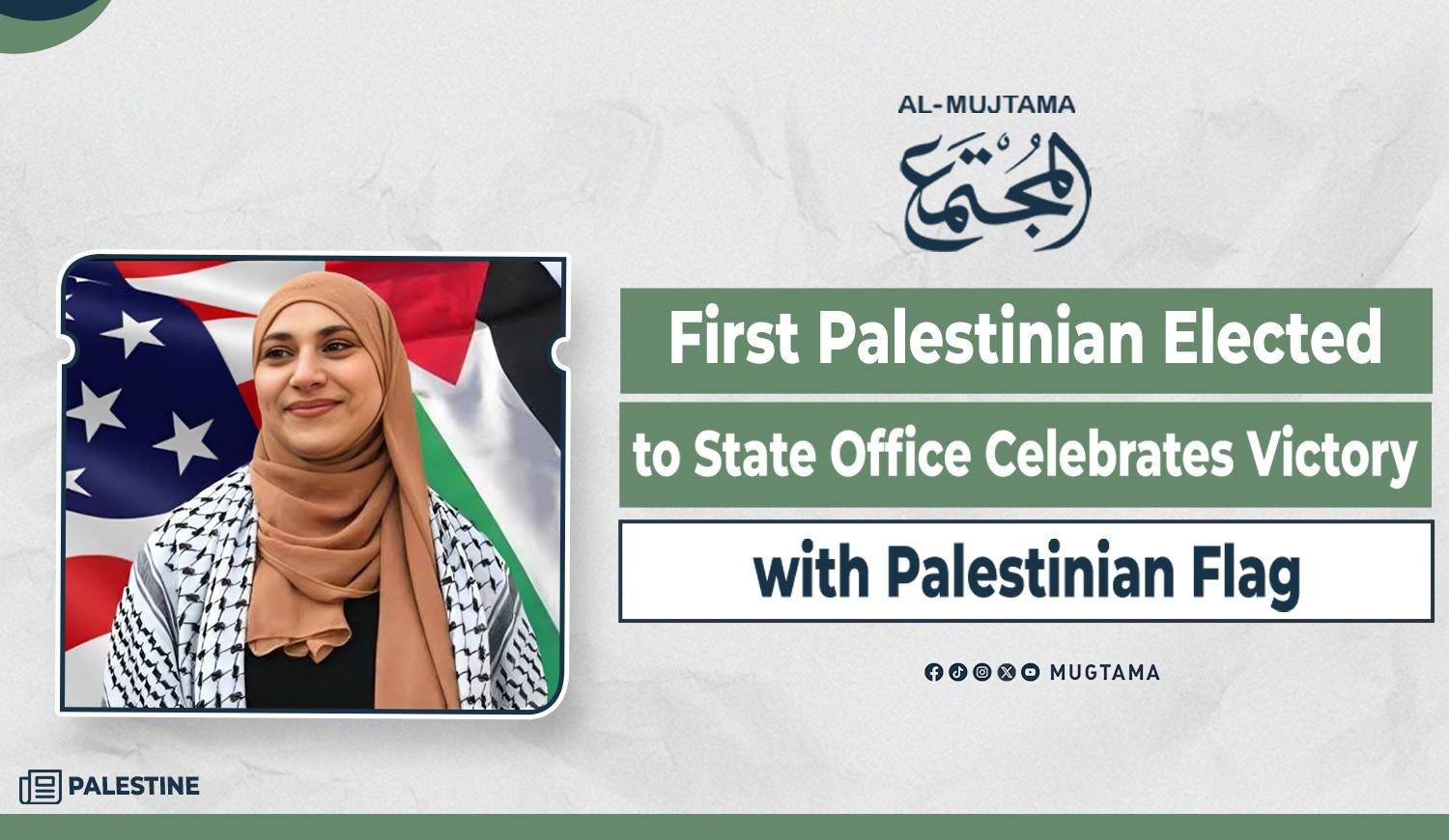
On the evening of November 3, 2026, supporters gathered across New York's 12th State Senate District as election results began to confirm a historic breakthrough. By the time major outlets called the race, Kawas had secured a commanding victory, making history as the first Palestinian-American elected to the New York State Legislature.
As celebrations erupted, Kawas shared a brief message on X: "We made history." The post was accompanied by
a Palestinian flag emoji, a gesture that quickly attracted national attention
and sparked discussion about identity, representation, and the evolving face of
American politics.
For supporters, the moment represented
far more than an electoral victory. It was the culmination of years of
community organizing, civic engagement, and growing political participation
among Palestinian-Americans. For critics and commentators, the symbolism of the
Palestinian flag added another layer of debate to an already significant
political milestone
Who Is Kawas?
Born and raised in Brooklyn to Palestinian immigrant parents, Kawas spent more than fifteen years working as a community organizer before entering electoral politics. Her advocacy has focused on workers' rights, immigrant communities, housing, economic justice, and Palestinian rights.
According to biographical information
published during her campaign, Kawas was deeply influenced by her family's
experience with the U.S. immigration system after her father was detained by
immigration authorities and deported. She has frequently cited that experience
as a formative moment in her political development.
Running as a Democrat and member of
the Democratic Socialists of America, Kawas campaigned on affordable housing,
healthcare access, public transportation, immigrant rights, and economic
equality under the slogan "Fund dignity, fight destruction."
Election Results Confirm a Historic Victory
The election took place on November
3, 2026, not November 4 as some secondary reports have implied. November 4
was the date many news outlets published stories about the result after the
race had been called.
Official election reporting showed
that Kawas
defeated Republican candidate Han-Khon To in New York's 12th State Senate District with
approximately 74.3 percent of the vote, while To received 25.4
percent.
The district covers portions of Queens
and Brooklyn and became open following the departure of former State Senator
The Symbolism of the Palestinian Flag
Almost immediately after her victory,
attention turned to Kawas's social media message celebrating the result.
For many Palestinian-Americans, the
Palestinian flag represented heritage, identity, and recognition of a community
that had achieved a political milestone. Supporters viewed the symbol as an
acknowledgement of the immigrant and diaspora experiences that shaped her
journey to elected office.
Others interpreted the symbolism
differently, arguing that international political symbols can carry broader
meanings when displayed by elected officials. The differing reactions
highlighted how cultural identity and political symbolism increasingly intersect
in modern American politics.
Yet regardless of political
perspective, observers agreed that the image became one of the defining moments
of the election and helped bring national attention to a race that otherwise
might have remained a local story.
A Landmark Moment for Palestinian-American Representation
Kawas's victory represents a
significant milestone for Palestinian-American political participation.
According to multiple reports, she
became the first Palestinian-American elected to the New York State Legislature
and the first Palestinian-American woman wearing hijab to hold such a position
in the state.
Her election comes at a time when immigrant and minority communities are increasingly seeking representation in state and federal government. Political analysts have long noted that representation can have ripple effects beyond a single election, encouraging civic participation among communities that have historically been underrepresented.
For many Palestinian-Americans, the
victory was seen as evidence that political engagement can translate into
meaningful influence within American democratic institutions.
Public Reactions Across the Political Spectrum
Supporters celebrated the election as
a breakthrough for diversity and inclusion in government. Many pointed to the
growing visibility of Arab-Americans, Muslim-Americans, and other immigrant
communities in political life.
Kawas also received endorsements from
several prominent progressive figures, including Bernie Sanders, Rashida Tlaib, and Zohran Mamdani.
Critics, meanwhile, questioned aspects
of the symbolism surrounding her celebration and raised concerns about
identity-based politics. The resulting debate reflected broader national
conversations about ethnicity, political representation, and the role of
cultural identity in public life.
Historical Context
Palestinian-Americans have been part
of the American social and economic landscape for generations, contributing to
business, education, healthcare, law, and public service. However, their
representation in elected office has remained relatively limited compared to
some other immigrant communities.
Kawas's election therefore joins a
broader American narrative in which communities that were once largely absent
from political office gradually achieve representation through organizing,
voter engagement, and demographic growth.
Similar milestones have been recorded
throughout American history among Irish-Americans, Italian-Americans,
Jewish-Americans, Latino Americans, Asian-Americans, and other ethnic groups
whose political influence expanded over time.
Challenges Ahead
While the election itself is historic,
governing presents a different challenge.
As a state senator, Kawas will face
expectations from supporters who hope to see progress on housing affordability,
public transportation, healthcare, workers' rights, and immigrant protections.
These were among the central themes of her campaign.
She will also operate in a political
environment where her statements and actions are likely to receive heightened
scrutiny because of the symbolic significance of her election.
Ultimately, her legacy will depend not
on the symbolism of election night but on her effectiveness as a legislator and
her ability to deliver results for constituents.
The election of Kawas
to New York's State Senate marks a historic moment in American political
history. Her victory on November 3, 2026, established a new milestone for
Palestinian-American representation and reflected broader trends toward greater
diversity in government.
The Palestinian flag displayed during
her celebration became a powerful symbol that generated debate, admiration, and
scrutiny in equal measure. Yet beyond the symbolism lies a more enduring story:
the election of a community organizer who successfully transformed grassroots
activism into electoral success.
Whether viewed through the lens of identity, representation, or governance, Kawas's victory represents a significant chapter in the continuing evolution of American democracy.
