








Domestic Violence in Kuwait: Between Social Reality and the Power of Law
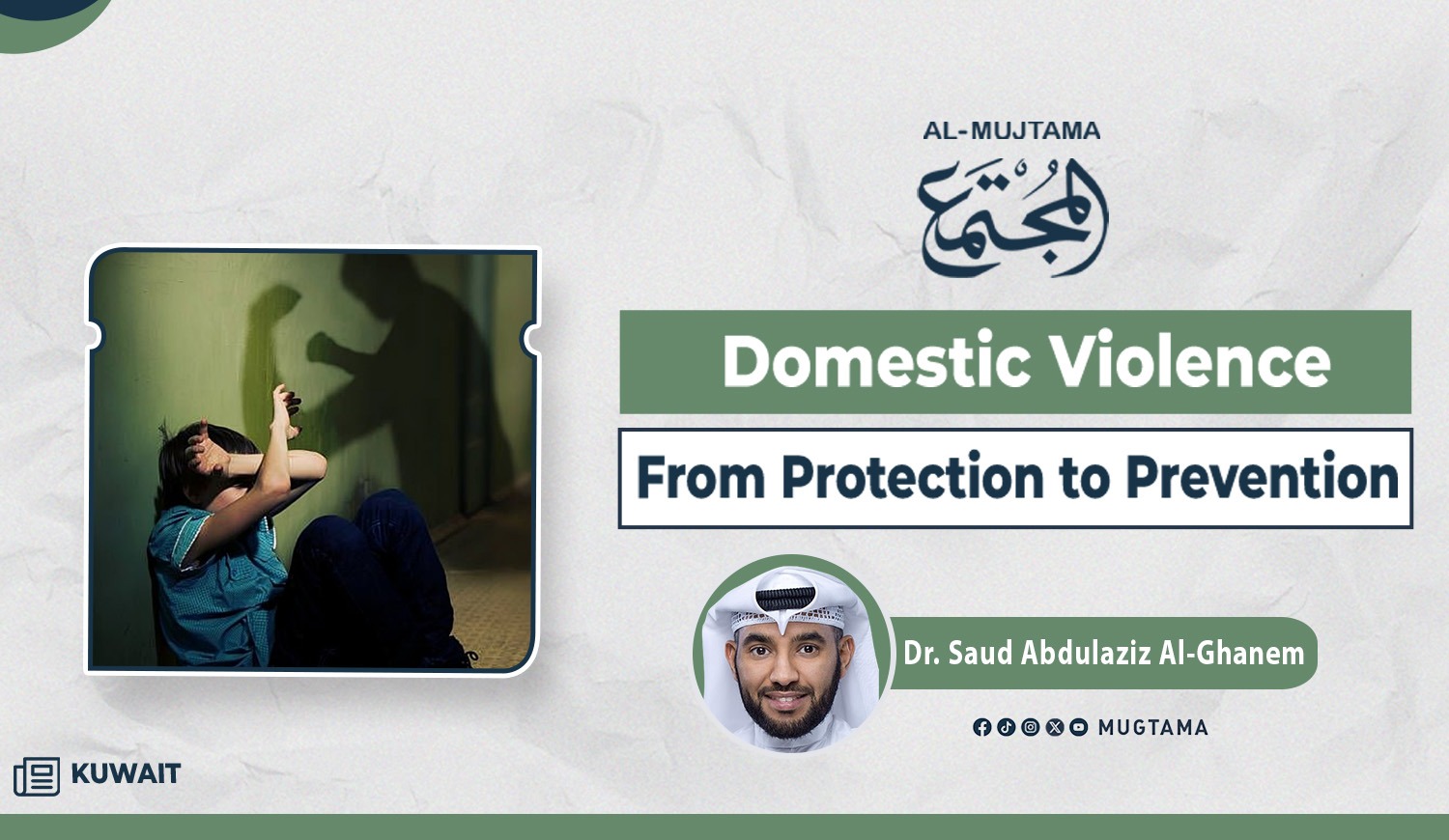
In September 2020, a shocking incident shook Kuwaiti public opinion. In the intensive care unit of Mubarak Al-Kabeer Hospital, a woman lay on her bed receiving treatment after being shot—by a member of her own family. The case exposed the growing patterns of domestic violence in society and became a symbol of a deeper problem that transcends individual tragedy, pointing to a social phenomenon that requires comprehensive confrontation. This report reviews the dimensions of the issue, its statistics, cultural roots, legal efforts, challenges, and future approaches.
The Scale of the Phenomenon: Alarming Data
Statistics from Kuwait’s Ministry of Justice reveal that the country recorded 9,107 domestic
violence cases between 2020 and March 31, 2025. Among the accused were 11,051
individuals (7,850 men and 3,201 women), while victims numbered 9,543 (5,609
women and 3,934 men)—showing women as the most affected group.
Of these cases, 4,057 were referred to
court, while 3,992 were closed through amicable settlement. Courts issued 3,497
rulings, including 2,639 convictions, with a conviction rate of about 75%.
Officials confirmed that cases nearly doubled within just two years, according
to Arab Times.
Cultural and Social Roots: Shame and Concealment
Experts argue that cultural pressures surrounding “shame” and “concealment” play a major
role in keeping victims silent, often pushing them to withdraw rather than
pursue justice. Human rights organizations note that many victims choose to
drop cases before reaching court, fearing stigma or family exposure. Human
Rights Watch acknowledged the Family Protection Law as a significant step,
but highlighted gaps—especially when victims withdraw, leaving cases
unmonitored.
The Kuwaiti Legal Framework: Growing Deterrence
In August 2020, Kuwait’s National Assembly passed Law No. 16 of 2020 on Protection from Domestic Violence, the country’s first legislation criminalizing all forms of domestic abuse—physical, psychological, sexual, and financial. The law provides victims with reporting mechanisms, temporary protection orders, shelters, and hotlines for psychological and legal support.
In September 2023, executive regulations were issued, establishing a Victim Support Fund,
clarifying the role of prosecutors, and detailing protection order procedures.
In 2025, Kuwait introduced a key amendment by abolishing Article 159 of the
Penal Code, which had allowed reduced sentences for mothers killing newborns
“out of shame.” The move was hailed as a reinforcement of the right to life and
a rejection of distorted cultural justifications.
Challenges in Implementation: Between Text and Reality
Despite pioneering legislation, gaps
remain between law and practice:
1.
Settlements and withdrawals: Nearly 4,000 cases
were closed through amicable settlement, returning victims to the same harmful
environment.
2. Social stigma: Family and societal pressure often force victims into
silence or withdrawal.
3. Resource shortages: Shelters remain insufficient, and some security
agencies lack specialized training.
4. Need for broader reform: Calls persist to update personal status laws to
complement family protection legislation.
Civil Society Initiatives and Awareness Efforts
Civil society
has played an active role in addressing these challenges. Human Rights Watch welcomed the law as historic, while urging stronger
enforcement. Organizations such as Equality Now linked domestic violence
to discriminatory criminal laws and called for continued reform. Local groups
demand more shelters, better training for police and prosecutors, and
culturally sensitive awareness campaigns.
Future Outlook: Strengthening Protection
The path forward requires a holistic
system of protection:
- Expand shelters and support services with long-term financial and psychological aid.
- Specialized training for law enforcement, prosecutors, and judges.
- Cultural and religious awareness campaigns to emphasize that “concealment” does not mean
silence in the face of violence.
- Comprehensive legislative reform of personal status and related criminal laws.
- Support for civil society initiatives that bridge the gap between law and practice.
The 2020 shooting incident was not
just an individual tragedy, but a societal alarm.
With more than 9,100 cases in five years and a near doubling of reports in two
years, domestic violence in Kuwait is not marginal—it is a structural problem
requiring systemic response.
Kuwait has taken significant
legislative steps, most notably Law No. 16 of 2020, its executive regulations,
and subsequent amendments. Yet the real challenge lies in implementation:
victims often withdraw under family and cultural pressure, and resources remain
insufficient.
The future demands joint efforts by
the state and civil society to strengthen awareness, improve legislation, and
provide real protection, transforming the law from mere text into a living
deterrent that prevents violence and rebuilds safety within the family.