









Culture of Human Rights: How Do We Cultivate It?

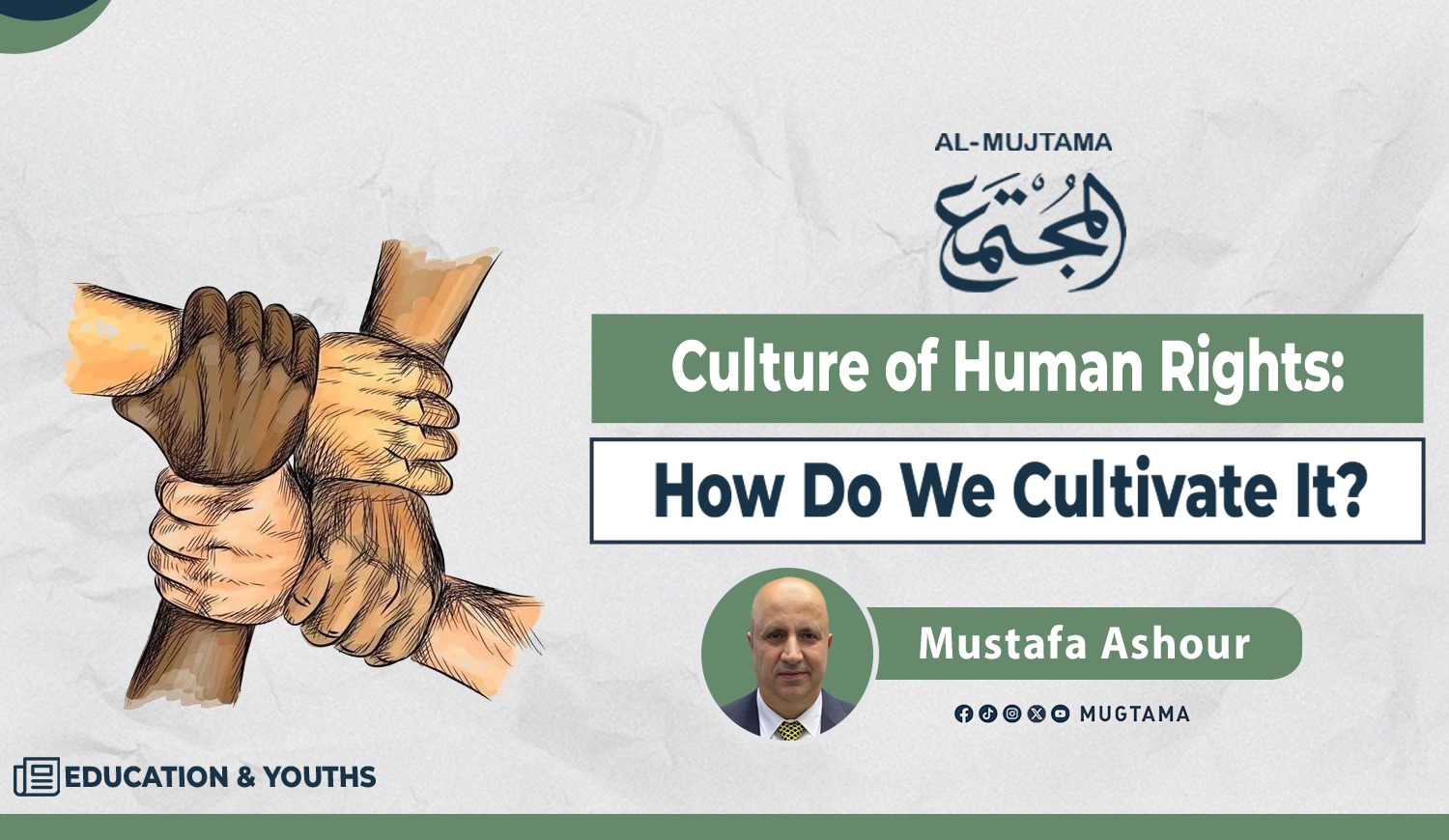
Nurturing awareness of human rights
requires time, effort, and a clear vision. It is a culture that develops
through the accumulation of values, ideas, knowledge, and behaviors over an
extended period. This process also depends on specific tools and methods within
educational, cultural, religious, and social fields.
Building a culture of human rights requires two parallel, synchronized, and
complementary efforts.
The first is to uproot the culture of tyranny from minds, behaviors, and the
social fabric—while clarifying the ugliness of despotism and its destructive
effects on individuals and society. This effort acts as a strong barrier
preventing the return of tyranny, for tyranny is the foremost destroyer of
human rights culture.
The second is to plant and nurture the
culture of rights—particularly human rights—at all educational and community
levels, strengthening this cultivation through behavior that promotes these
rights. This culture must be safeguarded by legal and constitutional frameworks
so that any violation of them constitutes a flagrant breach of social and legal
values.
How Do We Resist
Tyranny Through Education?
Resisting tyranny through education and
culture is an essential starting point for cultivating and strengthening human
rights values. The starting premise must recognize that human beings are
inherently capable of both righteousness and corruption, and that individuals are
products of the culture in which they were raised. Therefore, resistance to
tyranny is not impossible—it requires effort and struggle to uproot it and
replace it with a culture of human rights. This can be achieved through several
means:
1. Breaking the Aura of Tyranny:
Dismantling the aura of reverence surrounding tyranny is crucial to creating a
space for freedom, justice, equality, and dignity—the core principles of human
rights. The fear and awe surrounding despotic authority often lead to its
sanctification, and with sanctification comes the disappearance of
accountability. A tyrant then feels entitled to control people’s rights and
lives without restraint. Breaking this aura requires cultivating courage, free
speech, bold opinion, and respect for rights.
2. Dismantling the Alliance Between Corruption
and Tyranny:
The alliance between corruption and tyranny forms one of the most suffocating
environments for human rights. It combines the violence and arrogance of power
with the greed of wealth and vested interests. Breaking this alliance opens
space for ideas promoting human rights to grow. As Al-Kawakibi famously said:
“Despotism is the source of all corruption.”
3. Resisting the Inclination Toward
Submission:
This form of resistance requires changing the set of ideas that shape people’s
views of freedom, justice, equality, and humanity itself as a bearer of rights
that must be respected. The tendency to accept tyranny is in itself a burial
ground for the very notion of human rights. Thus, it is essential to dismantle
certain inherited sayings that perpetuate submissiveness, such as:
o
“People follow the
religion of their rulers,” which was used to justify despotic leadership and
thus undermine human rights culture.
o
“Sixty years under a
tyrant are better than one night without a ruler,” or “A tyrannical ruler for
seventy years is better than one hour of anarchy.” Although attributed to some
scholars, such sayings have often been exploited to entrench tyranny.
Similar ideas continue today within certain
currents—such as the “Madkhali Salafism”—that justify authoritarian abuse under
the guise of religious legitimacy. These notions present people with false and
dangerous choices: tyranny or chaos, rejecting any legitimate dissent or
opposing opinion, so that no voice remains but that of the tyrant.
Methods of
Cultivating a Human Rights Culture
Cultivating a human rights culture is not
an easy or quick process—it unfolds gradually and purposefully over time. The
following are some key means to achieve it:
1. Education:
Education is the cornerstone of nurturing human rights culture. This is why Abd
Al-Rahman Al-Kawakibi devoted much attention to it in his book “The Nature
of Despotism”, where he wrote:
“Scholars of sociology, ethics, and education agree that persuasion is better
than coercion or intimidation; that learning in freedom between teacher and
student is better than learning in solemn restraint; and that knowledge pursued
out of a desire for self-improvement is more enduring than knowledge sought for
reward or rivalry.”
Thus, sound education that teaches freedom becomes a powerful weapon against
the tyranny that destroys human rights and morality.
2. Highlighting the Authenticity of Human
Rights in Islamic Heritage:
It is essential to emphasize that the culture of human rights has deep roots in
Islamic and Arab heritage, derived from its authentic religious sources and
reflected in historical practice. Key sayings and traditions confirming these
values should be revived and integrated into public consciousness, such as:
o
The hadith: “O Abu
Hurayrah, an hour of justice is better than sixty years of worship—night prayer
and fasting by day; and O Abu Hurayrah, an hour of injustice in judgment is
more grievous and greater before Allah than sins of sixty years.” (Though
some scholars have graded it weak in its chain.)
o
Ibn Khaldun’s saying: “Injustice
heralds the ruin of civilization,” and “A just ruler brings prosperity
to the times.”
3. Encouraging the Study of Books that Promote
Justice and Human Rights:
Among such works are “The Virtue of Just Rulers” by Abu Nu`aym Al-Isfahani
(d. 430 AH), “The Nature of Despotism” by Al-Kawakibi, and “Islam and
Human Rights: Necessities, Not Rights” by Dr. Muhammad Imara. Global texts
like the Universal Declaration of Human Rights should also be read and
reflected upon.
4. Integrating Human Rights Culture into Daily
Life:
Human rights must become part of everyday practice within families, schools,
streets, and workplaces—where everyone knows and exercises their rights, and
resists any violations of human dignity or justice.
5. Transforming Human Rights from Moral Duty
to Legal Right:
This involves legislative and parliamentary efforts to embed human rights into
constitutions and legal frameworks rather than leaving them as moral ideals. It
also requires addressing past violations to make society realize that human
rights are a legal matter protected by enforceable law. Such accountability
helps establish a strong cultural and institutional foundation for human rights
within society and the state’s legal structure.
-------------------------------------------------------------
Read Also:
