









Can AI Change the Way We Love, Marry and Connect?
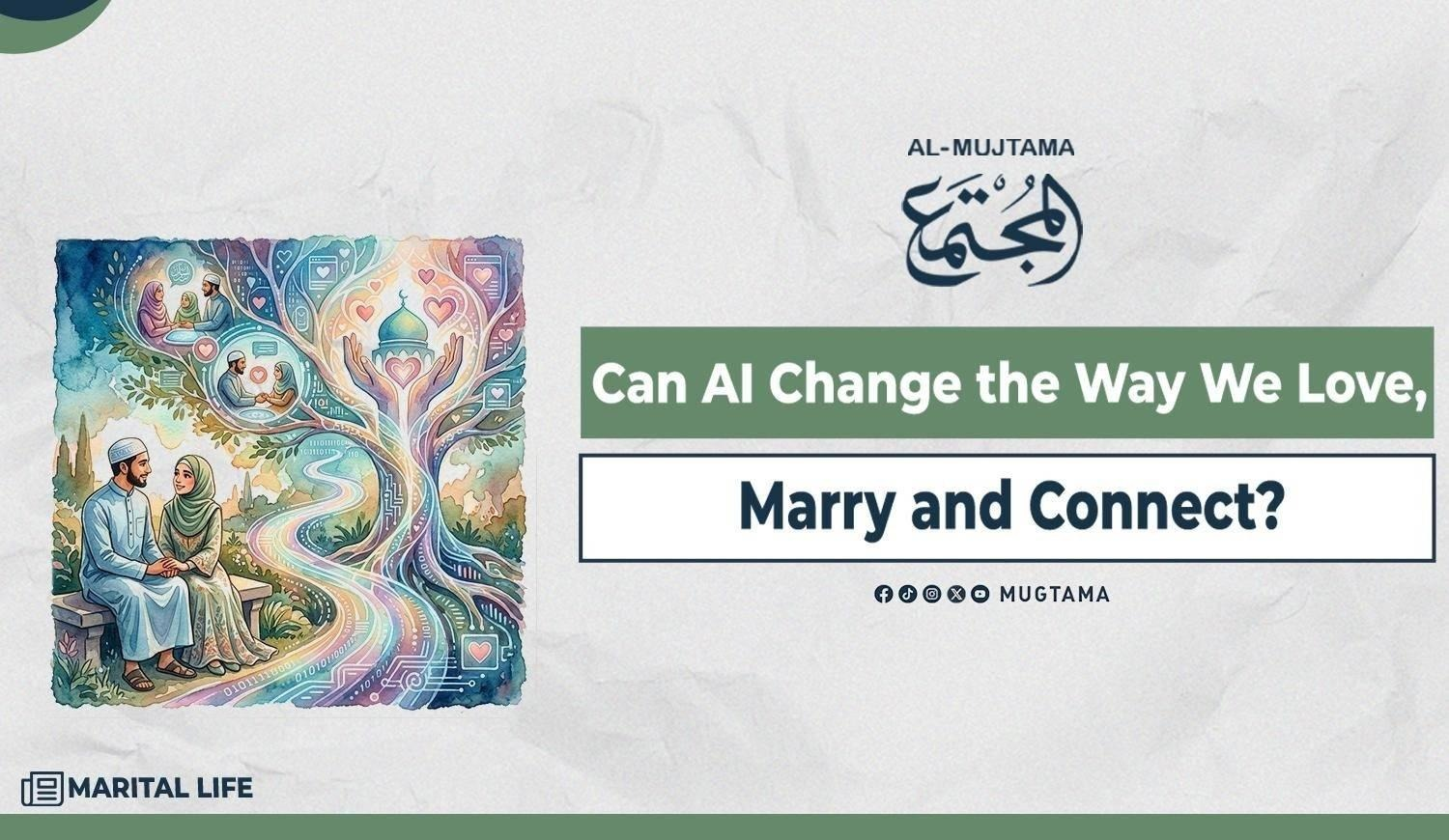
Elon Musk’s vision of the future is becoming increasingly
difficult to dismiss as science fiction. In his recent interview with The Economist, Musk predicted that artificial intelligence
could surpass the combined intelligence of humanity within roughly five years.
He also envisioned humanoid robots carrying AI from the digital world into the
physical one, eventually producing goods and services on a scale that could
create an era of extraordinary abundance. By 2036, he predicted, money itself
may no longer matter because machines could produce more than humanity could
consume.
Yet perhaps the most consequential question raised by this
technological revolution is not economic at all. If machines eventually become
better than humans at writing, calculating, programming, producing and solving
problems—and can increasingly simulate emotional conversation—what happens when
they become good at companionship too?
If an artificial companion can listen endlessly, remember
everything we say, adapt to our personalities and remain available whenever we
need it, could AI eventually change not only whom we choose as a partner, but
what we expect a partner to be?
AI Is Entering the Emotional Space
The possibility is no longer entirely hypothetical. A 2026 Pew Research Center survey of 5,119 U.S. adults found that 10% of
Americans use AI chatbots for emotional support or advice, while 4% use them
for companionship. Among adults aged 18 to 29, the figures rise to 20% for emotional support and 7% for
companionship.
These figures do not mean that young people are replacing
their spouses or friends with chatbots. But they reveal an important shift: AI
is moving beyond information and productivity into an area traditionally
occupied by human relationships. People are beginning to turn to machines not
only for answers, but for conversation, reassurance and a sense of
companionship.
The timing is significant because this development is taking
place amid a growing crisis of loneliness. The World Health Organization estimates that around one in six people worldwide
experiences loneliness, with adolescents and young adults among the groups most
affected. In Britain, the Office for National Statistics reported in January 2026 that
23% of adults felt lonely often, always or some of the time, rising to 27%
among those aged 16–29 and 28% among those aged 30–49.
AI is therefore entering a society in which many people are
already searching for connection. And that makes artificial companionship more
than a technological curiosity.
When the Machine Becomes Easier Than the Human
A human partner is inherently difficult. A spouse has needs,
fears, preferences and expectations of their own. They may misunderstand us,
disagree with us or need something from us when we are already exhausted. A
lasting relationship requires patience, compromise, forgiveness and the
willingness to make room for another person.
AI offers a very different model: personalization without
negotiation.
An artificial companion can potentially remember what we said
yesterday, adapt its tone to our mood and respond immediately. If we dislike
its response, the system can potentially be modified or replaced. It does not
become tired of listening, demand that we change our plans, or ask us to care
for it when it is struggling.
This creates a subtle danger. AI may not need to replace human
partners to transform marriage. It may simply make human relationships seem unnecessarily difficult.
A person accustomed to an endlessly responsive artificial
companion could eventually begin to judge a spouse by the same standard. Why
does my partner not understand me immediately? Why do they need time alone? Why
do they forget things? Why can’t they always communicate calmly? The problem
would no longer be that the human relationship had become worse, but the
standard by which it was being judged would have changed.
What AI Cannot Replace in Marriage
Islam begins from a fundamentally different understanding of
marriage. The Quran does not describe a spouse merely as someone who provides
entertainment, emotional validation or constant companionship. It describes
marriage as one of Allah’s
signs: {And among His signs is that He
created for you spouses from among yourselves so that you may find tranquility
in them; and He placed between you affection and mercy.} [Ar-Rum 30:21]
The words tranquility, affection and mercy point to
something much deeper than convenience. Marriage is not meant to be a perfectly
customized emotional service. It brings two human beings together, each with an
independent personality, rights, needs and responsibilities.
That is precisely why human marriage can cultivate qualities that artificial companionship does
not require from us. Patience becomes meaningful because the other person can
frustrate us. Forgiveness matters because the other person can hurt us.
Sacrifice matters because their needs will not always coincide with ours. Mercy
matters because neither spouse is perfect.
The difficulty is therefore not necessarily a defect in
marriage. It is part of the moral work of loving another human being.
The Problem With a Perfectly Customized Partner
Modern technology has already trained people to expect
personalization everywhere. Algorithms choose the music we hear, the videos we
watch and the products presented to us. AI takes that personalization further
by adapting the conversation itself to the individual.
The danger is that this logic could migrate into romantic
expectations. Instead of asking whether a relationship is worth building,
people may increasingly ask whether it is sufficiently convenient. Does my
partner understand me immediately? Do they respond exactly as I prefer? Do they
remember everything? Do they always validate me?
But another human being is not a product designed around our
preferences.
A spouse is valuable not because they perfectly satisfy us,
but because they are a person with whom we enter a relationship of mutual
responsibility. The Quranic vision of marriage therefore challenges the modern instinct to make
every relationship revolve around personal convenience. Marriage is not simply
about finding someone who makes my life easier; it is about two people learning
how to build a life together.
This distinction becomes especially important when AI can
offer companionship without many of the demands of human intimacy. A machine
does not require us to sacrifice for it, care for it when it is vulnerable, or
change ourselves for its sake. Human love does!
What Happens When AI Becomes Too Good at Companionship?
Research is already examining what happens when people develop
emotional relationships with AI. A 2025 study
analyzing 1,131 users, 4,363 chatbot sessions and more than 413,000 messages
found that people with smaller human social networks were more likely to turn
to chatbots for companionship. It also found that heavier
companionship-oriented use was associated with lower well-being, particularly
among users with weaker human social support. The researchers stressed that AI
companionship did not fully substitute for human connection.
This does not prove that AI companionship causes loneliness.
But it raises a question that society will increasingly have to confront: Can
technology relieve the feeling of loneliness without actually teaching people
how to build human connection?
The distinction matters. A machine can provide conversation
without vulnerability, attention without reciprocity and companionship without
responsibility, but human relationships cannot. And perhaps that is exactly why
they matter.
The Future of Marriage May Be Decided by a Human Choice
The AI revolution should therefore not be discussed only in
terms of jobs, productivity and economic abundance. Musk’s prediction that
machines could eventually outperform humans in almost every task contains a
deeper challenge: if machines become better than us at so many things, we will
have to rediscover the value of what cannot be reduced to performance, which includes
love.
Human beings do not need to prove that they can provide faster
or more perfectly personalized companionship than AI. The purpose of marriage
was never to create a flawless emotional experience. It is a relationship in
which two imperfect human beings find tranquility, develop affection and
practice mercy toward one another.
A machine may one day know exactly what words will comfort us.
It may remember every detail of our lives. It may never lose patience. It may
even convince us that it understands us.
But it will not need us to forgive it. It will not ask us to
sacrifice for it. It will not grow old beside us, raise children with us, care
for us through illness or share with us the unpredictable seasons of a human
life.
The real question, then, may not be whether AI can become our
partner. It is whether, in a world of increasingly perfect artificial
companionship, human beings will still recognize why another human being is
worth choosing.
