









Book Review: “The Ideal Muslimah” By Dr. Muhammad Ali Al-Hashimi
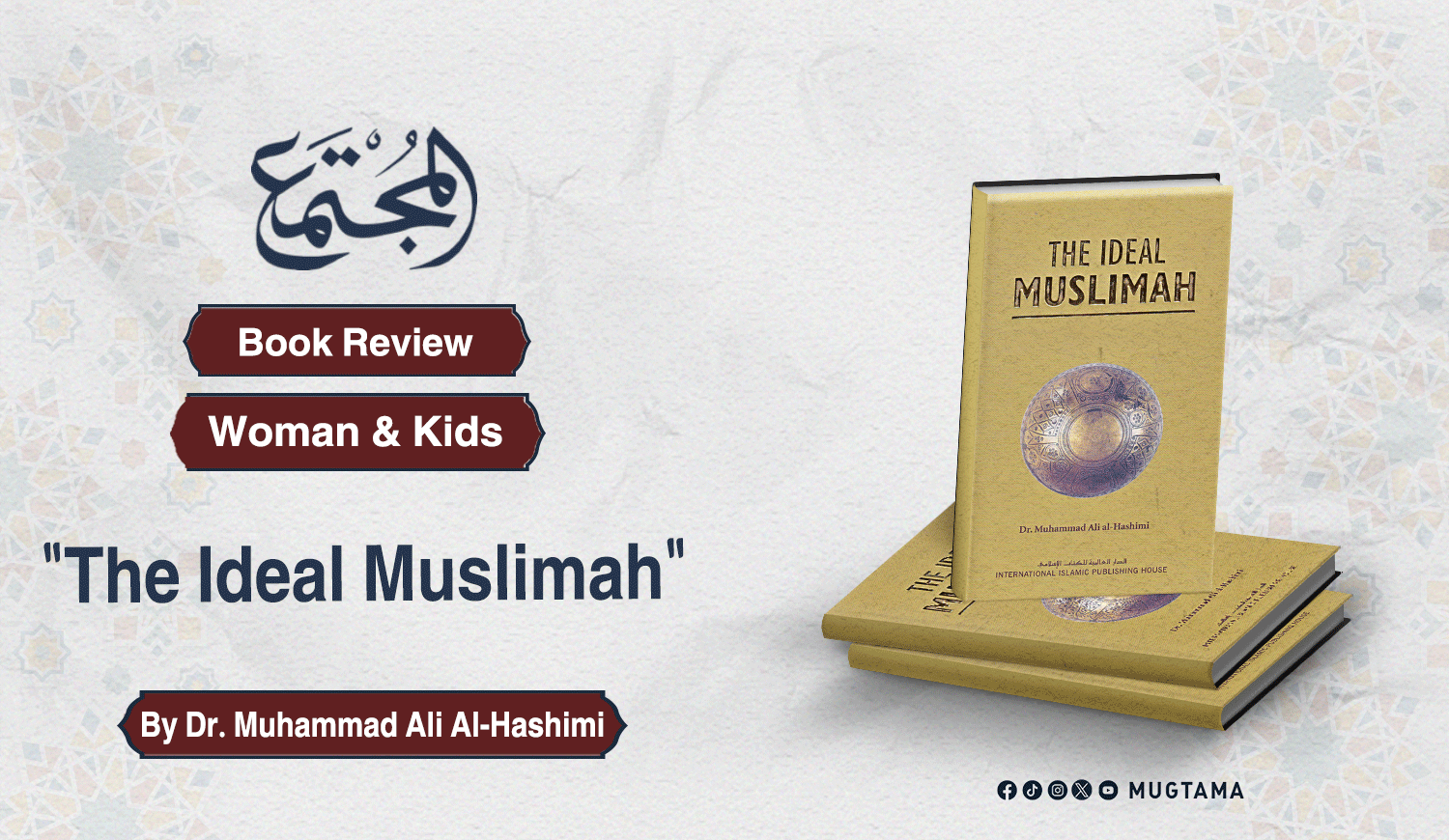
In The Ideal Muslimah, Dr.
Muhammad Ali Al-Hashimi presents a comprehensive vision of Muslim womanhood
grounded in the Quran and Sunnah.
Rather than defining righteousness
through religious observance alone, the author argues that a woman’s Islamic
character must be reflected in every dimension of her life: her relationship
with Allah, her personal development, her family responsibilities, and her
dealings with the wider community.
The book’s central message is that
genuine Islamic character emerges from balance, knowledge, and consistent
conduct, without allowing excellence in one area to become an excuse for
neglecting another.
Faith as the Foundation of Character
The book begins with the Muslim
woman’s relationship with her Lord, emphasizing sincere faith, regular worship,
gratitude, patience, and trust in Allah. For religious commitment is not
confined to outward rituals; it shapes a woman’s understanding of life, her
responses to hardship, and her conduct when no one is watching.
The author illustrates this through
examples from the lives of righteous women in
Islamic history, showing how faith produces integrity, self-discipline, and
moral awareness. Worship becomes the foundation upon which the rest of a
woman’s personality is built, influencing not only her private spiritual life
but also her responsibilities toward others.
Personal Development Beyond Worship
One of the book’s most important
themes is the need to develop women’s whole personality. Al-Hashimi argues that
a Muslim woman should care for her physical health, personal hygiene, intellectual
growth, emotional well-being, and spiritual development. Neglecting any of
these dimensions undermines the balance that Islam seeks to establish in human
life.
Knowledge occupies
a particularly important place in this framework. The author encourages women
to read, learn, reflect, and continually improve their understanding of their
religion and the world around them. Religious commitment and intellectual
development are not presented as competing priorities; rather, they complement
one another in forming a mature and thoughtful personality.
Family Relationships and Everyday
Responsibility
The book devotes substantial attention
to the Muslim woman’s relationships with her parents, husband, children,
relatives, and in-laws. Each relationship carries particular rights and
responsibilities, and the author draws upon Quranic teachings and Prophetic
traditions to explain the conduct expected in these settings.
Marriage is
presented as a relationship requiring affection, respect, patience, and mutual
support. Motherhood,
meanwhile, is treated as a significant responsibility involving the spiritual,
intellectual, emotional, and moral development of children. The author also emphasizes
kindness toward parents, maintaining family ties, respecting neighbors, and
preserving friendships through sincerity and good manners.
These discussions reinforce the book’s
central principle: religious character is demonstrated through everyday
interactions. A person’s worship cannot be separated from how she treats the
people closest to her.
Beyond the Home: The Muslim Woman and
Society
Al-Hashimi also challenges the idea
that a Muslim woman’s role is limited to managing her household. Although he
gives considerable attention to family life, he explicitly recognizes women’s contributions to education, social welfare, Islamic outreach, and
other areas of public life.
The Muslim woman should be
knowledgeable, socially aware, and capable of contributing positively to her
community. Her influence extends beyond her immediate family through her
conduct, her ideas, and her commitment to promoting what is good.
This wider perspective connects
personal development with social responsibility: cultivating a strong Islamic
character prepares a woman not only to fulfill her private obligations but also
to benefit society.
The Ideal Muslimah: A Life of Balance
Ultimately, The Ideal Muslimah
presents Islamic womanhood as a comprehensive process of character formation
rather than a checklist of religious duties. Its recurring emphasis on balance
challenges the tendency to prioritize one aspect of life while neglecting
others. Spiritual devotion must accompany good manners; family responsibility
must not eliminate intellectual growth; and personal development should
strengthen, rather than diminish, social responsibility.
The book’s lasting value lies in its
attempt to connect Islamic teachings with the practical realities of everyday
life. By organizing its discussion around a woman’s relationships with Allah,
herself, her family, and society, Al-Hashimi offers readers a structured
framework for examining their conduct and identifying areas for growth. His
central message is that the ideal Muslim woman is not defined by a single role
or quality, but by the harmony between faith, knowledge, character, and
responsibility.
-------------------------------------------------------
