









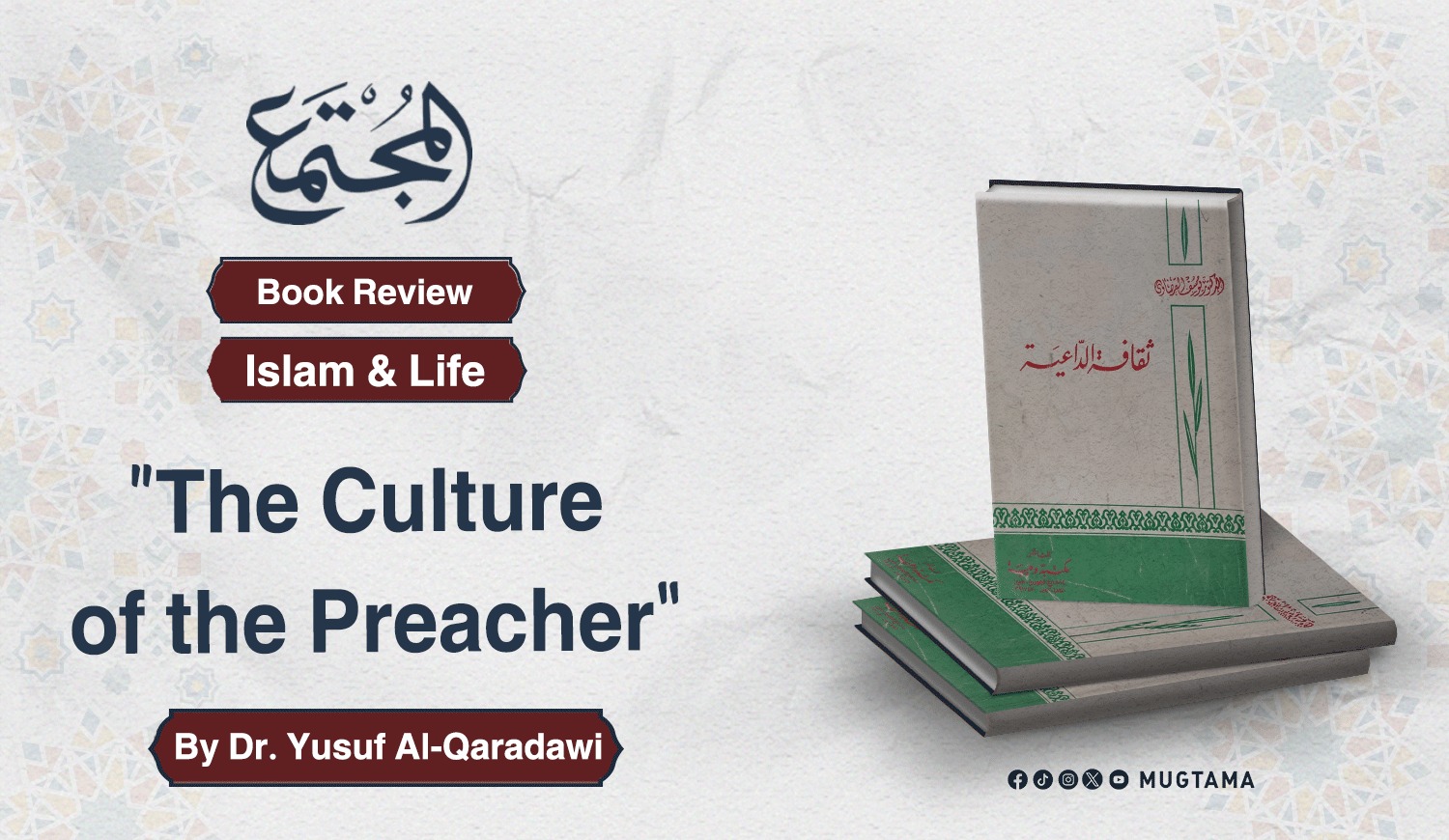
Book Review: “The Culture of the Preacher” By Dr. Yusuf Al-Qaradawi
The late
scholar Dr. Yusuf Al-Qaradawi, in his book “The Culture of the Preacher”,
addresses the importance of viewing calling to Allah
as a great mission to serve Islam in its complete and pure form—undistorted and
not fragmented.
The Essential Knowledge Every Preacher
Must Possess
Al-Qaradawi
explains in his book, published in 1976—which is considered a valuable
provision for preachers—that the preacher is in need of a range of cultures of
knowledge, including: religious, historical, literary and linguistic,
humanistic, scientific, and practical real-world knowledge.
He
continues that a successful preacher
must embody and internalize these forms of knowledge, blending them into a
beneficial and harmonious whole. He emphasizes that this preaching requires strong preachers who are worthy of its
greatness and comprehensiveness—capable of spreading its light into people’s
souls, minds, and consciences, after it has first illuminated their own inner
selves and lives.
The
author stresses the importance of carefully forming and preparing preachers in
a comprehensive manner. Otherwise, all projects of preaching will suffer failure and disappointment—both
internally and externally—because the primary condition will not have been
fulfilled: a preacher who is properly prepared to carry the message.
The Three Core Foundations of a
Successful Preacher
The
author outlines the most important “weapons” that a preacher must possess. The
first is the weapon of faith; without it, every other weapon becomes
ineffective, and every resource fails. Faith is not
wishful thinking, but what is firmly rooted in the heart and confirmed by
action.
The
second weapon is morals, which are inseparable from true faith and are among
its fruits.
The third
weapon is knowledge or culture—this represents the intellectual provision of
the preacher, alongside the spiritual and moral provisions.
Building a Well-Rounded Preacher in the
Modern World
Al-Qaradawi
clarifies the nature of the intellectual and cultural dimension required for
the Muslim preacher. He answers key questions such as: How should a preacher
prepare himself? Or how should we prepare him with the desired cultural
formation? What kind of knowledge is necessary for a preacher if we aim to
establish a school for preachers, a faculty of da`wah, or if one seeks to
develop himself into a preacher capable of guidance and influence?
For Further Reading:
- Da`wah in the Age of Screens
- Islam Addresses the Human Intellect
- New Generation and the Trap of Overindulgence Amid Declining Dawah Efforts
-------------------------------------------------------------
