









Book Review: “Sessions on Creative Education”
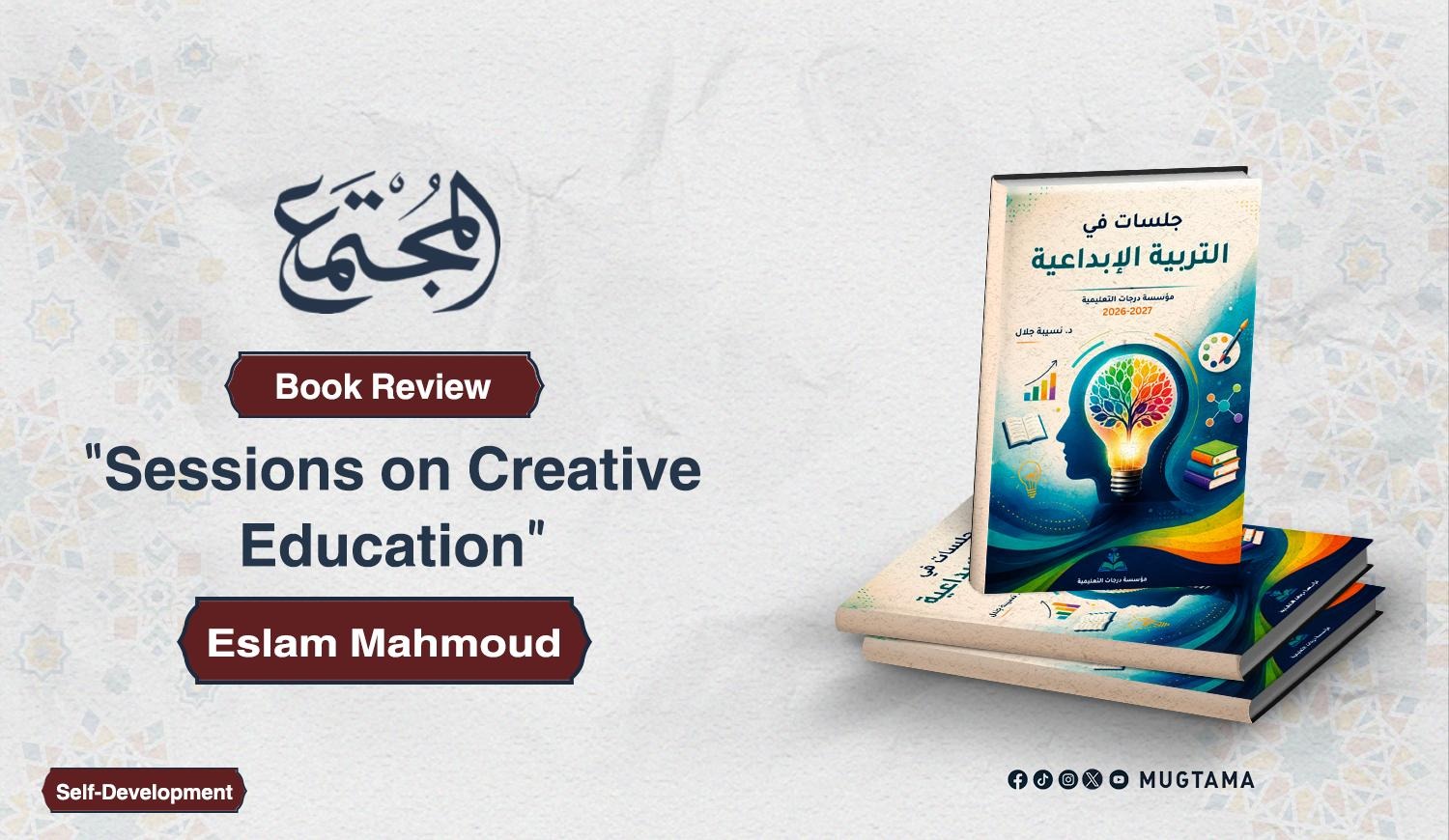
The book Sessions
on Creative Education explores practical ways of developing creative
education skills by training educators in creative educational methods and
effective approaches to communicating creatively with children.
The book’s
author, Dr. Nuseiba Jalal, seeks to equip educators with an understanding of
the nature of creativity at the different stages of their children’s and
students’ development, preserve Islamic identity by reinforcing the values and
principles of creative Islamic education, and address the cultural duality
between Muslim society and Western culture through creative educational
approaches.
Published in
2026, the book is divided into seven chapters covering: creativity, its concept
and tools; the stage of choosing a spouse; self-development during pregnancy;
developing the skills of young children; promoting early learning; fostering
creative thinking; and nurturing creativity among adolescents.
Creative
Islamic Education
The Syrian
author and academic explains that creative Islamic education is a comprehensive
educational approach aimed at developing an individual’s intellectual,
spiritual, and psychological abilities and stimulating their talents for
creativity and innovation in various areas of life, based on the foundations of
the two sources of revelation—the Quran and the Sunnah. She describes it as a
disciplined process that balances renewal and service to society with adherence
to Islamic principles, with the aim of fulfilling the human responsibility of
developing and cultivating the earth.
The objectives
of creative Islamic education include developing the intellect and encouraging
reflection, contemplating the signs of the universe in order to derive new
solutions and ideas, and promoting innovation in different areas of life in
ways that do not conflict with Islamic law.
Published by
Darajat Educational Foundation, the book focuses on developing decision-making
skills when choosing the right partner to build a creative family; balancing
reason and emotion; ensuring intellectual and social compatibility; emphasizing
compatibility in values, faith, and morals rather than romantic love alone;
assessing essential qualities such as honesty, responsibility, and respect;
observing behavior in difficult situations; and making use of Salat
al-Istikhara (the prayer for guidance).
A
Self-Development Roadmap
In her valuable
and rich work, Jalal presents a roadmap for women’s self-development during
pregnancy in Islam by bringing together the spiritual, psychological, and
physical dimensions. The aim is to build a strong and righteous personality and
nurture the fetus in a healthy, faith-centered environment, with positive
effects for both mother and child.
The roadmap
includes managing stress, learning, caring for the body, and providing all
possible conditions that support the fetus’s healthy development during
pregnancy and after birth, enabling the child to grow and reach their fullest
intellectual and physical potential.
The author, an
educational and psychological consultant, maintains that emotional bonding is a
crucial element in raising a child in a healthy and creative manner. Emotion is
an essential part of a child’s life and affects their behavior and personality formation.
It plays a major role in the child’s psychological development through promptly
responding to the child’s needs, physical touch, and eye contact.
Jalal
recommends establishing unconditional love and providing emotional security,
while also emphasizing the importance of play in the life of a young child.
Play serves as a medium through which the child’s personality develops and
takes shape during this formative stage of human development.
Creative
education at this stage begins between the ages of four and six. Play is the
primary activity and natural means through which young children learn and
develop, and is described as “the child’s work,” because through it they build
their physical, mental, emotional, and social skills. Play also provides a safe
environment for discovering the self and the world, releasing energy, and
developing imagination and creativity.
The
Early Learning Stage
The book
emphasizes that early education during the first stage of childhood, from ages
three to six, is a vital investment. It lays the cognitive, emotional, and
social foundations for the child and stimulates brain development at a crucial
stage. It also contributes to developing communication skills, building
self-confidence, and instilling social values such as sharing and cooperation,
thereby supporting later academic success and reducing educational gaps.
The author says
that childhood is one of the most important stages in shaping an individual’s
personality. It is during this period that inclinations and attitudes take
shape, abilities emerge, and skills and knowledge are acquired. It is also when
the course of a child’s physical, intellectual, social, and emotional
development is determined according to the surrounding cultural, social, and
educational environment, allowing that development to unfold and reach its
fullest potential.
She adds that
developing creative thinking in children should emerge from an environment rich
in stimuli, where cognitive abilities can develop properly. According to
scholars, genuine creativity in a mature person is the result of a long
process, with childhood creativity representing its first stage.
Educational
values also play an important and influential role during this stage. It is
therefore essential for children to acquire a set of values during their
upbringing, imparted and cultivated through the family, school, mosque, and
cultural clubs within society. This helps establish the child’s value framework
from an early age, enabling them to distinguish between what is permissible and
prohibited and between right and wrong, according to the author.
The Syrian
writer recommends strengthening positive communication skills with adolescents,
building healthy relationships with them, resolving problems, and creating a
comfortable and interactive environment at home and in their personal lives by
focusing on solutions rather than obstacles. She also advocates using digital
tools such as design, programming, and artificial intelligence for innovation
and self-expression, while paying attention to religious educational programs
for adolescents as a means of building identity and strengthening values.
-------------------------------------------------------------
