









Book Review: “Gender Equity in Islam” By Dr. Jamal A. Badawi
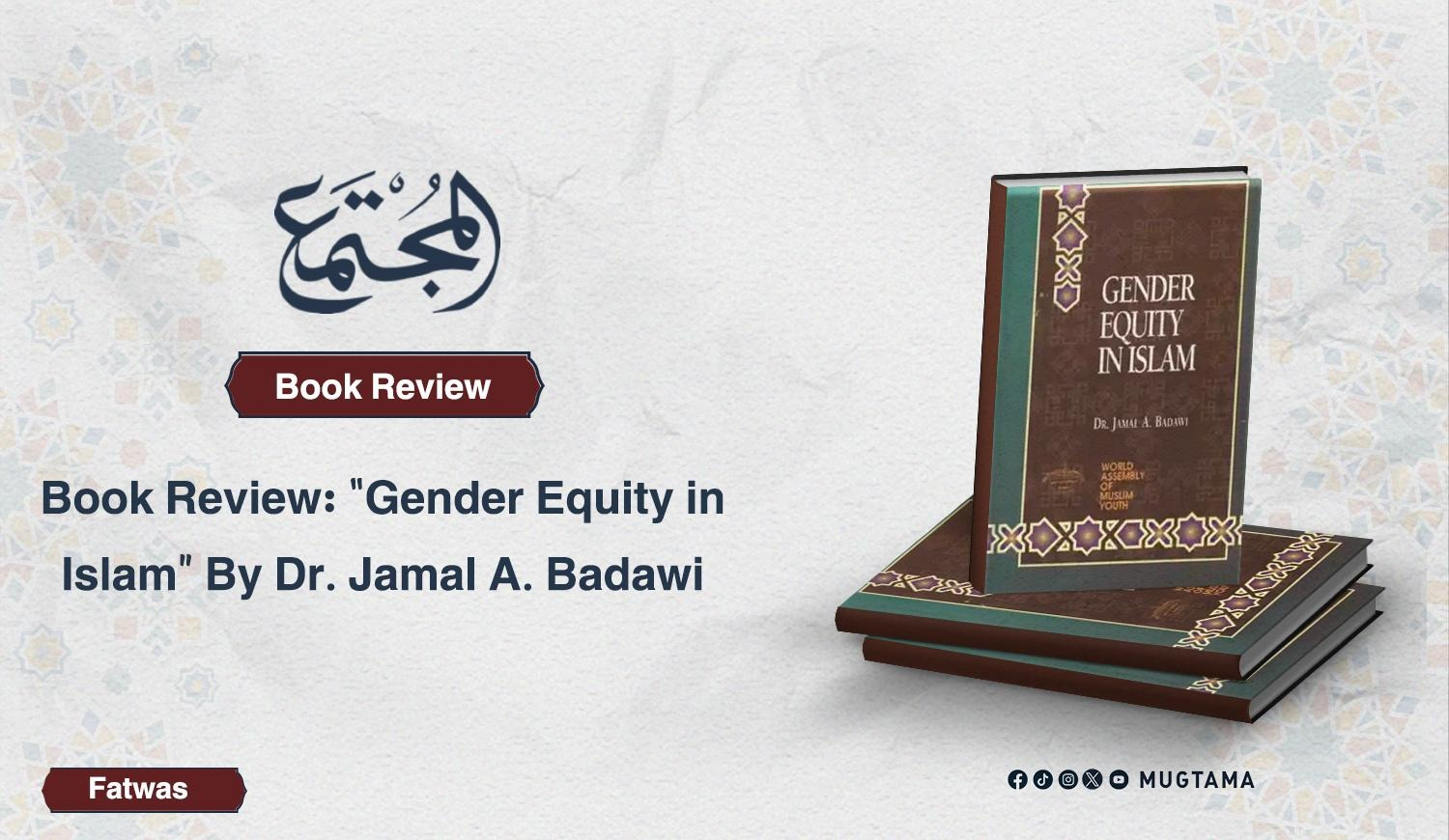
In Gender Equity in Islam: Basic
Principles, Dr. Jamal A. Badawi challenges one of the most persistent
misconceptions about Islam: that the religion itself is responsible for the
discrimination many women experience in some Muslim societies.
Rather than responding to contemporary
debates through emotion or ideology, he returns to Islam’s authentic
sources—the Quran and the Sunnah—to distinguish divine teachings from cultural
customs and historical interpretations.
The book argues that genuine gender
equity in Islam is rooted neither in identical roles nor in male dominance, but
in shared human dignity, complementary responsibilities, and justice. He
presents gender equity as a comprehensive worldview that balances rights with
responsibilities while urging Muslims to measure their practices against
revelation rather than inherited tradition.
Returning to Revelation Rather than
Culture
One of the book’s defining
contributions is its insistence on separating Islam from the cultural practices
often associated with it. Badawi argues that many criticisms directed at Islam
are, in reality, criticisms of customs that developed in particular societies
and later became mistakenly identified with religion. Likewise, some Muslims
have come to treat centuries of juristic opinion as though it carried the same
authority as the Quran itself.
To avoid this confusion, the author
begins by establishing a careful methodology for discussing women’s rights. Any
evaluation of Islam must begin with the Quran and the authentic Sunnah, while
also considering context, historical circumstances, and the role of prophetic
explanation in interpreting scripture. This methodological foundation shapes
the entire book.
Rather than defending every historical
Muslim practice, Badawi repeatedly distinguishes between the Islamic ideal and
the imperfect realities of Muslim societies, inviting readers to judge Islam by
its revealed principles rather than by human shortcomings.
Spiritual Equality as the Foundation of
Human Dignity
At the heart of the book lies the
principle that men and women possess equal spiritual worth before Allah.
Humanity originates from a single soul, both sexes receive the same divine
moral responsibilities, and both are equally accountable for their deeds. The Quranic
criterion for honor is righteousness rather than gender, ethnicity, or social
status.
This perspective also reshapes several
assumptions commonly attributed to religious tradition. The Quran does not
portray Eve as uniquely responsible for humanity’s fall, nor does it regard
motherhood as a punishment. Instead, both Adam and Eve share responsibility for
their mistake, while pregnancy and childbirth become reasons for honoring mothers
rather than diminishing women. The absence of female prophets is likewise
explained not as evidence of spiritual inferiority but in light of the
historical demands placed upon prophetic missions.
The recurring message is clear:
differences between men and women should never be interpreted as differences in
human value. Equity begins with recognizing their equal standing before Allah
while acknowledging that equality of worth does not necessarily imply identical
functions.
Rights, Responsibilities, and Economic
Justice
The book extends this principle of
equity into the economic sphere, as Islamic law granted women financial independence centuries before similar
rights became common elsewhere. Women retain ownership of their property before
and after marriage, may conduct financial transactions independently, and are
under no legal obligation to spend their wealth on household expenses.
Inheritance laws, frequently
criticized as unequal, are interpreted within this broader framework of
financial responsibility. While men often inherit larger shares, they also
carry legally binding obligations to provide for wives, children, mothers, and
sisters. Women’s inheritance, by contrast, remains their personal property and
financial security.
Employment receives similarly balanced
treatment. Motherhood is one of society’s most significant responsibilities
while the notion that Islam categorically prohibits women from
professional work is completely wrong. Instead, employment is viewed through
the lens of family welfare, social need, and individual circumstances,
illustrating the book’s broader attempt to balance rights with obligations
rather than isolate one from the other.
Family Life as a Partnership of
Complementary Roles
Rather than framing marriage as a
hierarchy of authority, it is a partnership built upon tranquility, compassion,
consultation, and mutual responsibility. Husband and wife are assigned different duties, yet these differences are complementary rather than
competitive. Leadership within the family is described as functional
responsibility linked to financial obligation,
not an expression of intrinsic superiority.
This understanding shapes the author’s
discussion of marriage, divorce, parenting, and family relationships. Women
possess the right to accept or reject marriage proposals, financial protection
is guaranteed throughout marriage, and divorce is a final remedy after sincere
efforts toward reconciliation and mediation. The book also rejects domestic violence
as inconsistent with Quranic ethics, emphasizing kindness, consultation, and
peaceful conflict resolution as the governing principles of marital life.
Even controversial subjects such as polygyny are
treated within their historical and social contexts. Rather than presenting
plural marriage as an ideal, the author argues that monogamy remains the
ordinary pattern of family life, while polygyny functions as a restricted
exception subject to demanding conditions of justice.
Throughout these discussions, the
family emerges not as a system of competing rights but as a moral institution
sustained by cooperation, responsibility, and compassion.
Law, Public Participation, and
Misunderstood Questions
Badawi also addresses legal and
political issues that frequently dominate modern discussions of Muslim women.
He argues that equality before the law is a fundamental Islamic principle and
challenges common assumptions surrounding testimony, leadership, and women’s
participation in public life.
Particular attention is devoted to Quranic
verses concerning testimony. Rather than accepting the widespread claim that a
woman’s testimony is universally worth half that of a man’s, the author
situates the relevant verse within its specific commercial context and argues
that it should not be transformed into a universal legal rule. Likewise,
discussions surrounding women in leadership positions are presented as matters
of juristic interpretation rather than explicit Quranic prohibition.
The broader theme running through
these chapters is intellectual caution. Simplistic conclusions, whether
apologetic or critical, often emerge from isolated readings of scripture
detached from context. Genuine understanding requires examining the totality of
Islamic sources before drawing conclusions about gender and public life.
Reforming Practice Without Altering
Principles
The book concludes by returning to the
distinction between Islam’s ideals and the realities of Muslim societies.
Badawi acknowledges that many Muslim communities have failed to embody the
standards established by revelation, yet he rejects the idea that reform
requires abandoning Islamic teachings in favor of externally imposed
frameworks.
Instead, meaningful reform begins from
within. Cultural traditions that contradict the Quran should be abandoned,
inherited interpretations should remain open to scholarly re-examination, and
Muslims should distinguish timeless revelation from historically conditioned
legal opinions. At the same time, the author cautions against reducing Muslim
women to stereotypes of universal oppression or measuring every society by a
single cultural model.
-------------------------------------------------------------
