






Book Review: “Etiquette of Dealing with Internet Fatwas” by Idris Abidmi Ahmad
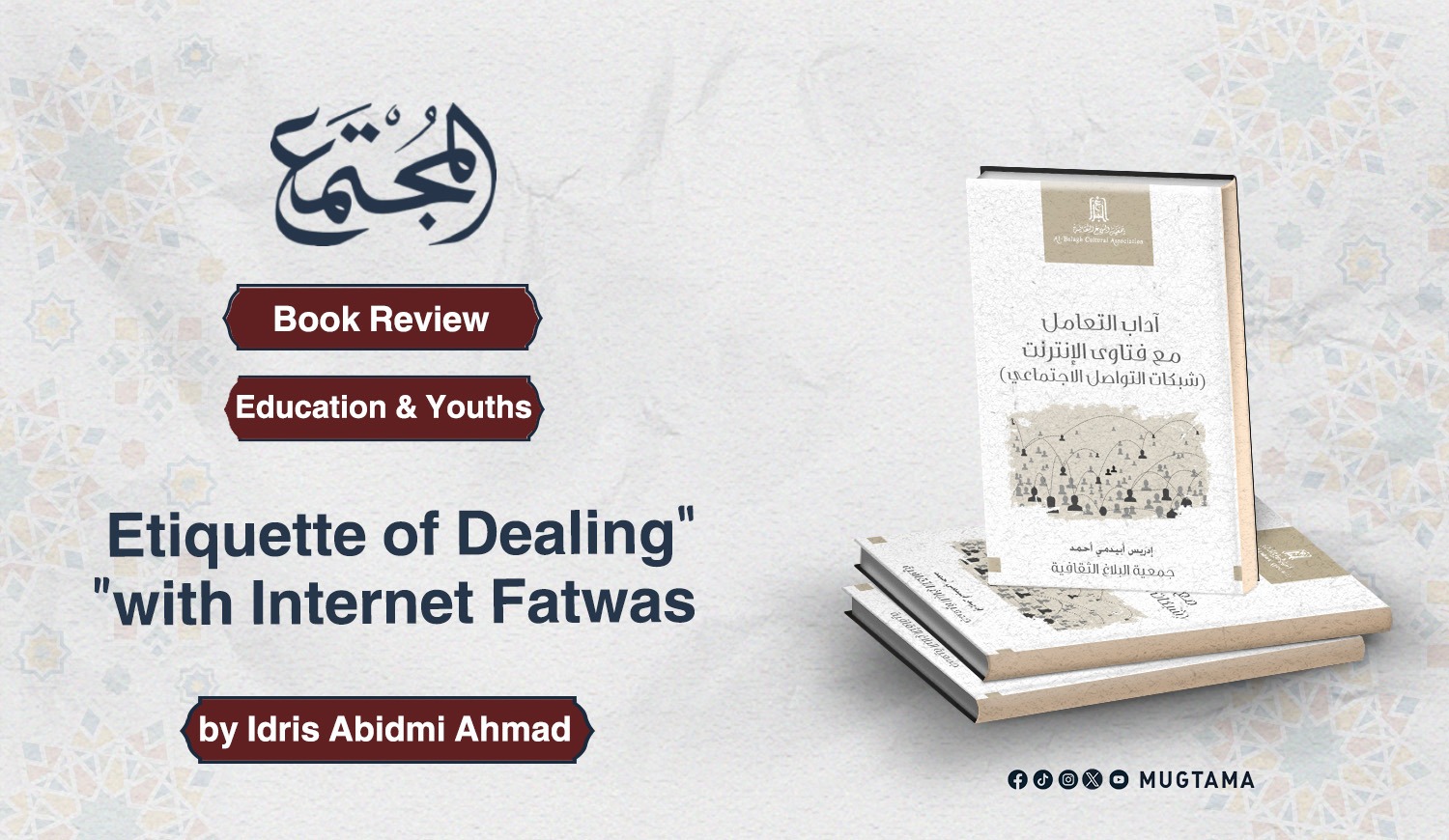
The book “Etiquette
of Dealing with Internet Fatwas” sheds light on the dynamics of the fatwa
issue through modern social media platforms, in an era marked by the
overwhelming dominance of the internet and the growing reliance on digital
technology.
The author of
the book, Islamic researcher Idris Abidmi Ahmad, states that the spread of
fatwas online facilitates access to religious information and Islamic legal
positions on contemporary issues. At the same time, however, it may lead to
contradiction and confusion, especially with unqualified individuals taking the
lead in issuing fatwas on social media platforms.
Through this
book—published by Al-Balagh Cultural Association in Qatar—the author seeks to
establish a roadmap for benefiting correctly from online fatwas without falling
into the trap of unreliable rulings, and explains how to reach sound and
authoritative fatwas issued by trustworthy scholars.
Importance of Online Fatwas
The first
chapter of the book, titled “An Introduction to the Importance of Online
Fatwas,” discusses the importance of the fatwa, the rulings of issuing and
seeking fatwas in Islam, the role of the mufti, his tools, and the etiquette of
requesting a fatwa.
The author
emphasizes the necessity of verifying the qualifications of those issuing
Islamic legal rulings, and warns against the dangers of obtaining fatwas from
unreliable sources or from seekers of fame and publicity.
Ahmad notes
that a fatwa is not merely a personal opinion presented publicly, but rather a
religious directive based on the Quran and the Sunnah, which underscores the
sensitivity of the role carried out by those engaged in issuing
fatwas—especially before acting upon or disseminating them through cyberspace
or other means of communication.
Fatwas and Social Media Platforms
In the second
chapter, entitled “Means of Issuing Fatwas and Social Media Platforms,”
the author traces the development of fatwa-delivery methods from ancient times
to the modern era, culminating in the twenty-first century.
He examines the
stages of the dissemination of fatwas from the Islamic heritage to the digital
age, warning of the dangers of fatwas spread through social media, the
circulation of inaccurate rulings, the extraction of fatwas from their original
temporal contexts, and the fact that fatwas may change according to time and
place.
The book also
addresses the negative consequences resulting from the absence of oversight
over electronically published fatwas, and the confusion that sometimes arises
due to the multiplicity of muftis from different countries and numerous
anonymous pages, which may lead to the spread of false fatwas.
Guidelines for Safe Engagement with Online Fatwas
The author
stresses the importance of adhering to a set of guidelines when dealing with
the internet and modern social media—guidelines that must be observed by both
the mufti and the one seeking the fatwa.
Among these
guidelines are verifying the mufti’s qualifications, ensuring the credibility
of the fatwa, understanding the context in which it was issued, referring to
trustworthy scholars, and seeking fatwas only from recognized and authoritative
sources.
The author
advises against relying on fatwas of unknown origin, warns against sharing
fatwas on social media without verifying their authenticity, and calls for
spreading awareness among Muslims to ensure access to sound and reliable
religious rulings.
The book “Etiquette
of Dealing with Internet Fatwas,” published in 2024, serves as a practical
guide for those seeking fatwas through cyberspace and social media networks,
and as a scholarly reference on how to utilize the internet for acquiring
Islamic knowledge and understanding the challenges surrounding the issue of
fatwas in recent years.
The book also
acts as a wake-up call for everyone to scrutinize the news and fatwas they
encounter, to verify them carefully, and to avoid sharing everything they
receive. Allah, Exalted is He, says: “O
believers, if an evildoer brings you any news, verify ˹it˺ so you do not harm people unknowingly,
becoming regretful for what you have done.”
(Surah Al-Ḥujurat 49:6)
This is a
warning against falling into the trap of unreliable fatwas that may mislead
people and divert them from the correct path.
Read Also:
-
Da`wah in the Age of Screens
-
AI Role in the Rise of Digital Religiosity
-
How to Keep Persistence in Da'wah despite Challenges
-------------------------------------------------------------