








Book Review: “Child Mental Health: From Birth to Age 12” By Hatem Adam
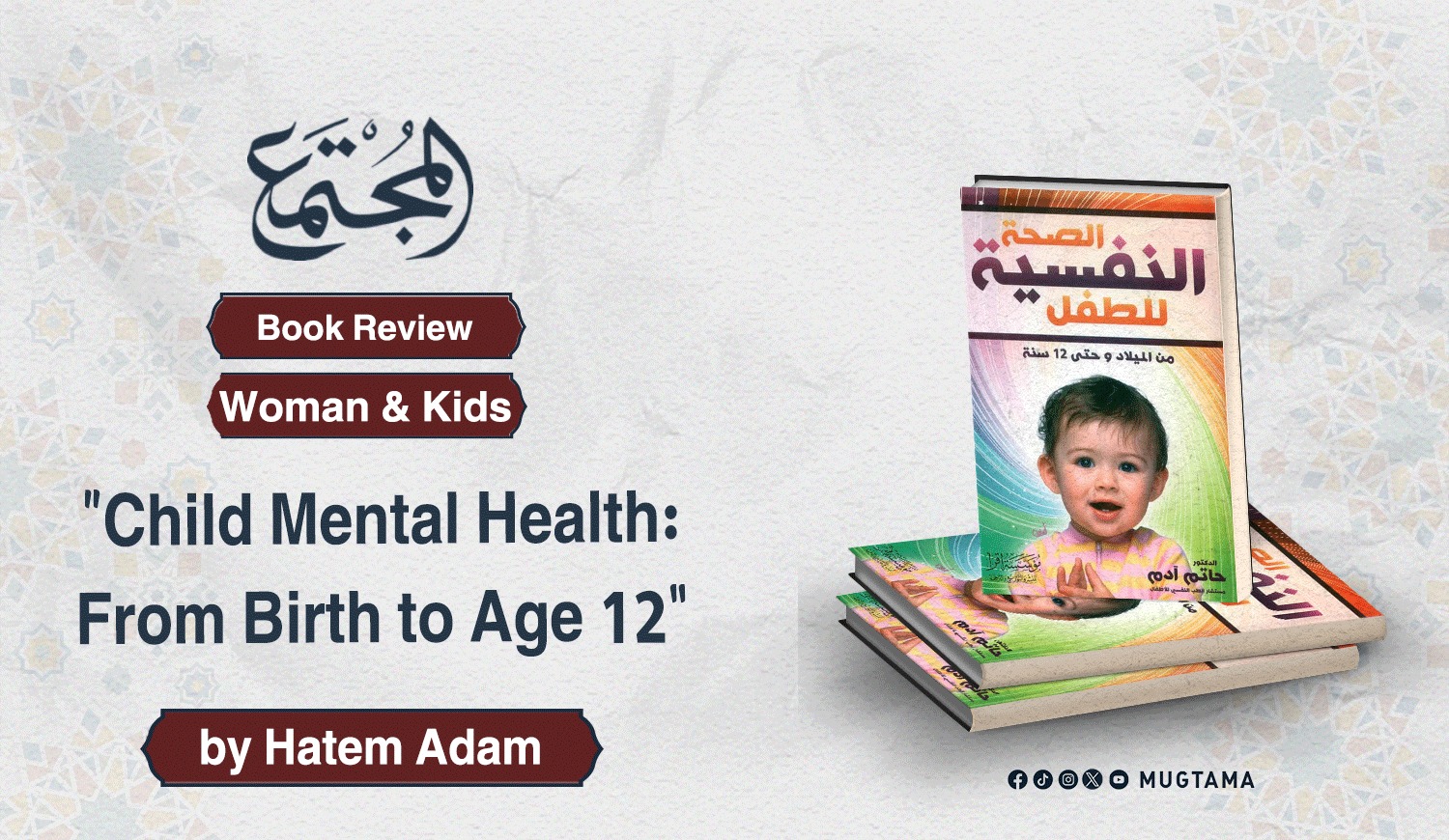
The book “Child
Mental Health: From Birth to Age 12” sheds light on proper parenting
methods, the problems children face in early life, and how to deal with them.
How can
we, as much as possible, raise children who are both mentally and physically
healthy? This is the central focus of the book. It begins by advising the
careful selection of spouses
based on religious commitment, followed by guidance on nutrition and childcare
during the first year, the skills children should acquire each year, how to
handle children’s embarrassing questions, and the proper ways to answer them.
A Practical Parenting Guide by Dr. Hatem
Adam
The
author, Dr. Hatem Adam, attempts to formulate a practical guide for parents to
understand a child’s behavior, stages of development, the thoughts that occupy
their mind, how they acquire normal or abnormal behavior, and the mechanisms
and methods that ensure raising a child in a healthy and balanced way.
Dr. Adam
states in the book, published by Iqra Foundation in Cairo in 2003, that a child
is not born with psychological problems, as some believe. Rather, parenting
styles are what create, amplify, or prevent such problems from arising in the
first place—placing a significant responsibility on parents from an early
stage.
Across
its 384 pages, the book explores the concept of the family and its functions,
mental health and its various fields, psychological adjustment—its elements,
forms, and influencing factors—as well as the concept of personality, its
traits, characteristics, and components.
It also
discusses patterns of normal and abnormal behavior, solutions for treating
psychological disorders in children, stages of cognitive and intellectual
development, and how to modify a child’s behavior
using behavioral therapy techniques.
Understanding Child Behavior and
Parenting Responsibilities
The
author, a specialist in child psychiatry, raises important questions that
concern parents and educators regarding child-rearing, the nature of
responsibilities and duties, how parents can understand what goes on in their
child’s mind, how to provide proper sexual education,
and when strict intervention is necessary versus when overlooking behavior is
more appropriate.
The book
attempts to map out children’s behavioral traits, essential skills, sensitive
questions, and both recommended and rejected parenting styles.
It also
reviews common childhood issues such as speech difficulties, jealousy, stubbornness, lying,
anger, shyness, stealing, speech disorders, sleep disturbances, bedwetting, and
other problems associated with children up to the age of 12.
Common Parenting Mistakes to Avoid
Dr. Adam
emphasizes that hitting, humiliation, constant threats, overprotection,
comparing children, neglect, excessive pampering, and even cursing the child
are all incorrect parenting methods.
He
explains that excessive harshness leads to fear or rebellion, while excessive pampering results
in weak character.
The
author advises maintaining a balance between firmness and compassion, avoiding
physical violence during discipline, instilling religious
values in children, and providing proper sexual education without the extremes
of Western excess or Eastern neglect.
He
stresses that every negative behavior has an underlying psychological cause and
is not merely the result of poor upbringing.
Effective Parenting Techniques and
Behavioral Correction Methods
The book
explains several effective parenting techniques, such as positive
reinforcement, selective ignoring, behavioral rehearsal, and gradual exposure
to anxiety-inducing situations. It also highlights methods for building self-confidence and
improving behavior.
These
approaches align with the guidance of Imam Abu Hamid Al-Ghazali regarding
raising children and refining their character.
This rich
and valuable book serves as a practical educational session on child
upbringing. It presents a simple and applicable approach that enables parents
to learn modern parenting methods, identify common mistakes, and understand
their responsibilities toward their child.
It
focuses on the early and sensitive stages of childhood, which are the most
critical in shaping a child’s personality and behavior, forming the foundation
upon which their future is built.
For Further Reading:
- 8 Parenting Methods to Boost Your Child’s Mental Health
- 4 Parenting Errors distance you from your child
- 6 Steps to Help Your Child Feel Safe During War
-------------------------------------------------------------