






Al-Aqsa Intifada 26 Years On: 6 Defining Moments from Sharon’s Raid to Muhammad al-Durrah’s Martyrdom
September 28 marks 26 years since the eruption of one of
modern Palestinian history's bloodiest chapters. In 2000, the confrontations at
the Al-Aqsa compound proved far more than a fleeting headline—they
signaled a long-anticipated rupture. Later termed the Second Intifada, or
Al-Aqsa Intifada, the uprising stemmed from an entrenched political impasse,
compounded by the breakdown of the Camp David Summit two months earlier and
ongoing Israeli settlement activity and land seizures.
Spanning five years, the conflict took a devastating civilian
toll, leaving over 4,400 Palestinians dead and upwards of 48,000 wounded. It
also brought widespread infrastructure destruction, coupled with severe
blockades and measures of collective punishment that paralyzed economic and
daily life for millions.
The spark lit by Ariel Sharon’s provocation soon erupted into
a blaze that shattered the 'Oslo illusion,' plunging Palestinians into a daily,
bloody confrontation to defend their presence and holy places.
Between Knesset maneuvering and a Palestinian memory scarred
by violence, here are six documented, pivotal moments from the Al-Aqsa
Intifada:
1. Camp David Negotiations Hit a Dead End
In July 2000, then-U.S. President Bill Clinton hosted the
Second Camp David Summit, bringing together the late Palestinian President
Yasser Arafat and former Israeli Prime Minister Ehud Barak. The stated goal was
to reach a final status agreement to resolve the historic conflict.
Disputes centered on the most contentious core issues: most
notably, sovereignty over East Jerusalem—specifically the Al-Aqsa Mosque—the
right of return for Palestinian refugees, and the demarcation of borders for a
future Palestinian state.
Alongside the diplomatic failure, conditions on the ground
steadily deteriorated. During the years of so-called 'peace' from the 1993 Oslo
Accords to 2000, Israeli settlers in the Palestinian territories more than
doubled. The stark contrast between peace pledges and relentless settlement
growth eroded ordinary Palestinians' trust in talks altogether.
Camp David’s breakdown opened a dangerous political vacuum,
leaving Barak’s coalition deeply fragile. Amid mounting Palestinian frustration
and Israeli political weakness, Ariel Sharon seized an opening to launch a
provocation that would overturn the status quo for all involved.
2. Sharon Storms the Al-Aqsa Compound
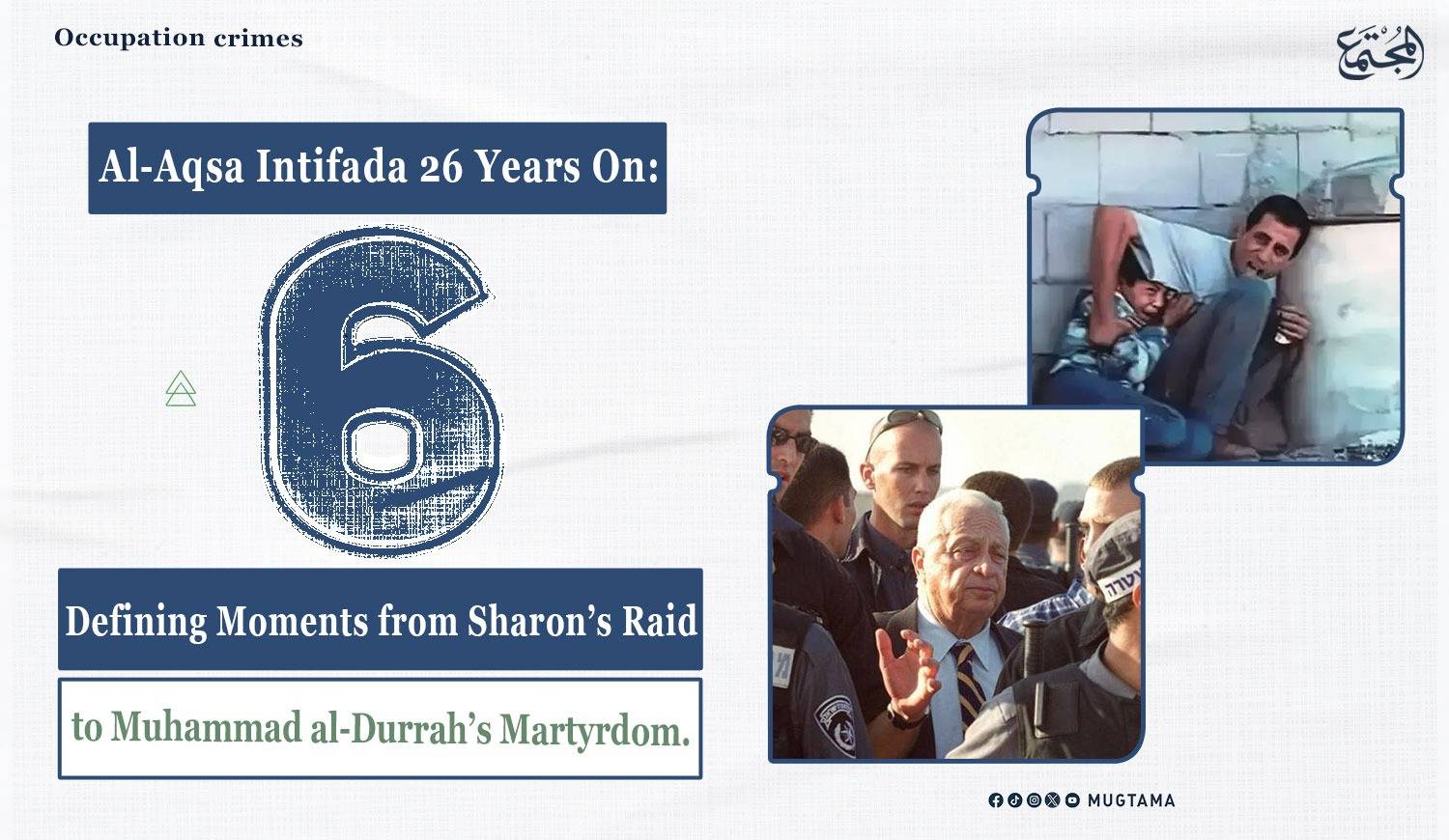
On the morning of September 28, 2000, Ariel Sharon,
then-leader of the opposition Likud Party, entered the courtyards of Al-Aqsa
Mosque in Jerusalem flanked by more than a thousand Israeli police officers.
Palestinian and U.S. officials had urged Barak to block the move, but he
refused, dismissing the visit as a domestic political maneuver by his rival.
Though leading the opposition Likud, Sharon faced a dual
challenge: one from his internal rival, Benjamin Netanyahu, who was angling for
a comeback to wrest control of the far right, and another from Prime Minister
Barak, who was pitching himself as a peacemaker.
Sharon calculated that striking at the very epicenter of the
Camp David impasse—the Al-Aqsa compound—would deal a decisive double blow. The
raid was meant to cement his standing as the right wing's fiercest hawk,
thwarting Netanyahu's political comeback. At the same time, it trapped Barak in
an inescapable dilemma: barring Sharon would leave the prime minister looking
weak and subservient to Palestinian demands, while allowing and securing the
visit—as he did—guaranteed an eruption that would dismantle Barak’s coalition
and extinguish the peace track.
Did Sharon win his gamble? Through the lens of pragmatic
Israeli politics, it was a sweeping victory. Barak’s government collapsed under
the weight of security and political paralysis, forcing early elections in
early 2001. In that vote, Sharon crushed Barak and relegated Netanyahu to the
political sidelines for years, ascending to the prime minister's office. Sharon
won his partisan battle, but the price of this reckless gamble was an inferno
that Palestinians paid for in blood and daily suffering for years to come.
3. The Spark of Clashes in Jerusalem
Sharon’s provocative storming of the compound did not fade as
a routine political event. The very next morning, on Friday, September 29,
2000, the courtyards of Al-Aqsa Mosque became ground zero for a massive popular
uprising. Following Friday prayers, outraged youths hurled stones in protest
against what they saw as the desecration of their sacred site, but the Israeli
response was, as ever, lethal.
Those bloody hours left seven Palestinian martyrs dead within
the courtyards of Al-Aqsa and wounded more than 200 others. The shockwaves of
that day quickly breached the confines of Jerusalem, the West Bank, and Gaza;
the official Or Commission later documented how outrage rippled across the
Green Line into Palestinian citizens of Israel ('48 Arabs) in early October. In
its final report, the commission condemned Israeli police for their unjustified
use of live fire against Arab citizens, which resulted in the martyrdom of 13
protesters.
4. Muhammad al-Durrah: The Footage That Shook the World and Human
Conscience
On September 30, 2000, the world had yet to realize that a
single piece of footage from the Gaza Strip would become one of the most
enduring symbols of the Second Palestinian Intifada.
At the Netzarim junction south of Gaza City, 12-year-old
Muhammad al-Durrah and his father, Jamal, found themselves trapped in
crossfire. Father and son sheltered behind a concrete barrel as Palestinian
cameraman Talal Abu Rahma, filming for France 2, captured the unfolding scene.
The footage showed Jamal desperately trying to shield his terrified boy with
his own body, before Muhammad was struck and collapsed, succumbing to his
wounds.
Yet the story of al-Durrah did not end with his death. The
footage itself later turned into one of the most fiercely contested episodes in
the media coverage of the conflict. While Israel denied that its forces were
responsible for the gunfire that killed the boy, France 2 and the cameraman
stood by their account asserting that al-Durrah was struck by Israeli bullets.
The origin of the fatal shots remained a subject of bitter dispute and
protracted official inquiries.
The image of al-Durrah was far more than just another picture
of the Intifada; it became the definitive visual memory of a turning point—one
where Palestinian casualties began to mount relentlessly as confrontations
rippled outward from Jerusalem across the West Bank and Gaza Strip.
5. The Intifada Escalates into All-Out Confrontation
Following weeks of grassroots clashes and the fall of hundreds
of Palestinian martyrs to Israeli gunfire, the Palestinian street came to
realize that stones alone would not deter a military apparatus intent on lethal
force. This stage marked a radical turning point: the final vestiges of the
Oslo security accords collapsed, and the military wings across all factions
plunged into an all-out armed confrontation from within Palestinian cities.
Factions launched shooting operations and engaged in
firefights targeting military checkpoints and settlements. The confrontation
soon escalated to bombing attacks deep inside Israeli territory in retaliation
for the targeting of civilians. Meanwhile, in the Gaza Strip, factions began
enhancing their operational capabilities and manufacturing arms locally; this
period witnessed the debut of early-generation homemade rockets—such as the
'Qassam'—fired toward neighboring settlements, forging a new deterrent
equation.
In response, Israel sharply escalated its offensive, deploying
fighter jets and attack helicopters to strike residential neighborhoods. The
escalation reached its apex in the spring of 2002 with the launch of Operation
'Defensive Shield,' as tanks stormed cities and refugee camps across the West
Bank—most notably culminating in the Jenin massacre.
6. From the Intifada to a Redrawn Reality: Gaza Withdrawal and a
Wall Swallowing the West Bank
The Second Intifada did not conclude with a political
settlement; rather, it ended with Israel imposing an entirely new geographic
and demographic reality that fundamentally redrew the land and the dynamics of
the conflict.
Under the relentless pressure of resistance strikes, Sharon
recognized that maintaining a presence in the Gaza Strip had become untenable
and militarily costly. In August 2005, Israel executed a unilateral initiative
known as the 'Disengagement Plan,' dismantling 21 settlements and withdrawing
its ground forces from inside the Strip. Gaza's landscape was completely
transformed, and a suffocating land, sea, and air blockade was clamped down
from the outside, turning the enclave into the world's largest open-air prison.
Yet the far greater
catastrophe on the land unfolded across the West Bank and Jerusalem. Israel
exploited the years of confrontation to reshape the landscape through iron and
concrete, breaking ground in 2002 on the 'Separation Barrier' (the Apartheid
Wall). The barrier was never a mere security fence tracing a border; rather, it
was an expansionist settlement enterprise.
