









Book Review:
"Educators from My Country" by Dr. Abdul Mohsen Al-Khorafi
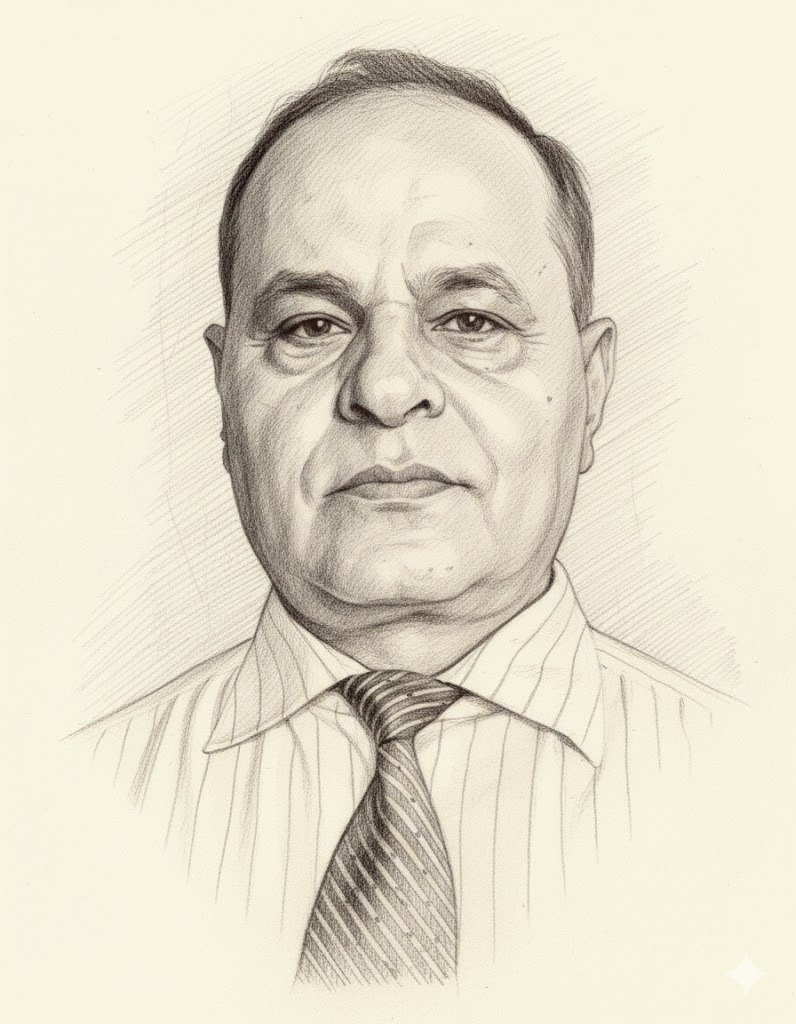
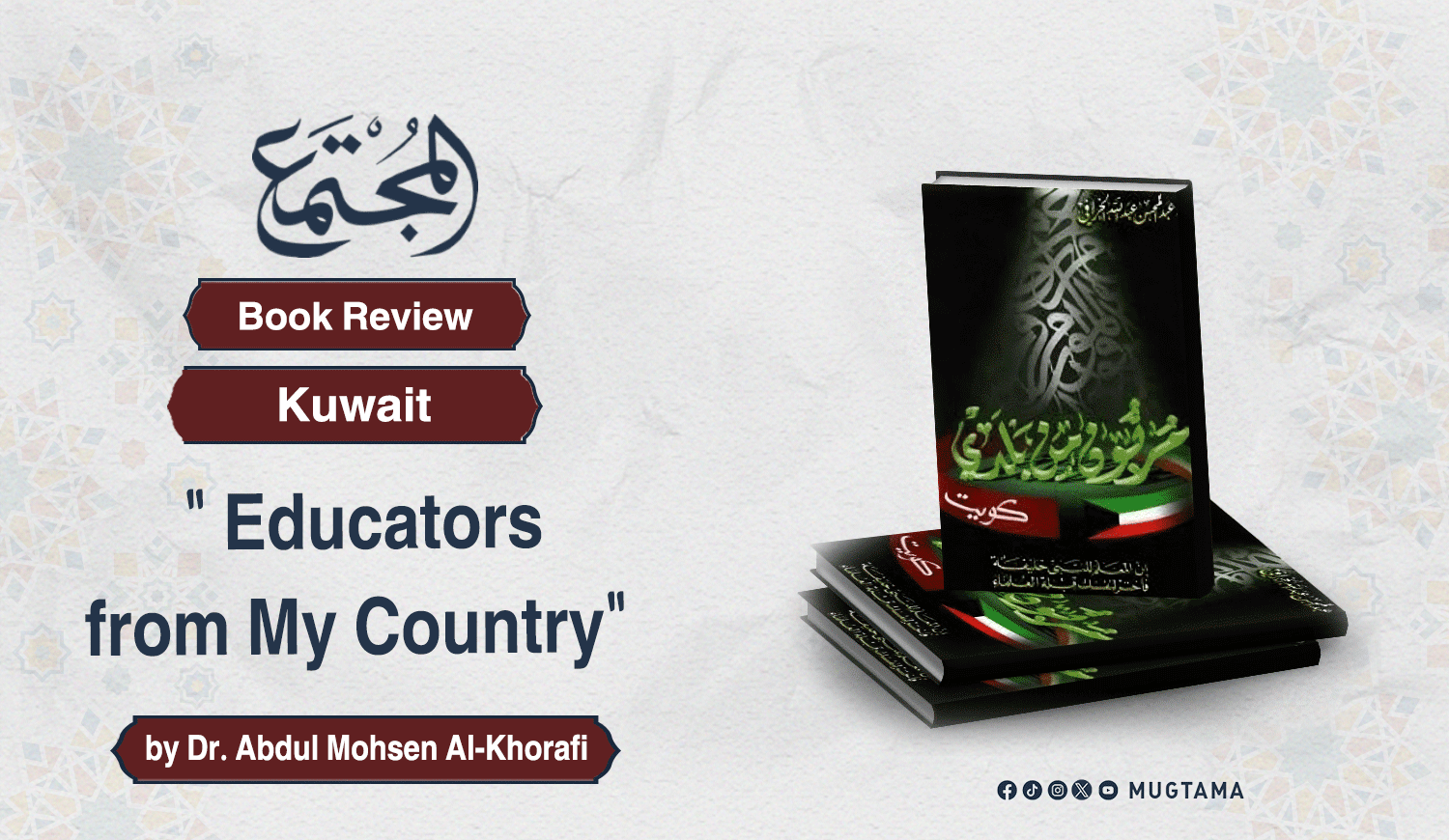
Dr. Abdul Mohsen Abdullah Al-Khorafi recounts the history of education in
Kuwait in his book "Educators from My Country" through the
biographies of scholars, Quranic school teachers, female Quranic tutors
(Al-Mutawwa'at), male and female teachers in regular schools, and educational
supporters. The first edition of the book was published in 1998, compiling
hundreds of biographies of the first generation of distinguished educators and
teachers across nearly 1,400 pages, alongside historical introductions,
conclusions, educational commentaries, documents, and photographs. The core
idea of the book is to preserve the names of those who contributed to building
the Kuwaiti human being and to safeguard their experiences from oblivion under
the national educational title "Educators from My Country."
Loyalty to Educators and Preserving Their Legacy
The project idea materialized after the liberation of Kuwait, when the
author assumed the deanship of the College of Basic Education in late 1991 and
was tasked with leading the reconstruction of the college following the
destruction and vandalism committed by the brute aggressor against the State of
Kuwait. He wanted to connect the country's present with its educational past by
adding a moral educational dimension to the reconstruction, shifting it from a
purely material aspect to a moral educational one. Because written sources did
not provide sufficient information about most of the personalities, he set out
to gather testimonies from educators, their families, and colleagues, relying
on interviews, private papers, and available publications.
The purpose of loyalty explains the broad scope of selection; the author
appreciates the teacher who taught children the Holy Quran, reading, and
writing, just as he appreciates the school founder and supporter. The unifying
criterion is the contribution to education, even if it was not accompanied by
widespread fame or authorship. (pp. 8-12, 29-32).
A Methodology Combining Documentation and Education
The encyclopedia includes male and female educators from among the people of Kuwait, with the author setting its scope to include those born up to the
year 1935 and earlier, arranging the figures according to their common titles
and then by birth year within each category.
He adopted a model for gathering information that includes upbringing,
education, teachers, students, work, and social contributions. A biography
typically consists of a documentary narrative followed by a commentary
extracting an educational or moral meaning, or discussing a topic related to
the figure. Thus, the book combines the preservation of historical accounts
with the presentation of experiences as material for reflection and emulation.
(pp. 12-13, 62-65).
From Quranic Schools to Educational Institutions
The book presents the beginnings of education in mosques, homes, and
Quranic schools, its connection to the religious and commercial needs of
society, and its subsequent transition to regular schools, foremost among them
being Al-Mubarakiya School in 1911 and Al-Ahmadiya School in 1921. The details
of fees, curricula, and donations reveal that education grew through the
participation of scholars, merchants, and citizens amidst the challenges of
funding and the development of study materials. (pp. 14-18).
By way of example and not limitation, the biography of Youssef bin Issa
Al-Qناعي (Al-Qenaei) embodies this transformation;
he participated in the establishment and administration of Al-Mubarakiya,
assumed the management of Al-Ahmadiya, contributed to founding the Al-Ahliya
Library and supporting study missions, and authored the book "Pages from
the History of Kuwait" for school students before it became a source for
the country's history. (pp. 149-151).
As for Abdulaziz Al-Rashid, his biography illustrates the extension of
the educator's mission into history and journalism; he combined teaching with
authoring the book "The History of Kuwait" and issuing
"Al-Kuwait Magazine," through which he opened space for young people
to publish their writings. (pp. 164-167).
Meanwhile, the experience of Mulla Morshed Muhammad Al-Sulaiman reveals
the evolution of the Al-Ahliya School; he organized his school into four
grades, graded the subjects from easy to difficult, enlisted other teachers,
and introduced English in the fourth grade. (pp. 376-378).
Female Educators in the Educational Memory
The book grants female educators an important presence and uncovers the
roots of girls' education prior to the expansion of regular schools. In the
biography of Habiba Abdullah Al-Dhawadi, the author traces the opening of her
Quranic school to around 1850, describing her as the earliest female educator
about whom he received information, while noting the limitations of his
knowledge and without asserting that she was the absolute first. (pp. 448-450).
Maryam Hamad Boodai stands out as a model combining education with mutual
aid; she opened a girls' school in her home, accommodated the varying financial
capacities of families regarding fees, exempted those unable to pay, and
trained one of her female students to assist her in teaching. (pp. 470-471).
As for Maryam Abdulmalik Al-Saleh, she represents a bridge between female
Quranic tutors and the modern school; she studied under female tutors and her
father, then participated in teaching at the middle school in 1938 and
documented her experience in a book concerning the historical development of
girls' education in Kuwait. (pp. 902-903).
The Value and Limitations of the Encyclopedia
The importance of the book transcends the collection of biographies to
preserve the details of educational life through notebooks, exams,
correspondence, photographs, and school blueprints. These materials allow for
the study of curricula, teaching methods, and the relationship between the
school and society.
The encyclopedia's focus on loyalty and the extraction of role models shapes the nature of its reading. Its primary value lies in transforming scattered memory into a record showing how the accumulated efforts of teachers, female educators, and supporters helped build education and society in Kuwait.
The author acknowledges the impossibility of documenting more than 65 personalities due to a lack of information available to him or even to their descendants afterward. He also recognizes the merit of Arab teachers and educational missions, clarifying that the absence of their biographies does not diminish their contribution. (pp. 56, 60).
