






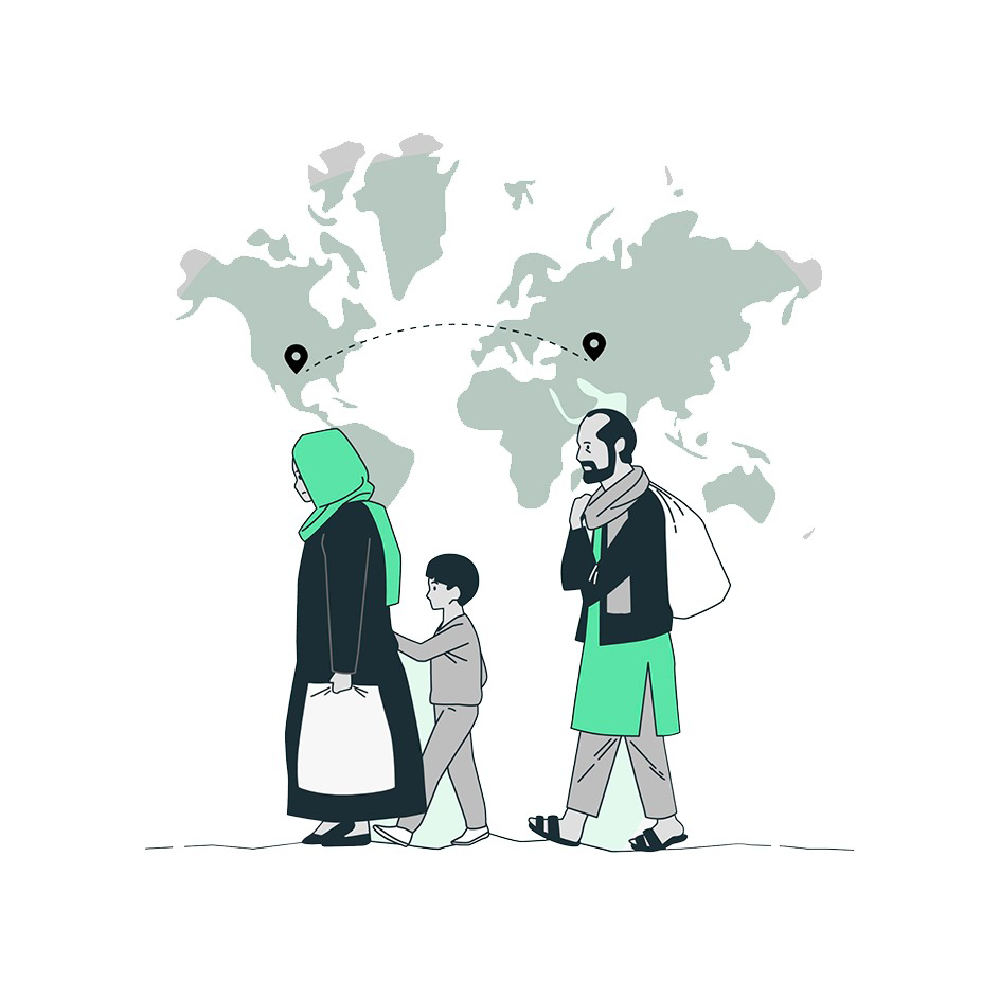


Finding Comfort in Allah
5 Spiritual Causes of Loneliness in a Hyperconnected World
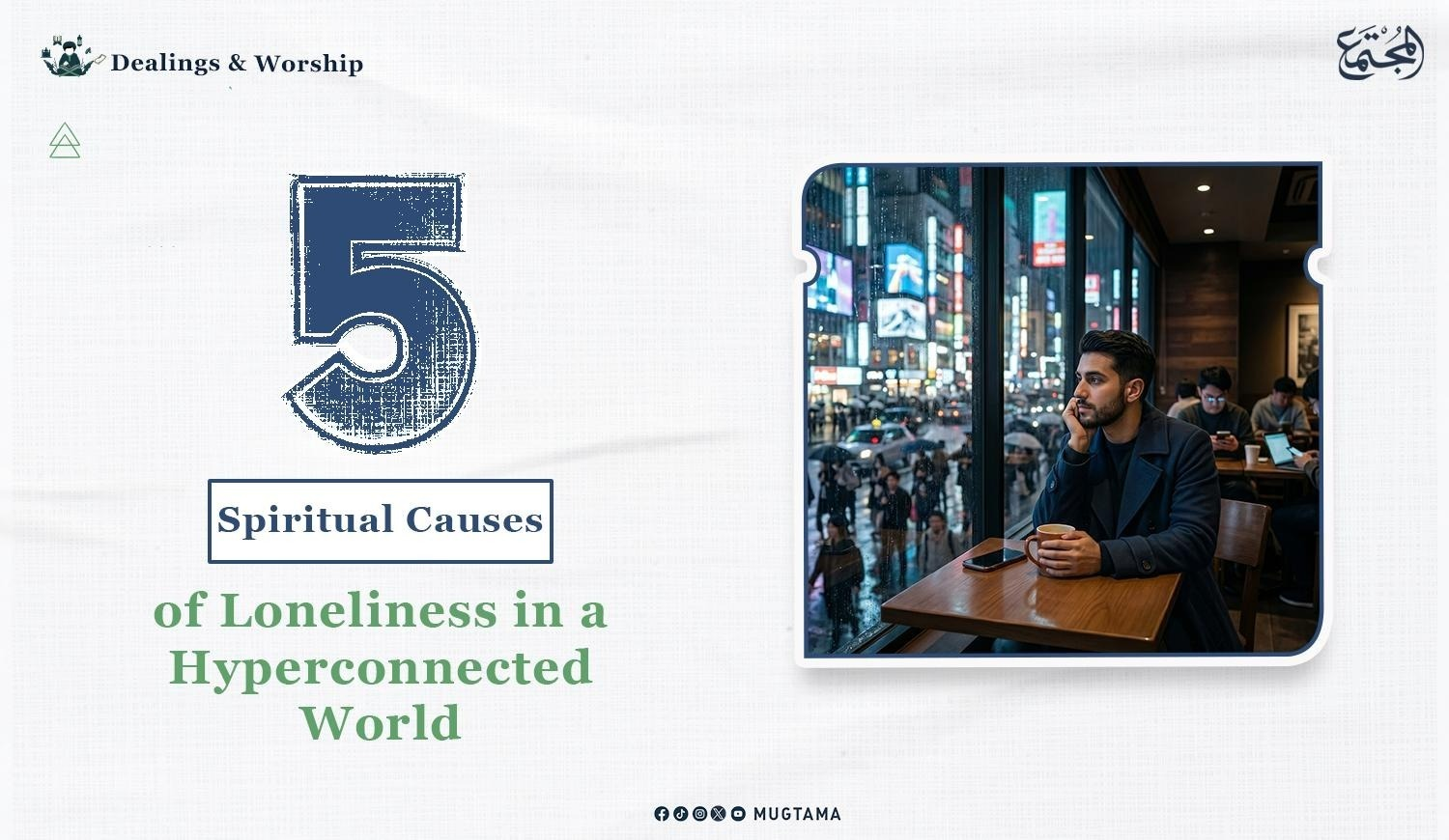
We have never been more connected and
yet never felt more alone.
A person can spend hours scrolling
through social media, exchanging messages, reacting to posts, and participating
in endless online conversations, only to close the screen feeling strangely
empty. The modern world has multiplied our connections, but it has not
necessarily deepened them.
This paradox is becoming increasingly
visible. In 2023, the U.S. Surgeon General described loneliness as a public health epidemic,
warning that social isolation carries health risks comparable to smoking fifteen cigarettes a day. Meanwhile, studies
consistently show that younger generations—despite being the most digitally
connected—report some of the highest levels of loneliness and anxiety.
Neuroscientists have offered an
interesting explanation. Matthew Lieberman,
director of the Social Cognitive Neuroscience Lab at UCLA, argues that the
human brain treats social connection as a basic need, much like food and
shelter. Loneliness is not merely an emotion; it is a signal that something
essential is missing. Looking at people online, he suggests, cannot satisfy
this need any more than looking at pictures of food can satisfy hunger.
Yet from an Islamic perspective, there
is another dimension to this crisis. Human beings were not created merely to
connect with one another. They were created to connect with their Creator. When
that deeper connection weakens, even a crowd may feel empty.
So Why Do We Feel Lonely Despite Being Surrounded
By People?
1. More Contact but Less
Presence
Technology allows
constant communication, but genuine presence has become rare. Messages, likes, tweets,
and comments can transfer information, but they cannot fully replace the warmth
of physical companionship, sincere attention, and meaningful conversation.
Many people today are surrounded by
interactions yet starved of intimacy.
The Quran reminds us that true
tranquility is not found in external noise but in inner connection: {Those who believe and whose hearts find comfort in the
remembrance of Allah. Surely in the remembrance of Allah do hearts find
comfort.} [Ar-Ra`d 13:28]
A heart deprived of this deeper source
of peace often remains restless, no matter how many notifications appear on the
screen.
2. Comparing Reality to
Everyone Else’s Highlights
Social media constantly exposes us to carefully curated versions of other people's
lives. We see achievements, celebrations, travels, and smiling faces, but
rarely the struggles behind them.
As a result, many people begin to
measure their worth against unrealistic standards. The outcome is often envy,
dissatisfaction, and emotional isolation.
The believer, however, is taught to
anchor his value elsewhere—not in public approval, but in his relationship with
Allah.
When the heart seeks validation from
people, it remains vulnerable to disappointment. When it seeks closeness to
Allah, it finds stability.
3. Depending on People for
What Only Allah Can Give
One of the profound insights of the
early Muslim scholars is that excessive attachment to people
often produces anxiety.
Ibn Al-Qayyim beautifully wrote: “In
the heart there is a fragmentation that can only be gathered by turning to
Allah. In the heart there is a loneliness that can only be removed through closeness
to Him. And in the heart there is fear and anxiety that can only be dispelled
by fleeing to Allah.” (Madarij As-Salikeen “Stations of the Seekers”)
Many of us unconsciously expect
friends, relationships, careers, or social recognition to provide complete
emotional fulfillment. Yet human beings are limited. They cannot carry the
weight of needs that were meant to be directed toward Allah.
The more the heart depends entirely on
people, the more fragile it becomes. The more it depends on Allah,
the more secure it feels.
4. Inability to Stay Alone
Modern culture often treats solitude
as a problem to escape from. Every silent moment is quickly filled with
entertainment, scrolling, or distraction.
Yet the righteous Salaf viewed
beneficial solitude differently. They cherished moments of reflection, worship,
and private conversation with Allah.
Ibrahim Ibn Adham was once asked,
while ascending from a mountain, where he had come from. He replied: “From Finding
Comfort in Allah.” (Ihya’ `Uloom Ad-Deen “The Revival of the Religious
Sciences”)
For them, solitude was not emptiness.
It was companionship of the highest kind.
A person who cannot sit alone with his
own soul will often feel lonely. A person who learns to sit alone with Allah
discovers that solitude and loneliness are not the same thing.
5. Neglecting the
Relationship That Our Souls Were Created For
The deepest reason behind modern
loneliness may be the simplest: the soul naturally longs for its Creator.
Material comfort, entertainment, and
social networks can distract the heart, but they cannot replace its original
purpose.
Allah says, {But whoever turns
away from My Reminder will certainly have a miserable life, then We will
raise them up blind on the Day of Judgment.} [Taha 20:124]
This hardship is not always financial
or physical. Often it appears as inner emptiness, persistent anxiety, or a
feeling that something essential is missing.
How Does Finding Comfort in Allah Heal
Loneliness?
Finding comfort in Allah “Al-Uns
Billah” is one of the most beautiful spiritual states described by Muslim
scholars. It is not merely a theological idea but a lived experience.
It grows through prayer, remembrance,
Quran recitation, repentance, and sincere devotion. Over time, the believer
begins to feel the reality expressed by Ibn Taymiyyah: “Whoever seeks
everlasting happiness should remain at the doorstep of servitude to Allah.” (Madarij
As-Salikeen “Stations of the Seekers”)
This does not mean withdrawing from
people or neglecting relationships. Islam encourages family bonds, friendship,
and community. Rather, it means that the heart's ultimate dependence belongs to
Allah alone.
When that relationship becomes strong,
loneliness loses much of its power.
The early Muslims used to say: “The
poor people of this world departed from it without tasting the sweetest thing
in it.” When asked what that sweetest thing was, they replied: “The love of
Allah, finding comfort in Him, longing to meet Him, and delight in His
remembrance.” (Al Jawabul Kafi by Ibn Al-Qayyim)
In a world overflowing with
connections, perhaps the deepest human need is not another notification,
another follower, or another conversation.
It is to rediscover the One whose
nearness transforms isolation into peace, emptiness into meaning, and
loneliness into companionship.
For Further Reading:
- 8 Ways to Build Certainty in Muslims' Hearts
- 10 Groups Adversely Affected by Technology
- Ihsan (Perfection) in Everyday Interactions
-------------------------------------------------------------